Why go
French pastry read through the five senses
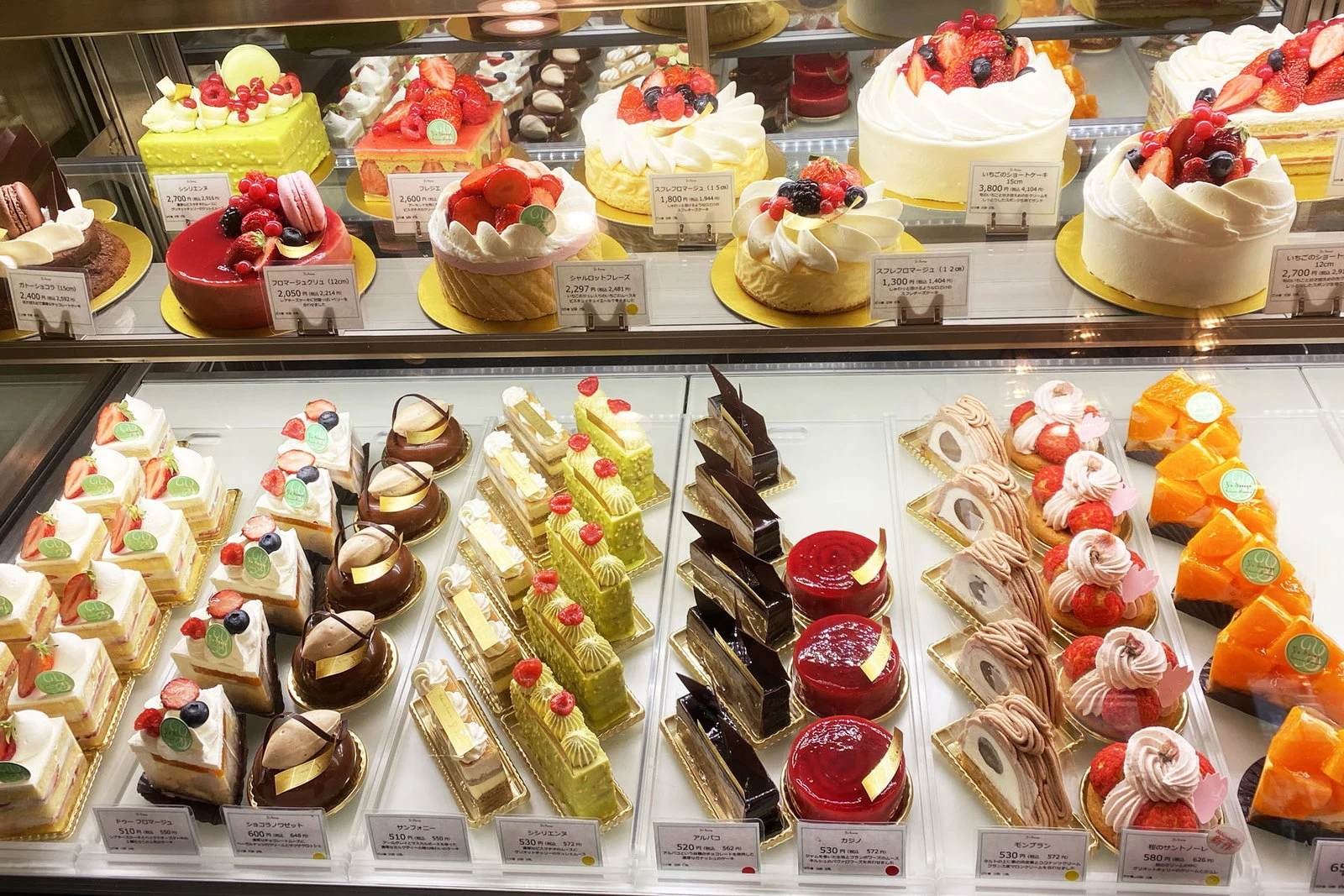
Aroma and texture are given the same weight as the finish at Patisserie Yu Sasage, where the case is arranged around a single idea: French pastry that works on all five senses rather than the eye alone. That shows in how the pieces are built and in what the kitchen is aiming at, which is a cake someone remembers rather than one they photograph. The Chitose-Karasuyama shop is the main address of the house, a compact specialty patisserie in the Setagaya ward of Tokyo rather than a hotel counter or a dining room.
The menu is organised in French: petit gateau for individual fresh pastries, entremets for larger composed cakes, and a cake section covering the baked side. Within that, the recurring names are Valencia, Saint-Honoré and Sicilienne, joined by a millefeuille built on Le Lectier pears from Sanjo City in Niigata. That fruit connection is the house’s other signature, putting classic French structure over Japanese seasonal sourcing.
A retail patisserie, not a seated scene
The visit is retail-first. You choose from the display, reserve the seasonal pieces that sell through, and take the box away. There is no chef’s counter and no tasting pacing to work around, which keeps the decision on the pastry itself.
Seasonality drives the rotation. Fruit-led pieces come and go with what is good, and even the fixed names get revised: the Saint-Honoré has appeared in a pistachio and raspberry version rather than staying on one recipe all year. Larger formats are made around holidays and occasions, which is when the entremets side of the case fills out. The room itself is quiet and finished, with the display and the aroma of the day’s baking doing most of the work.
Start with the Saint-Honoré
If one order has to carry a first visit, take the Saint-Honoré. Its choux construction, caramel and cream are hard to hide behind, and the seasonal revisions make it the clearest window onto how the kitchen is thinking at that moment. Valencia and Sicilienne sit beside it among the rotating petit gateau, so both are worth taking when they appear.
The Le Lectier pear millefeuille is the other route in, pairing a classic French format with Niigata fruit and showing why the sourcing matters. For a table or an occasion, move up to the entremets, and use the cake section for the baked pieces that keep better than a fresh pastry. Across all of it, read the shop through form, season and texture rather than through a fixed list of signatures.
Frequently asked questions
What should you order at Patisserie Yu Sasage?
The Saint-Honoré is the piece to start with, since choux, caramel and cream leave nowhere to hide and the recipe is revised through the year, appearing at times in a pistachio and raspberry version. Valencia and Sicilienne rotate beside it, and the Le Lectier pear millefeuille shows the Niigata fruit sourcing.
How is the menu at Patisserie Yu Sasage organised?
In French categories. Petit gateau covers individual fresh pastries, entremets covers larger composed cakes for a table or an occasion, and a cake section holds the baked pieces that keep better. Seasonal fruit drives which pieces appear, so the case changes rather than holding one fixed line-up.
Compare nearby places
| Venue | Type | Area |
|---|---|---|
| Boulangerie Sudo | Bakery | Setagaya |
| TOLO COFFEE AND BAKERY | Bakery | Setagaya |
| Boulangerie Paris no Sora no Shita | Bakery | Setagaya |
| PATISSERIE ASAKO IWAYANAGI | Bakery | Setagaya |
| Okusawa Factory Coffee and Bakes | Café | Setagaya |