Nishi Ogikubo

Boulangerie SOO SEE JI

Bakery3.4 on GoogleAbout $9 a head
Boulangerie SOO SEE JI

Why go

On the residential side of Nishi-Ogikubo, Tokyo’s bread culture becomes quieter and more exacting. Serious bakeries are not confined to department-store basements or polished hotel arcades; many work at street level on neighbourhood routes, their days shaped by proofing, baking, cooling, counter service, and thinning shelves. Boulangerie SOO SEE JI belongs to this small-format Tokyo tradition, where timing, restraint, and bake-to-counter choreography matter more than a dining room.

Tokyo classifies bread with the same instinct it applies to sushi, ramen, curry, and coffee. A bakery can be breakfast stop, destination purchase, or local habit. The serious tier is judged by consistency across a narrow service window, not long menus or theatre. Selection for Tabelog’s Bread TOKYO 100 in 2022 places this shop in that recognised bracket, useful in a city where bread specialists compete across French technique, Japanese softness, sandwich culture, and commuter practicality.

Nishi-Ogikubo bread culture rewards timing over spectacle

Nishi-Ogikubo sits far enough from central Tokyo’s luxury corridors that food businesses show their priorities quickly. The neighbourhood has long supported independent restaurants, cafés, curry counters, kissaten, and small specialty shops, often serving local clients who notice inconsistency faster than visitors do. A bakery here does not need a grand room to be serious; it needs a production rhythm that earns repeat visits.

The take-out format at Boulangerie SOO SEE JI fits this ecology. Tokyo’s better neighbourhood bakeries often operate as precision retail, not hospitality theatre: no long meal arc, sommelier handoff, or table pacing. Teamwork compresses into back-and-front coordination: what comes out when, how fast the counter turns, how clearly the day’s selection is managed, and how demand is handled without performance. In restaurants, front-of-house may explain a tasting menu; here, counter discipline is the service language.

The price position also matters. A sub-¥1,000 bakery spend in Tokyo can still be highly competitive because bread buying is frequent, comparative, and unforgiving. The comparison is not with high-ticket sushi counters such as Sushi Marufuku, where scarcity is structured around seats and chef-led service, but with everyday specialists whose reputation is built across many small purchases. In the same city, Ooiwa Shokudo, Tsushima Ryu South Indian Kei Karakuchi Ryori Ten Tarikaro, and Rahi Punjabi Kitchen occupy different casual-dining brackets, while Kitaya sits closer on spend but not necessarily category. Tokyo’s lower-price food culture can be as sharply judged as formal dining.

A compact format with a recognised Tokyo bread credential

Tabelog’s Bread TOKYO 100 selection is a meaningful trust signal because it separates bakeries from general restaurant rankings and evaluates them within category. Bread is technical: fermentation, bake timing, shelf life, crumb structure, crust, sweetness balance, and temperature management punish imprecision quickly. Without naming unverified specialties, the safe reading is that Boulangerie SOO SEE JI has earned attention as a bread specialist rather than a café, restaurant, or dessert shop.

That distinction helps travellers. Tokyo bakery visits work differently from formal restaurant planning. The rewarding version is usually a focused stop folded into a neighbourhood itinerary, not a substitute for lunch or dinner. A bakery like this belongs before a walk, beside a coffee plan, or as a calibrated detour from the station area. The experience is short, but it shows how Tokyo food culture operates outside the reservation economy: disciplined production, compact service, low spend, and a clientele that treats repetition as quality control.

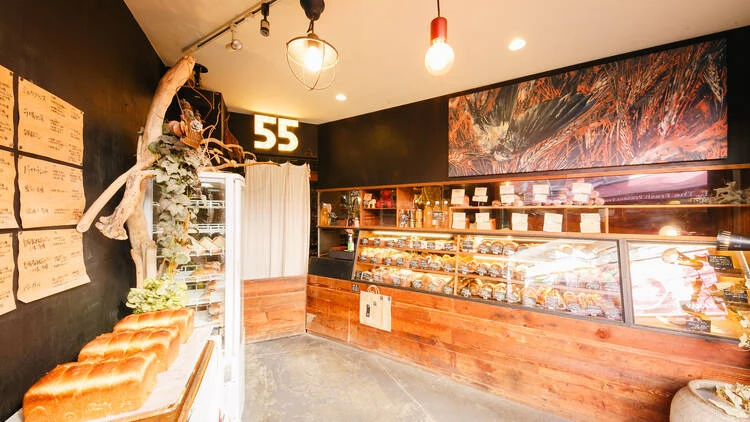
The operational details reinforce that reading. It is a take-out specialist, not a place to linger through courses. Interior photography is prohibited, redirecting attention from documenting to buying. Card, electronic money, and QR payments are not accepted, so the transaction follows an older, cash-based neighbourhood model. In a city increasingly fluent in mobile ordering and frictionless payment, that constraint is not quaint; it reflects a format where energy goes to production and counter flow.

The location also shapes the decision. Nishi-Ogikubo is not a default stop for every Tokyo visitor, which suits readers who have already covered Ginza, Shibuya, Shinjuku, and Omotesando. Western Tokyo has a different food tempo: less trophy dining, more repeatable neighbourhood intelligence. Pairing a bakery stop with nearby independent cafés, curry shops, or izakaya-style routes gives a clearer read on local eating than another department-store basement crawl. For broader planning, Our full Tokyo restaurants guide maps the city’s restaurant range, while Our full Tokyo hotels guide, Our full Tokyo bars guide, Our full Tokyo wineries guide, and Our full Tokyo experiences guide place the stop inside a wider itinerary.

How to read it against Tokyo's wider casual-food map

Useful comparison is not with luxury dining rooms, but with different kinds of precision at modest scale. Tokyo can make a specialist out of almost any narrow format: curry, yakitori, onigiri, bread, coffee, ramen, or a single regional cooking style. Nearby in the broader EP Club Tokyo index, entries such as 3 Chome no Curry Ya San, 124. KAGURAZAKA (Yakitori), 12/10 Shinjuku ten, 2D Cafe, and. 鮪と炭火焼き うお炭 秋葉原店 show how varied the city’s casual formats can be without sharing the same logic.

Boulangerie SOO SEE JI is a strong choice for readers who value food systems as much as meals. It is not a long-form restaurant experience, which is the point. The visit sits in the compact, local, production-led side of Tokyo dining, where a recognised bread specialist can justify a detour through evidence rather than ceremony. Build it into a west-side day, pay attention to timing, and treat the purchase as a window into how seriously Tokyo takes buying bread.

For broader national contrast, Japan’s casual-food map extends beyond Tokyo: -Grilled beef Sukiyaki- KAMAKURA TANUKIAN 鎌倉 たぬき庵 in Kamakura,.cafe in Osaka,.know in Kumamoto, (Shoku) Vietnam in Kawasaki, [Curry Senmon Ten] Maruyama Kyoju. in Sapporo, and [ki:] in Kyoto each reflect a different local register. Abroad, Jōdo Saké Bar in Los Angeles and Onigiri Time in Pasadena show how Japanese formats change when translated into overseas dining markets.

Tags

CozyHidden GemClassicSoloCasual HangoutFamilyStandalone