Hachioji / Minami-Osawa

CICOUTE BAKERY

BakeryBakery Cafe4.2 on GoogleAbout $15 a head
CICOUTE BAKERY

Why go

The approach to Minami-Osawa resets expectations. Tokyo’s central bakery circuit often means glass-fronted counters, basement food halls, and patisserie-adjacent retail theatre; out in Hachioji, the tempo is quieter and more residential. CICOUTE BAKERY belongs to the part of the city’s bread culture that rewards a detour, not because it hides from attention, but because Tokyo’s serious baking map has never been confined to Ginza, Shibuya, or Aoyama.

That matters. Bread in Tokyo is a competitive category, with French technique, Japanese flour preferences, cafe culture, and takeout habits colliding in compact shops that draw cross-town travel. The Tabelog Bread TOKYO 100 selection in 2022 is the trust signal here: it places the bakery inside a documented citywide bread conversation, not a casual neighbourhood-cafe bracket. The format is modest; the category is not.

A small-format bakery in Tokyo's serious bread circuit

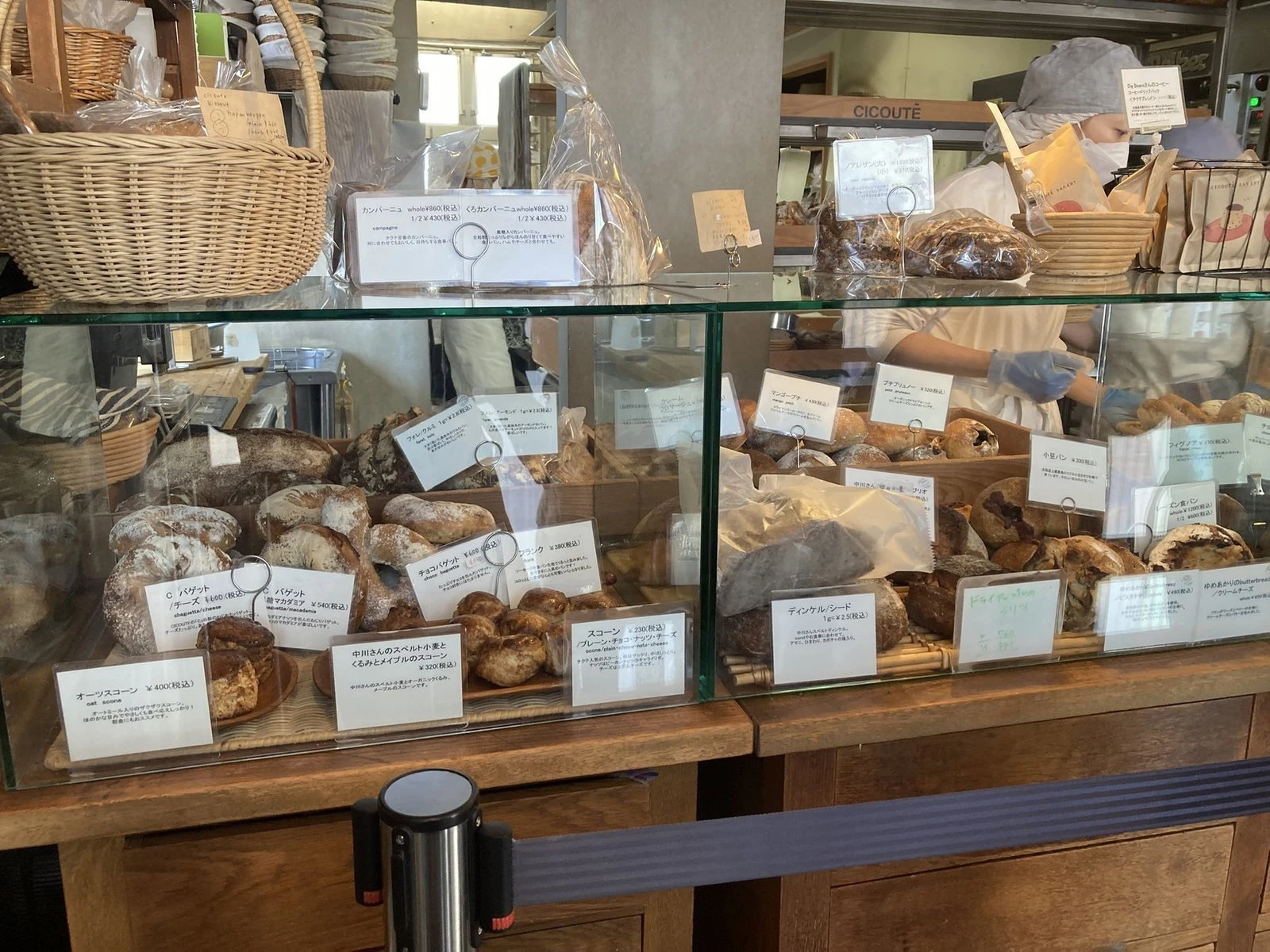
The useful way to read CICOUTE BAKERY is through sequence rather than spectacle. A bakery visit rarely has the formal progression of a tasting menu, yet leading ones create an arc: the counter decision, the split between bread for now and bread for later, then the cafe pause if seats align. Tokyo diners understand that rhythm. It is less about one plated dish than how the shop manages appetite across a short window of attention.

That makes the bread-and-cafe identity important. Tokyo has many bakeries that are pure grab-and-go counters, and many cafes where bread is supporting cast. A hybrid format changes the decision: the stop can work as a planned mid-day anchor rather than a pastry errand. The room is small, with a compact seating footprint and an open-terrace note, so the experience is a controlled pause rather than a long cafe session. That scale explains why the bakery belongs with specialist counters and limited-format food shops across the city, where capacity shapes the encounter.

The award history gives the place a longer shadow. Selection for Tabelog’s Bread 100 lists appears across multiple years, including 2017, 2018, 2019, 2020, and 2022, suggesting continuity in a category where daily execution matters more than an opening-season splash. For travellers, that separates chasing novelty from visiting a shop that has stayed visible in a crowded Tokyo bread field.

The Minami-Osawa detour changes the value equation

Minami-Osawa is not where many visitors begin a Tokyo food day, and that is the editorial point. The city’s outer districts can offer a different precision: less international signalling, more reliance on repeat local traffic, and fewer chances to mask weakness behind design spend. A bread shop here has to justify the trip through the product itself. CICOUTE BAKERY does that with citywide recognition, a takeout-friendly model, and a cafe layer that makes the stop intentional rather than incidental.

Compared with low-cost Tokyo casual stops such as Da Luciano, the price band sits in a familiar everyday range, but the logic differs. Gelato, ramen, curry, and bread all occupy Tokyo’s low-to-mid spend tier, yet bread rewards timing and selection more than table comfort. Out-of-metro casual specialists such as Jikaseimen Nichome Ramen, Taisho Ken Fuchinobe ten, and Curry no Mise Maboroshi sit in adjacent spending territory, but a bakery visit has a narrower rhythm: arrive with flexibility, choose quickly when stock is strongest, and treat the purchase as part of the day’s itinerary rather than the whole meal.

That sequencing separates it from central Tokyo restaurant planning. A table at 12/10 Shinjuku ten, a yakitori evening at 124. KAGURAZAKA (Yakitori), or a seafood-led stop such as . 鮪と炭火焼き うお炭 秋葉原店 asks the diner to plan around a meal slot. A bakery in Hachioji asks for different discipline: build it into a day when western Tokyo already makes sense, rather than forcing it between central appointments.

How to place it within a Tokyo food day

The sharpest use of CICOUTE BAKERY is as a bread-focused waypoint, not a full-service dining substitute. Tokyo’s cafe culture can blur that line, but the strongest bakery visits are selective: choose with an eye to what travels, pause if seating works, and leave room for the rest of the day’s eating. That is the tasting progression here, compressed into a counter decision and short cafe rhythm.

For broader Tokyo planning, place it beside specialist food stops rather than conventional restaurant reservations. Pair the idea with the citywide context in Our full Tokyo restaurants guide, then widen the day around neighbourhood logistics rather than one meal. Visitors building a cross-category itinerary can also map the city through Our full Tokyo hotels guide, Our full Tokyo bars guide, Our full Tokyo wineries guide, and Our full Tokyo experiences guide.

The comparison extends beyond Tokyo. Japan’s casual food culture is full of precise, narrow-format addresses, from -Grilled beef Sukiyaki- KAMAKURA TANUKIAN 鎌倉 たぬき庵 in Kamakura to.cafe in Osaka,.know in Kumamoto, (Shoku) Vietnam in Kawasaki, [Curry Senmon Ten] Maruyama Kyoju. in Sapporo, and [ki:] in Kyoto. Abroad, the same specialist impulse appears at Jōdo Saké Bar in Los Angeles and Onigiri Time in Pasadena. Tokyo’s version is more granular: a bakery, a curry counter, a cafe, each judged on whether a tightly framed format can carry the trip.

The editorial verdict is clear. This is not a central-Tokyo convenience stop, and should not be treated as one. Its value lies in expanding the map of Tokyo bread beyond the obvious wards, backed by repeated Bread 100 recognition and a small format suited to visitors who plan by category rather than neighbourhood fame. In a city where precision often lives in compact rooms, that is enough reason to take the bakery seriously.

For a nearby cafe-style contrast inside Tokyo, 2D Cafe plays to visual concept and urban novelty, while 3 Chome no Curry Ya San shows how another low-to-mid spend category can become destination dining through focus. CICOUTE BAKERY sits in the quieter lane: bread first, cafe second, and the western Tokyo detour as part of the point.

Tags

CozyRusticHidden GemSoloCasual HangoutAfter WorkBrunchTerraceStandalone