Why go
Handmade bread with a Paris reference
The baguette tradition is where Boulangerie et Cafe Main Mano puts its argument: a crust and crumb built the French way, in a Tokyo bakery-café whose concept is drawn from the residential streets of Paris's 16th arrondissement. Bread is made from scratch, and the shop treats wheat, butter, vegetables and water as identity rather than as inputs.
The name carries the same idea. Main in French and Mano in Italian both mean hand, and the bakery frames its work as connecting people hand to hand through bread made by hand. The result in Yoyogi-Uehara is a boulangerie with a café attached, where the café serves the bread rather than replacing it.
A bakery case rather than a menu
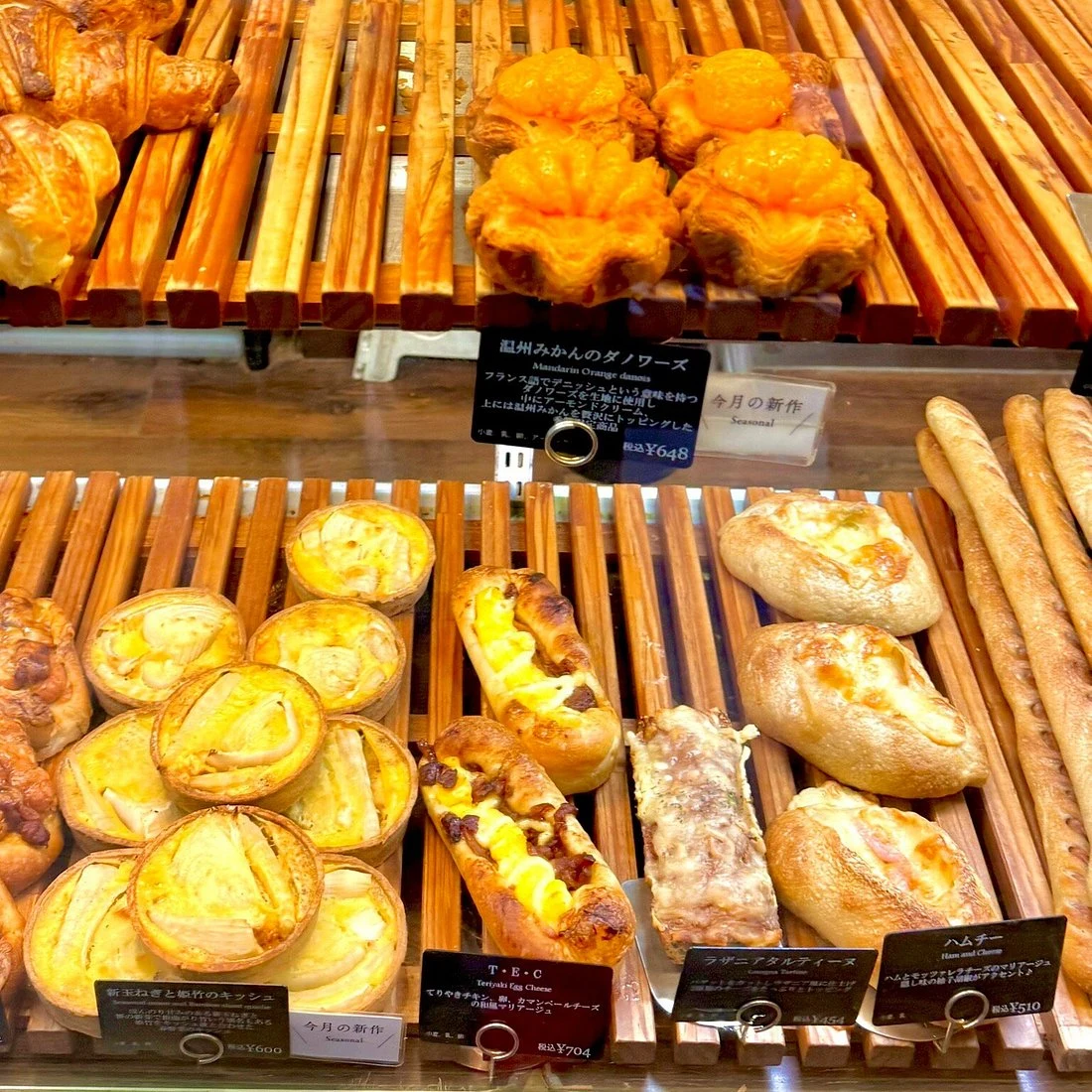
Expect a case, not a carte. The counter is organised around loaves and chef-created baked goods rather than courses or plated desserts, and the pleasure is in scanning it and choosing rather than in ordering off a list. Alongside the French forms sit sweeter items with an Italian accent, including maritozzo cream buns, and small viennoiserie such as mini pains au chocolat.
The house phrase for its own baking translates roughly as creation being fun, new and abundant, which is a fair description of how the case behaves: authentic French method on one side, invention on the other, and the two sharing a shelf. The café tables exist so that bread can be eaten where it was baked, not to turn the place into a restaurant.
Start with the baguette tradition
Start with the baguette tradition. It is the least forgiving thing in the case and the fastest way to judge a boulangerie that has staked its identity on French technique and scratch production. Eat it the same day, ideally within a few hours, because a tradition is a short-lived object by design.
Then take one from each of the other two directions. Mini pains au chocolat show what the lamination is doing on a small scale, where the butter has nowhere to hide, and a maritozzo cream bun shows the softer, sweeter side of the case and the Italian thread running through a French-influenced Tokyo bakery. If bread is what you came for, add a second loaf to take home, since Main Mano's whole premise is that bread should be usable across an ordinary day rather than saved for an occasion.
Frequently asked questions
What should I order at Main Mano?
Order the baguette tradition first, since it is the plainest test of a bakery built on French method and scratch production. Follow it with mini pains au chocolat to see what the lamination is doing at small scale, and a maritozzo cream bun for the sweeter, Italian-accented side of the case.
What kind of bakery is Main Mano?
It is a boulangerie with a cafe attached in Yoyogi-Uehara, built on a concept drawn from the residential 16th arrondissement of Paris. Bread is made from scratch and the shop treats wheat, butter, vegetables and water as its identity. The name means hand in both French and Italian.
Compare nearby places
| Venue | Type | Area |
|---|---|---|
| Katane Bakery | Bakery | Yoyogi-Uehara |
| TOLO COFFEE AND BAKERY | Bakery | Setagaya |
| Patisserie Cacao et Paris | Bakery | Nakameguro |
| Boulangerie Paris no Sora no Shita | Bakery | Setagaya |
| Boulangerie Ianak | Bakery | Nishi-Nippori |