Why go
Approaching a Tokyo neighborhood bakery is a different ritual from arriving at a restaurant. The decision happens at street level: a quick look through the frontage, a short pause at the counter, then the practical calculation of what will travel well by train or survive until breakfast. In Sasazuka, that rhythm matters. This part of Shibuya sits just far enough from the hotel-heavy center to keep its food culture local in tempo, but close enough to reward travelers who treat bread as part of Tokyo’s daily craft rather than a side note to sushi and ramen.
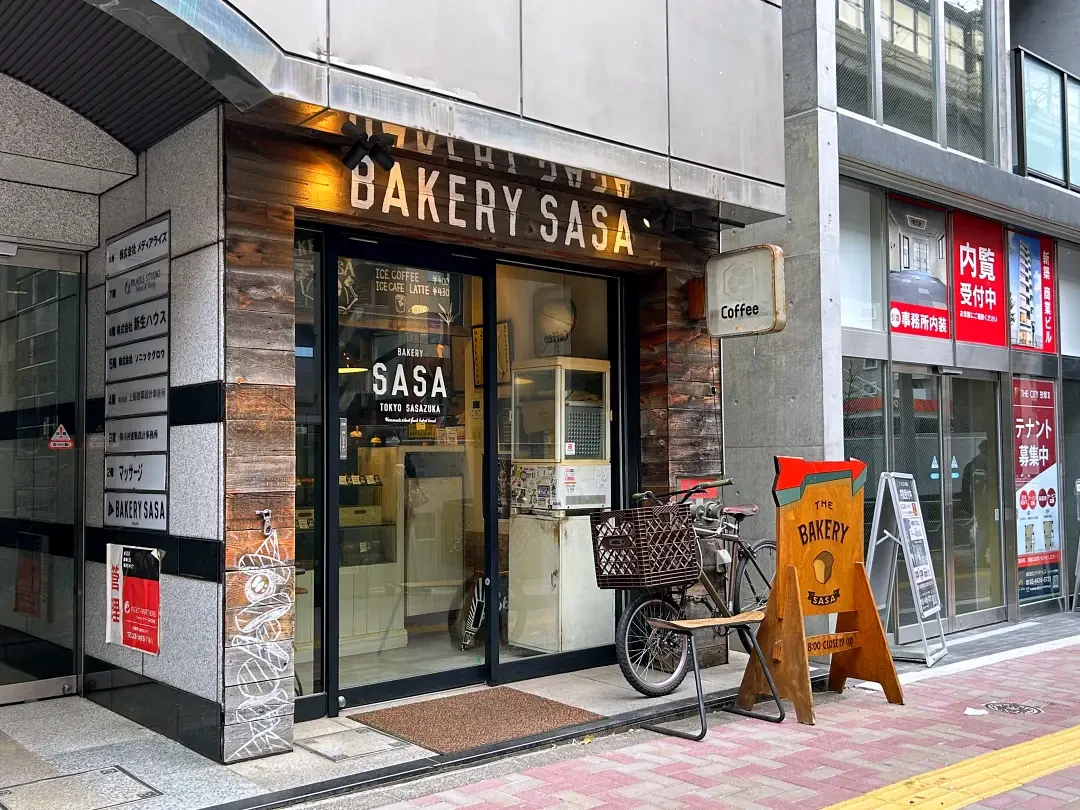
BAKERY SASA fits that category with unusual clarity. The format is take-out, the price band sits at JPY 999 and under, and reservations are unavailable, which places it outside the performative scarcity of Tokyo dining. Recognition comes from selection for Tabelog Bread TOKYO 100 in 2022, with a Tabelog score of 3.72 attached to the listing. For a bakery, those signals matter because the competitive set is broad and unforgiving: Tokyo has convenience-store bread at one end, French-influenced neighborhood boulangeries at another, and specialist shops that turn a morning purchase into a queue.
Tokyo bread culture, seen through a Sasazuka counter
Tokyo’s serious bakery scene is not a single tradition. It borrows from French technique, Japanese milk bread culture, commuter snacking, and the city’s habit of turning small purchases into exacting routines. The better shops are judged less by spectacle than by consistency: how quickly product moves, how tightly the day’s range is managed, and whether the shop can keep a neighborhood audience without becoming a destination circus.
That is where the environmental angle becomes more concrete than slogan. Small-batch bread retail, especially when built around take-out and short purchase windows, can reduce the distance between production and consumption. It does not automatically make a bakery sustainable, and no sourcing claim should be assumed without published detail. But the model rewards precision: bake for a finite day, sell directly, and avoid the waste patterns that come with oversized menus and underused dining rooms. In Tokyo, the better neighborhood bakeries often feel closer to a craft supply chain than to restaurant theater.
BAKERY SASA’s recognition in a bread-specific Tokyo list places it in that specialist lane. This is not a place to measure against multi-course dining rooms such as 12/10 Shinjuku ten or grill-focused venues like . 鮪と炭火焼き うお炭 秋葉原店. A bakery asks a different question: can a small purchase justify a detour? In Sasazuka, the case rests on price discipline, Tabelog recognition, and the fact that bread in Tokyo often functions as both breakfast infrastructure and craft object.
Why the format feels more current than a reservation chase
Tokyo travel planning often becomes a contest of access: counters, ballots, deposits, timed releases. Bread cuts across that hierarchy. A no-reservation bakery is democratic in structure but not casual in standards. The visitor has to accept the logic of the category: selection changes through the day, peak hours can thin the shelves, and the reward is often a fast purchase rather than a seated meal.
The sub-¥1,000 range is part of the point. In a city where premium dining can consume an evening’s budget before drinks, bakeries create another route into quality. That makes BAKERY SASA useful for travelers staying west of Shinjuku, but also for those mapping a food day across smaller stops. Pairing a bakery run with coffee, a later curry stop such as 3 Chome no Curry Ya San, or a casual detour to 2D Cafe gives a more accurate picture of how Tokyo eats outside formal reservations.
Sasazuka also changes the mood. Central Tokyo’s luxury dining often foregrounds theatre, while outer-neighborhood food shops tend to reward repeat use. The nearest-station convenience matters here because bread is perishable, and a bakery visit is rarely improved by a complicated transfer. Parking is unavailable, another useful clue: this is a rail-and-foot stop, not a car errand. Payments are more flexible than some old-school cash-only counters, with major cards, transport IC cards, several electronic money systems, and PayPay accepted.
For travelers comparing categories, the bakery sits in a more everyday register than 124. KAGURAZAKA (Yakitori), -Grilled beef Sukiyaki- KAMAKURA TANUKIAN 鎌倉 たぬき庵 in Kamakura, or sake-bar dining such as Jōdo Saké Bar in Los Angeles. That contrast is useful: Tokyo food literacy is not only built at counters with a chef in front of you. It is also built in bakeries, curry shops, onigiri specialists like Onigiri Time in Pasadena, and regional casual addresses such as.cafe in Osaka,.know in Kumamoto, (Shoku) Vietnam in Kawasaki, [Curry Senmon Ten] Maruyama Kyoju. in Sapporo, and [ki:] in Kyoto.
Know Before You Go
- Format: Take-out bakery, not a seated restaurant format.
- Recognition: Selected for Tabelog Bread TOKYO 100 in 2022; Tabelog score listed at 3.72.
- Price signal: Listed in the JPY 999-and-under band, useful for a low-commitment food stop.
- Access pattern: Sasazuka Station is the practical anchor; this is a rail-first visit.
- Planning note: No reservations. Treat timing like a bakery run, not a dinner booking.
The editorial read is simple: BAKERY SASA is strongest as evidence of Tokyo’s disciplined everyday food culture. It will not replace a tasting counter or a long dinner, and it should not be forced into that role. Its value is sharper: a recognized bread specialist in a neighborhood format, priced for repeat purchase, and aligned with the low-waste logic of direct, same-day bakery retail. For broader planning, see Our full Tokyo restaurants guide, then build around the city’s other categories through Our full Tokyo hotels guide, Our full Tokyo bars guide, Our full Tokyo wineries guide, and Our full Tokyo experiences guide.