Musashisakai

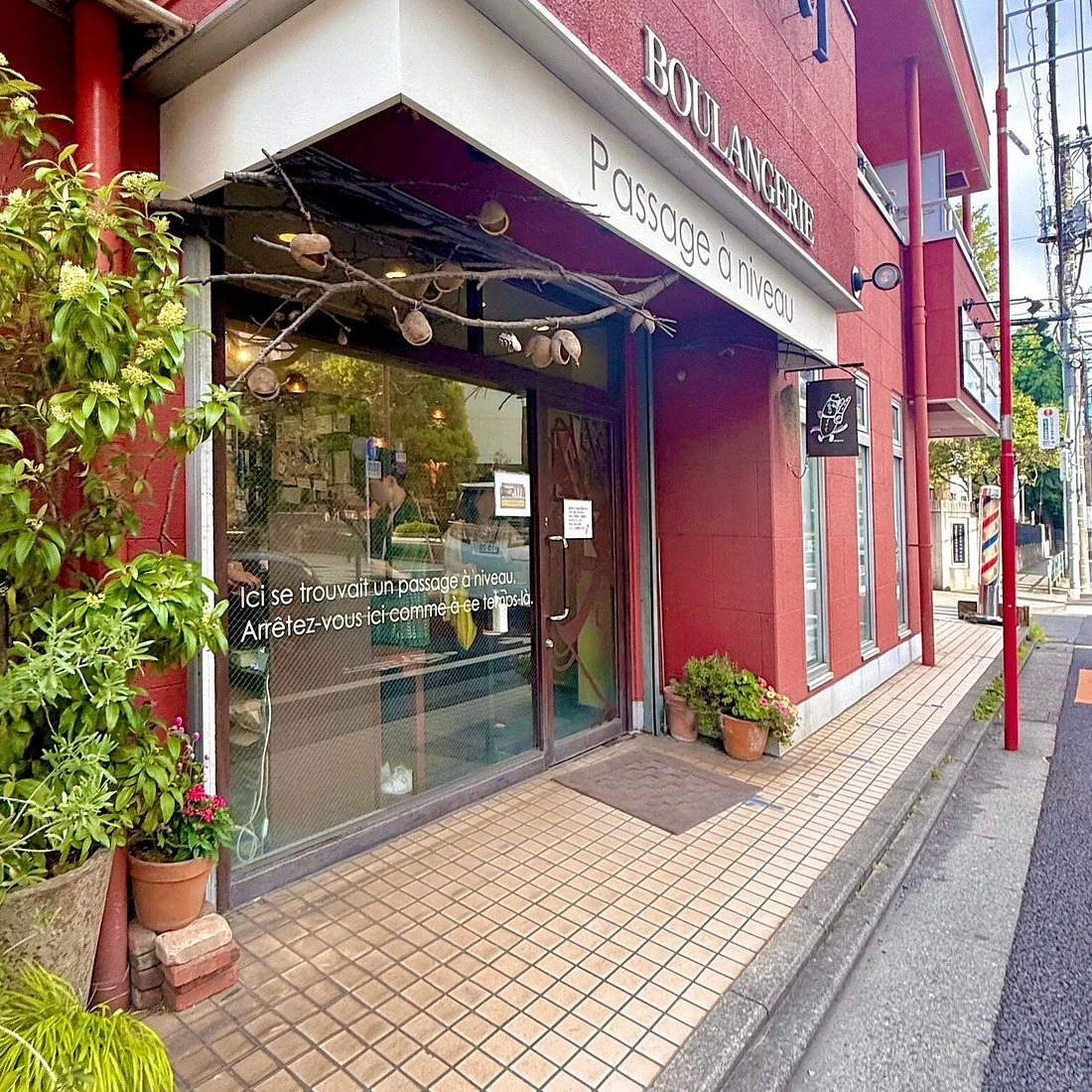
Boulangerie Passage à Niveau

Bakery4.4 on Google
Boulangerie Passage à Niveau

Why go

Approaching a neighbourhood bakery in western Tokyo is a different rhythm from entering a Ginza counter or a hotel dining room. The cues are quieter: a compact frontage, morning traffic around the station, and the practical choreography of customers buying bread to carry away rather than settling in for a long service. That format matters. Tokyo’s bread culture has built a reputation not through ceremony, but through repeatable daily craft, and Boulangerie Passage à Niveau sits firmly inside that tradition.

The city’s food conversation often tilts toward sushi counters, yakitori rooms, ramen queues, and tasting-menu restaurants, yet bread has its own serious critical tier. Tabelog’s Bread 100 selections have become a useful map for that tier because they separate specialist bakeries from cafés where pastry is secondary. Boulangerie Passage à Niveau was selected for Tabelog Bread TOKYO 100 in 2022, with earlier Bread 100 selections in 2020 and 2019, a pattern that points to sustained recognition rather than a single-year spike.

Tokyo bread culture, measured by daily-use discipline

Tokyo bakeries operate in a demanding middle ground. They must serve commuters, families, and neighbourhood regulars while satisfying a city that treats texture, timing, and product consistency with the same scrutiny applied to noodle shops and sushi rice. The category is also less forgiving than it looks: bread is often bought quickly, eaten away from the shop, and judged without the theatre of table service. A bakery has fewer ways to distract from technique.

That is why the take-out format is not a footnote. It places the emphasis on production rather than hospitality performance. Bread and sandwiches carry the full burden of the experience, with no wine list, room pacing, or service ritual to soften the judgment. In Tokyo, that can be a strength. The city’s smaller specialist shops often gain authority by narrowing the encounter: select, pay, leave, then let the product prove the point elsewhere.

Boulangerie Passage à Niveau’s price bracket, listed below JPY 999, also places it in a different decision category from much of Tokyo’s destination dining. The comparison is instructive. A sub-JPY 999 bakery purchase competes with everyday ramen and udon more than with omakase. In the same low-price band, Ganso Stamina Manten Ramen Suzuki and Udon Stand Gozu show how Tokyo’s casual specialists can be tightly focused without becoming casual in execution. Gyoza no Harbin and Shichijo sit nearby in the broader affordable-dining conversation, while Yakitori Yamamoto occupies a far higher spend bracket. Bread, in this context, is not a consolation category; it is one of the city’s clearer demonstrations that craft and access can overlap.

Recognition without restaurant theatre

Tabelog recognition carries particular weight in Japan because it reflects a domestic reviewing culture that can be exacting about narrow genres. Bread TOKYO 100 is not a general restaurant accolade; it is category-specific, which makes it more useful for readers seeking bakeries rather than broad dining prestige. For a small take-out specialist, repeat selection signals that the shop is being judged against other bread-focused addresses, not simply admired as a pleasant neighbourhood stop.

The shop’s identity is also anchored by a named owner-boulangère, Sachiko Yamato, though the more useful reading is not biographical. Tokyo’s bakery scene has long absorbed French technique, Japanese precision, and local buying habits into a hybrid form that feels neither imported nor derivative. The relevant point is how specialist ownership translates into a focused category: bread and sandwiches, rather than a sprawling café menu built for dwell time.

For travellers, this is the kind of Tokyo food stop that clarifies the city beyond headline dining. It suits a day built around neighbourhood movement, especially when paired with other compact food experiences rather than a single long meal. Readers mapping a broader itinerary can place it alongside central Tokyo restaurants such as . 鮪と炭火焼き うお炭 秋葉原店, 12/10 Shinjuku ten, 124. KAGURAZAKA (Yakitori), 2D Cafe, and 3 Chome no Curry Ya San. For a fuller city plan, use Our full Tokyo restaurants guide, with parallel planning through Our full Tokyo hotels guide, Our full Tokyo bars guide, Our full Tokyo wineries guide, and Our full Tokyo experiences guide.

How to read the experience

The correct expectation is a bakery visit, not a seated restaurant appointment. There are no private rooms, and the format is take-out. That shifts the value equation toward selection timing, portability, and how the stop fits into a day in Musashino rather than toward service duration. Credit cards and several electronic money options are accepted, while QR code payments are not listed; for travellers moving between rail stations and small shops, that practical split is worth noting outside the romance of Tokyo dining.

The family-friendly designation and children-welcome note also place the shop in ordinary urban life, not occasion dining. That matters in Tokyo, where acclaimed food can sometimes be locked behind counter etiquette, reservation windows, or adult-only atmospheres. Here, the critical reputation belongs to a format that remains usable for a low-key daytime stop.

For readers extending the same lens beyond Tokyo, the useful comparison is not cuisine-to-cuisine but format-to-format: compact specialists that clarify a city through one tight category. That might mean -Grilled beef Sukiyaki- KAMAKURA TANUKIAN 鎌倉 たぬき庵 in Kamakura,.cafe in Osaka,.know in Kumamoto, (Shoku) Vietnam in Kawasaki, [Curry Senmon Ten] Maruyama Kyoju. in Sapporo, [ki:] in Kyoto, Jōdo Saké Bar in Los Angeles, or Onigiri Time in Pasadena. Boulangerie Passage à Niveau belongs to that same editorial category: a narrow-format address where recognition, restraint, and daily use tell the story more clearly than spectacle.

Tags

CozyHidden GemClassicSoloStandalone