Why go
About 200 sweets, made in the French register
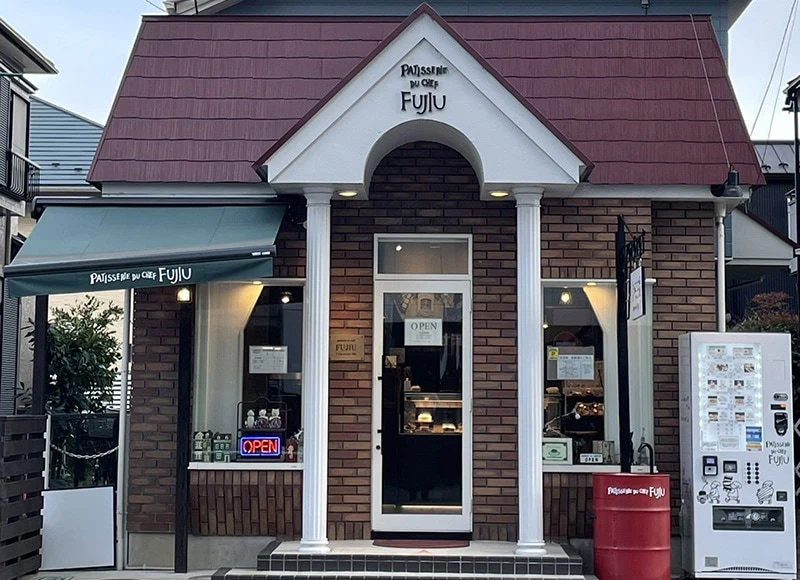
The cases at this Tokyo patisserie carry around 200 handmade French sweets, with Charlotte poire and Saucisson anchoring the order. The breadth is the point: fresh cakes, baked sweets, confiserie and viennoiserie all sit inside one French confectionery programme rather than a narrow cake-shop idea. Yoshiharu Fujiu, 藤生 義治, has worked with French sweets for more than 50 years, and the counter reflects that older Japanese pâtissier model, chef as craftsman, shop as daily expression of the work. The kitchen keeps close to French forms but does not treat them as museum pieces. Old recipes, seasonal fruit, modern technique and a steady retail rhythm all share the same case. The house line, to love the seasons, nature and sweets, is not decorative here; it explains why the range moves with the calendar while the underlying grammar stays French.
A retail counter first, with a small eat-in side
The room works like a product-rich patisserie before it works like a café. The first act is the case: read the labels, then decide whether the day is for a fresh cake, a baked piece for later, or a gift box. The main shop also runs a small eat-in service, which turns a quick purchase into a short cake stop, but the centre of gravity stays at the counter. Come with a little patience for choosing rather than for ceremony. Around the winter holidays the rhythm shifts toward celebration cakes and seasonal brochures, a Tokyo pastry calendar where Christmas demand matters. At other times the pleasure is simpler: an abundant case, handmade stock, and the sense that the staff are replenishing a living assortment rather than guarding a display.
Start with Charlotte poire, then take Saucisson home
Order Charlotte poire first if you are eating on site. It is the cake tied to Fujiu’s time in France and to the shop’s signboard, built around pear liqueur with a raspberry sauce accent, so it gives the clearest read on the house: French memory, softened for a neighbourhood counter, with fruit doing the lift. Saucisson is the one to add if the walk allows a box. It was recreated from a hundred-year-old recipe and sits somewhere between a roll cake and a Baumkuchen, with raisins and apricot jam running through it. Those two orders show the range better than a random selection from the case. Charlotte poire gives the fresh pastry side, fragrant and immediate; Saucisson gives the historical side, denser, more kept, and suited to carrying away.
Frequently asked questions
What should I order at Patisserie du Chef FUJIU?
Start with the Charlotte poire, the pear liqueur cake with a raspberry accent that carries the shop’s signboard, then take home a Saucisson, recreated from a hundred-year-old recipe and closer to a Baumkuchen than a plain roll cake. Between them they cover both halves of a case that runs to roughly 200 handmade French sweets.
Compare nearby places
| Venue | Type | Area |
|---|---|---|
| Boulangerie Sudo | Bakery | Setagaya |
| Patisserie l’abricotier | Bakery | Koenji |
| Patisserie SOURIRE | Bakery | Meguro |
| patisserie de bon coeur Musashikoyama honten | Bakery | Musashikoyama |
| French Gashi Patissier Chocolatier Inamura Shozo | Bakery | Yanaka |