Why go
French forms on an Osaka counter
The case at patisserie accueil is built on classical French pastry, made in Kitahorie by a shop whose name is the French word for welcome. The pastry work runs through one pâtissier, from ingredient choice to the finish on each piece, and the categories are kept distinct: petits gâteaux, entremets, gift boxes, viennoiserie and dry baked sweets.
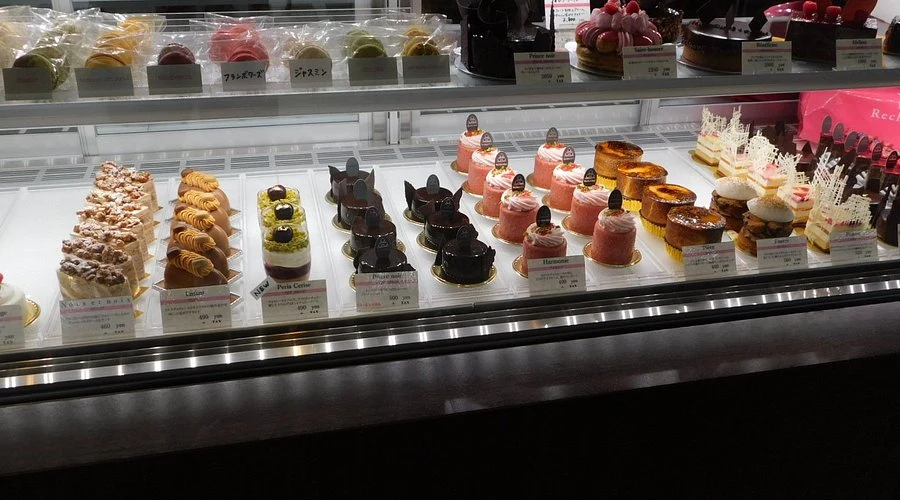
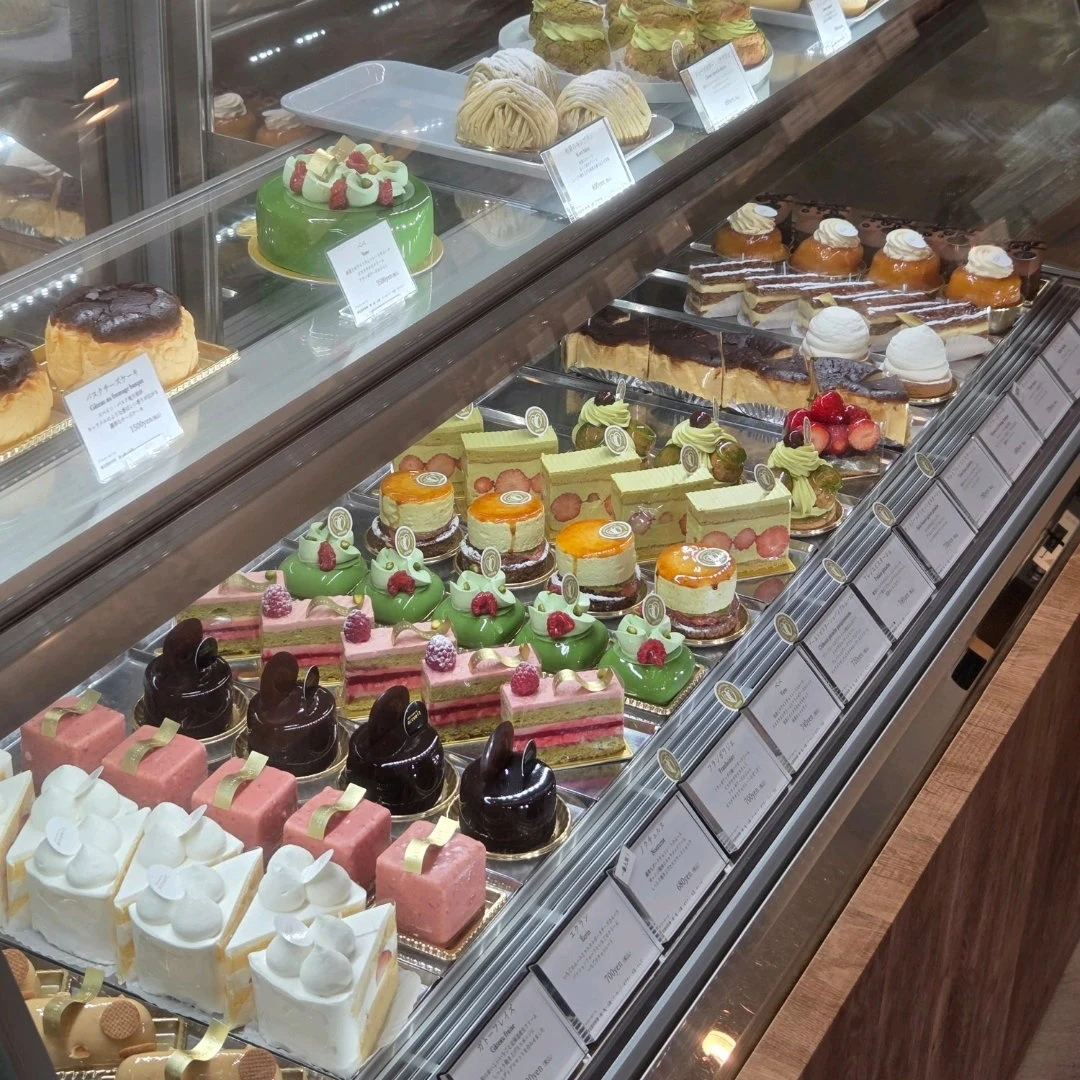
That split tells you how the shop is used. Petits gâteaux cover the single-serving side, with cerise, gâteau mangue, tarte cerise and a Basque cheesecake that reappears in a larger format. Entremets carry the occasion cakes, including soufflé chocolat, délice chocolat, the Bébé and the same Basque cheesecake scaled up for sharing.
A case built for choosing and carrying
Accueil reads as a retail patisserie rather than a café. There is no beverage programme to speak of and no long sit; the point is to choose, box and carry, whether that is one cake for the evening or a gift for someone else. A seasonal entry rotates through the case, while the permanent categories keep the choice legible.
The gift side is where that idea sharpens. Macarons, cookie assortments and boxed selections in two sizes sit together as a category of their own, which is unusual for a shop of this scale and says something about how much of the trade is gifting. Chocolate runs through the entremets and cherry through the petits gâteaux, so the two halves of the case have distinct characters rather than repeating each other.
Start with the Basque cheesecake, then take canelé home
Order the Basque cheesecake first. It is the one item that appears in both the small and the large format, which makes it the clearest read on the kitchen: dark top, loose centre, and enough salt to keep it from being simply sweet. Chocolate is the other strong route, through the soufflé chocolat and the délice chocolat, while cerise and tarte cerise give the fruit side of the case its counterpoint.
For something to keep, the baked and viennoiserie categories are more interesting than the display cakes. Canelé is the obvious one, dark and chewy at the edge; kouglof alsacien brings an Alsatian note into an Osaka shop; weekend citron and gâteau basque round out the travel cakes. If the visit is for a gift, macarons or the cookie assortment are the pieces the shop is set up to send out the door.
Frequently asked questions
What should I order at patisserie accueil?
The Basque cheesecake, which the shop makes in both an individual size and a full entremet, so it is the item the kitchen repeats rather than rotates. After that, soufflé chocolat and délice chocolat cover the chocolate side, and cerise or tarte cerise give a lighter fruit option from the small-cake case.
Does patisserie accueil do boxed sweets to take away?
Yes, and the gift side is a category in its own right. Macarons, cookie assortments and boxed selections in two sizes are kept separate from the display cakes, alongside travel cakes such as canelé, kouglof alsacien, weekend citron and gâteau basque, which all hold up better than an entremet on a long walk home.
Compare nearby places
| Venue | Type | Area |
|---|---|---|
| Patisserie Rielg | Bakery | Higashi-Osaka |
| Patisserie Rechercher | Bakery | Minamihorie |
| Boulangerie & cafe gout | Bakery | Tanimachi 4-chome / Chuo Ward |
| Boulangerie goût | Bakery | Chuo Ward |
| Boulangerie parigot | Bakery | Tennoji |