Why go
A French pastry case in Minami-Horie
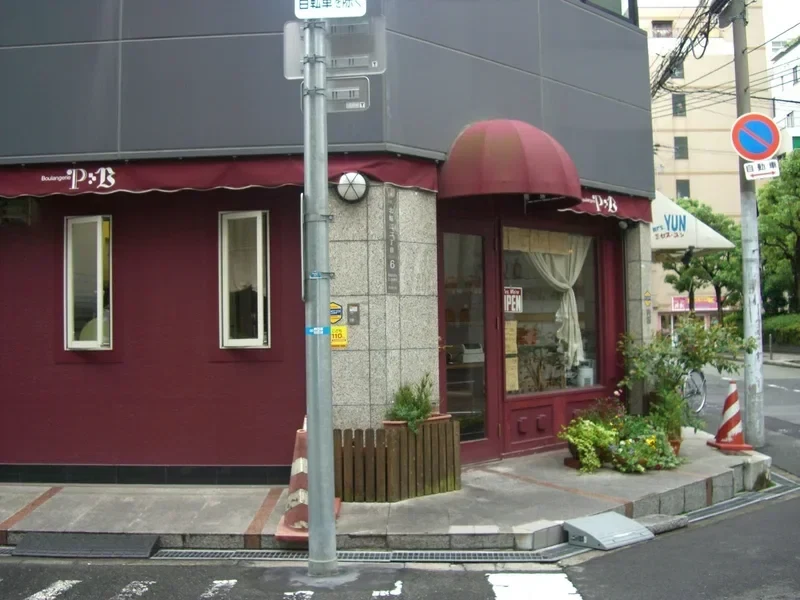
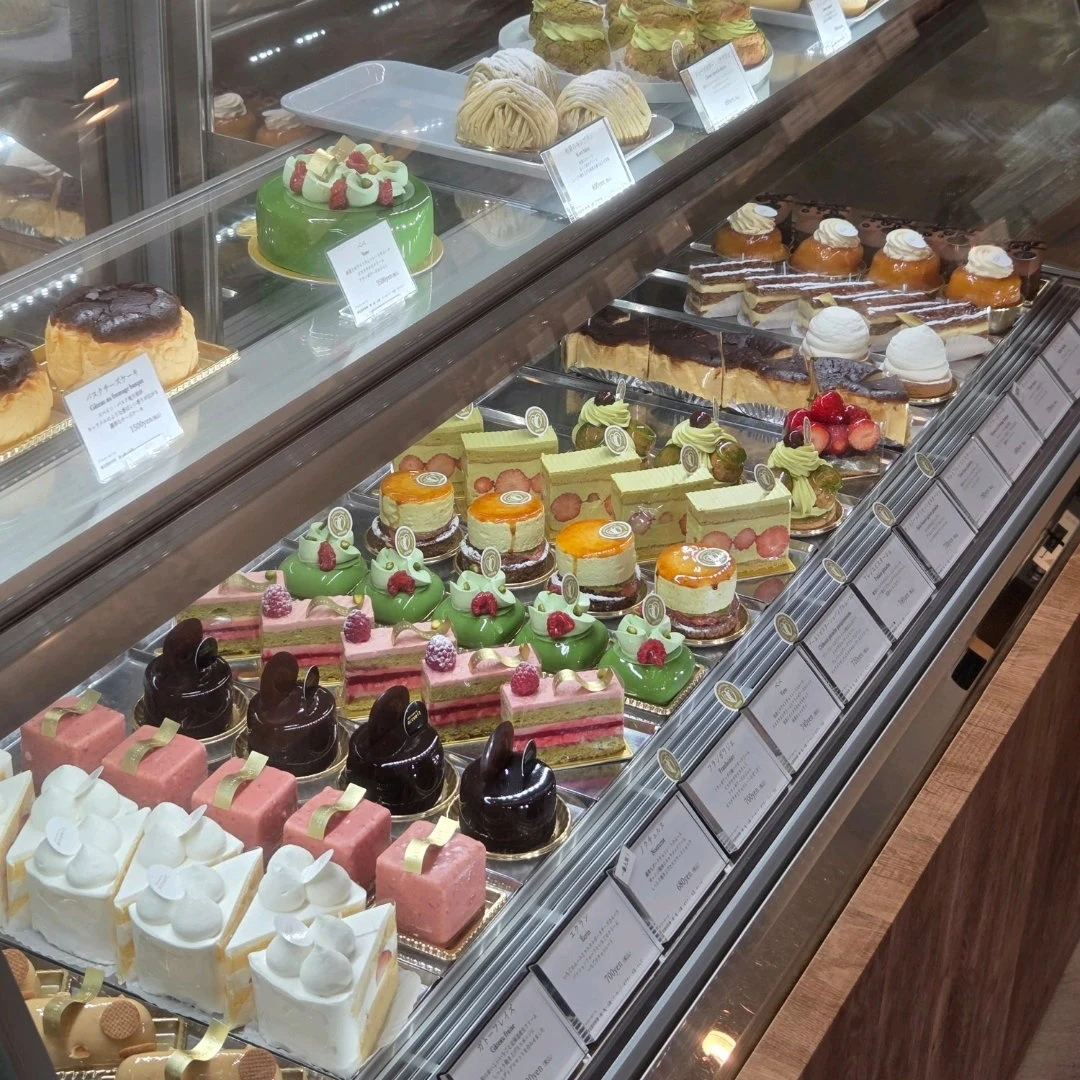
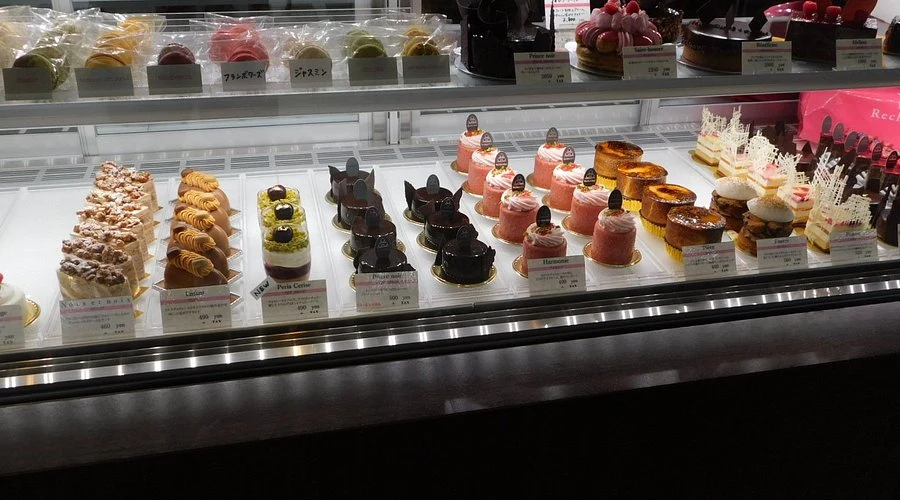
The case is small and the range is narrow, which is the point at this Osaka pâtisserie. Rechercher takes its name from the French verb to search, and the shop reads that literally: the work is a running experiment in French confectionery, built on fresh ingredients and on pulling as much flavour as possible out of them. There is no dining room behind it and no long café menu to distract from the counter. What you get is a cake shop in the French manner, run at neighbourhood scale in Minami-Horie, in Nishi Ward, west of the centre of the city. French technique supplies the inspiration; the daily decisions are Japanese in their precision.
A quiet room with a handful of seats
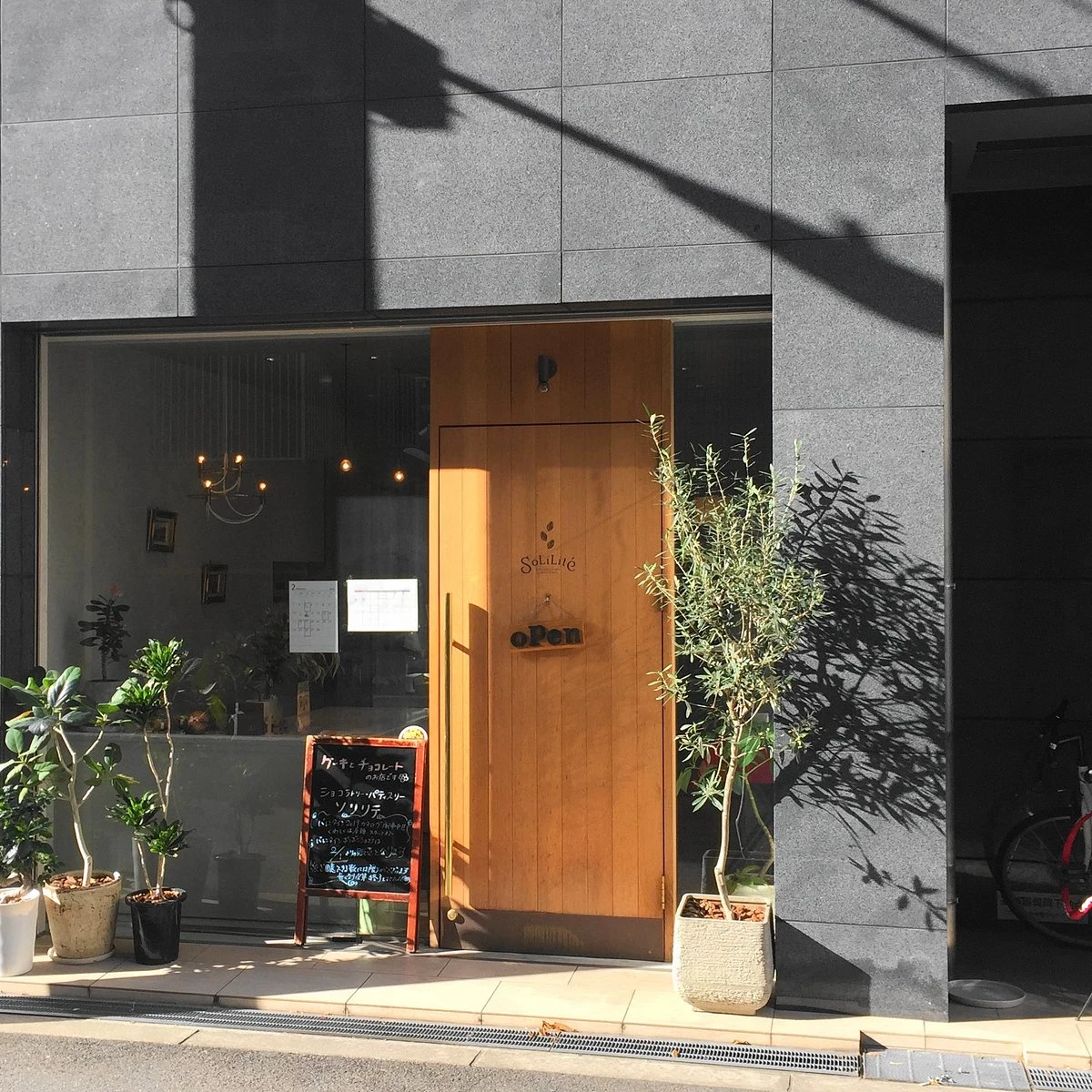
The room is quiet and plainly modern: a few seats inside, a couple more outside, and a case that does the talking. Most people come for a box rather than a table, and the pace suits that. The present shop opened in October 2019, when the pâtisserie moved into Minami-Horie and refitted the space, so the room is newer than the practice behind it. The result sits between a destination dessert stop and a local cake shop, close enough to home for regulars and specific enough to be worth crossing the city for. Nobody is performing here, and the brand carries the story rather than a named chef.
Choose by the day, not by a fixed list
Ask what is new. The house frames its own work as a daily search for new French sweets, so the useful order is whatever has just been finished that morning rather than a signature you can name in advance. The small size of the case makes that easy: read it once, choose twice, and let the seasonal fruit decide the second cake. A place at number 10 on the Tabelog 100 in 2023 is the one outside marker worth carrying in, and it fits the kind of shop this is, precise and contained and more interested in refinement than in range. Take a box away if the plan is a walk through Horie, or take one of the few seats and eat it while it is at its best. When the shop is busy the queue moves in one direction and the choosing happens quickly, so it helps to decide before you reach the front whether the box is for now or for later.
Frequently asked questions
What is Patisserie Rechercher known for?
Modern French pâtisserie made in small quantities in Minami-Horie, with a range that changes as the kitchen works through new ideas and seasonal fruit rather than a fixed signature. The shop was ranked number 10 on the Tabelog 100 in 2023, which is the clearest outside signal of where it sits among Osaka cake shops.
Can you sit down at Patisserie Rechercher?
There are a few seats inside and a couple outside, so eating in is possible, but the shop is built around boxes to take away. The room is quiet and plainly modern rather than a café with a long drinks list, and most visits are short: read the case, choose, then either take a seat or carry the box out.
Compare nearby places
| Venue | Type | Area |
|---|---|---|
| patisserie accueil | Bakery | Kitahorie |
| Acidracines Patisserie | Bakery | Chuo-ku |
| Patisserie Rielg | Bakery | Higashi-Osaka |
| Boulangerie & cafe gout | Bakery | Tanimachi 4-chome / Chuo Ward |
| Boulangerie goût | Bakery | Chuo Ward |