Why go
ZEN CAFE is the Gion café of 鍵善良房, Kagizen Yoshifusa, the confectionery house that has walked alongside the district since the mid-Edo period. It serves Japanese sweets in vessels made by contemporary artists, which is the whole idea in one line: wagashi heritage handled quietly and modernly, with sencha, namagashi, black tea, café latte, coffee and juice around it.
Wagashi and tea in Kyoto
The café is best understood through its sweets and its drinks. The identity rests on wagashi, especially Japanese sweets taken with tea, rather than on specialty coffee. The menu runs in English and Japanese, staff explain the sets, and there are pictures of the sweets to help you choose. The core order is a namagashi set with sencha; coffee, café latte, black tea and juice are the alternatives.
The sencha shapes the pairing. It arrives hot in a small can that yields about three cups, and its slight bitterness works as a deliberate counterpoint to the sweetness of the namagashi. The vessels add the visual layer, so cup, plate and sweet are read as one thing.
A quiet room down a Gion alley
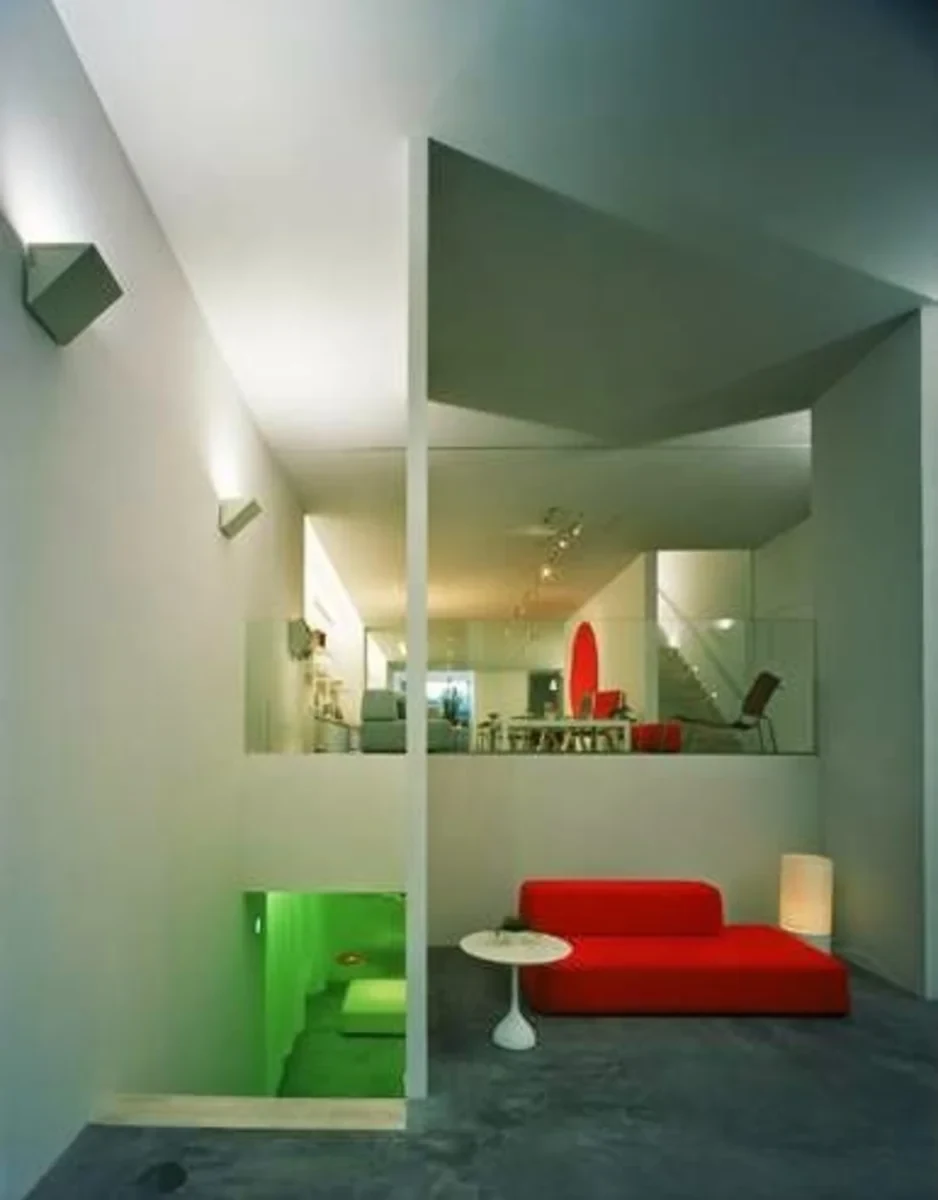
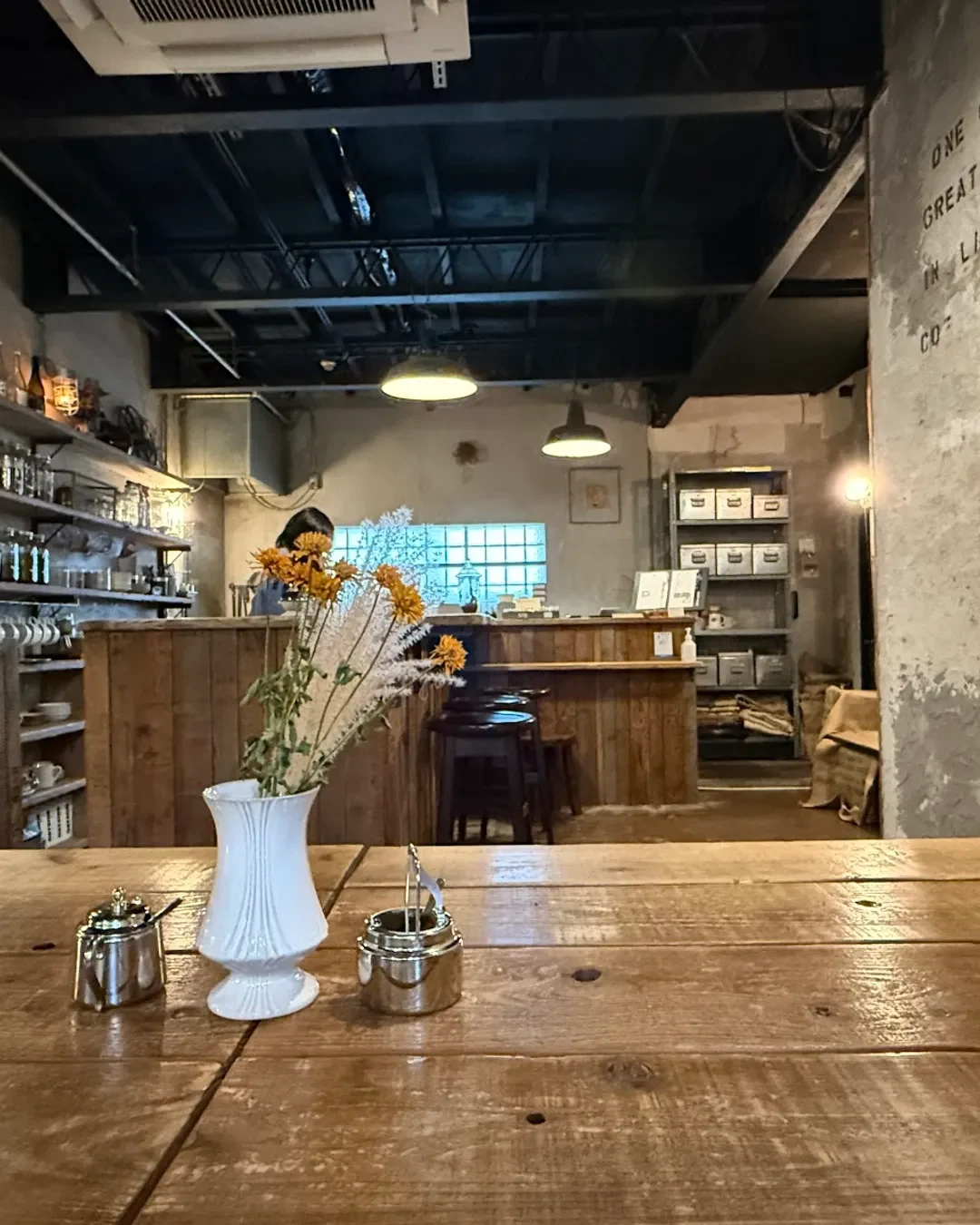
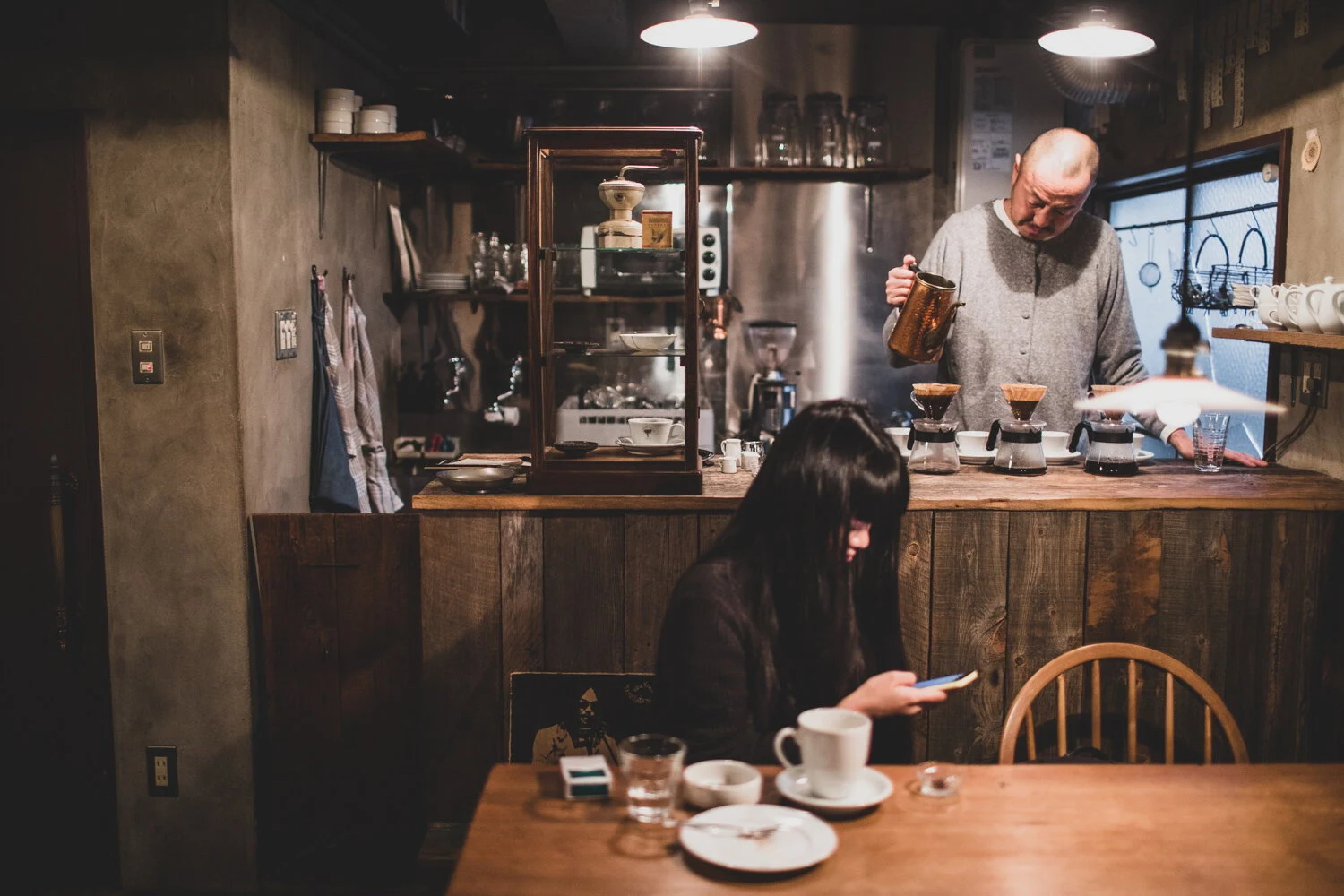
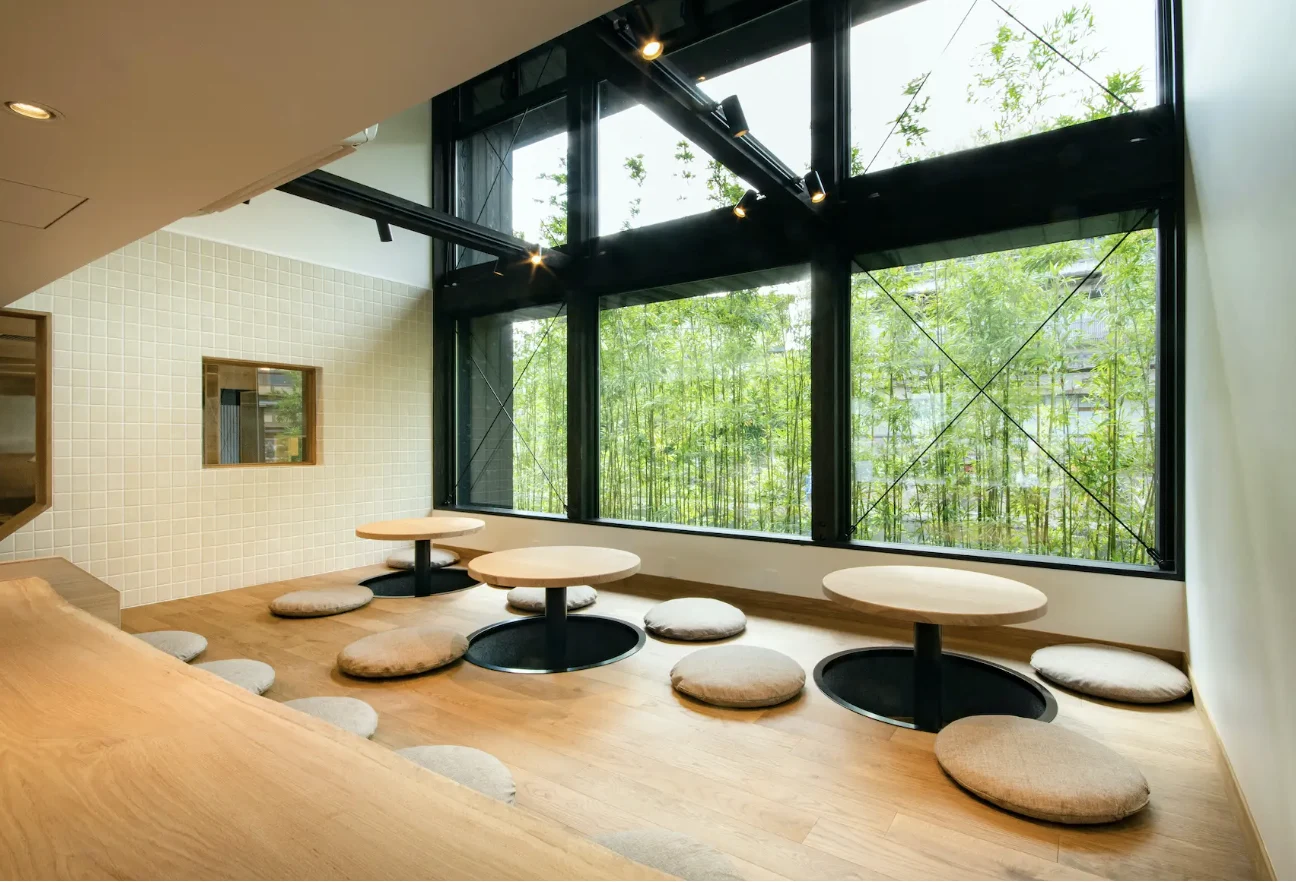
The room is calm and design-conscious rather than formal, a modern hideaway reached down a small side alley in Gion, inside an old traditional-looking house. The interior is contemporary, with dimmed lighting, carpet, bookshelves and an open, door-free arrangement that includes a small in-between room.
Seating suits different visits: single tables along the sides of one area, tables for pairs or groups, and a larger table for four. Some seats look out onto a green garden; another corner sits enclosed by bookshelves and feels more private. Service is table-oriented, with staff showing you to a seat, bringing the menu, explaining the sets, and returning when called rather than hovering. A small bell signals when you are ready to settle. The rhythm is sitting with tea, sweets and ceramics rather than turning the table.
Order the namagashi with sencha
Of the named orders, namagashi with sencha is the clearest. The namagashi is a raw, chewy sweet with a caramel-like taste, wrapped in a leaf and served still warm, and it comes with a small wooden knife, which matches the careful pace wagashi asks for. With sencha it becomes the café’s clearest expression: warm confectionery, green tea, and the balance between sweetness and bitterness.
That order also connects the café to the wider Kagizen Yoshifusa house, which is where its authority comes from. If sencha is not for you, coffee, café latte, black tea and juice are there. Still, the strongest path is simple: take the namagashi set, drink the sencha across several small cups, and let the vessel, the utensil, the leaf-wrapped sweet and the quiet room carry the visit.
Tags
Frequently asked questions
What should I order at ZEN CAFE?
The namagashi set with sencha. The sweet is raw and chewy with a caramel-like taste, wrapped in a leaf and served warm with a small wooden knife, and the sencha arrives hot in a can that yields about three cups. Coffee, café latte, black tea and juice are the alternatives.
Compare nearby places
| Venue | Type | Area |
|---|---|---|
| Cafe Don Bai Sfera | Café | Gion |
| CLAMP COFFEE SARASA | Café | Nakagyo Ward (near Nijo Castle) |
| ELEPHANT FACTORY COFFEE | Café | Nakagyo Ward |
| Umezono Cafe and Gallery | Café | Nakagyo-ku |
| Kaikado Cafe | Café | Shimogyo |