Why go
Wagashi, matcha and mitarashi dango
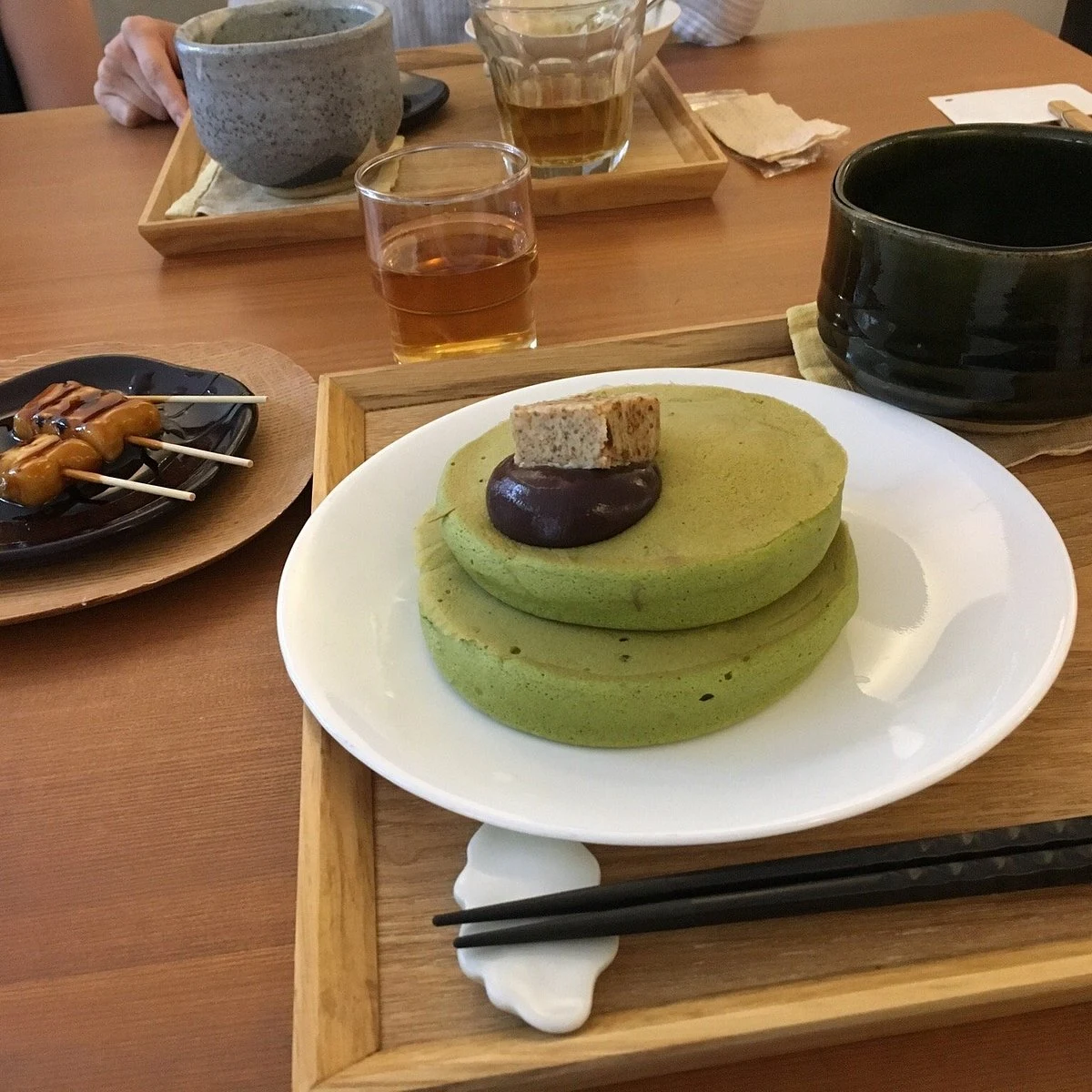
Umezono is a 甘党茶屋, a sweet-tooth tea house, and it reads that way at the table: matcha sweets, mitarashi dango and hotcakes, ordered slowly and eaten sitting down. The Umezono name carries a long Kyoto confectionery culture, and this branch adapts it to a contemporary café setting rather than a formal dining room or a coffee bar. Sweets come first here and drinks arrange themselves around them, which is the reverse of how a coffee shop works.
The house talks about holding its quality steady as ingredient and production costs rise, which is a modest way of saying the recipes are not being thinned. Continuity and confectionery craft do the work here, not a chef's name over the door, and the result is closer to a family sweet shop that grew up than to a modern dessert concept.
The gallery is half the reason
The CAFE&GALLERY name is literal. The venue gives real space to gallery programming, and a visit is meant to include looking as well as eating. A recent showing centered on kimono accessories and summer dressing, bringing antique obidome and related pieces into the room.
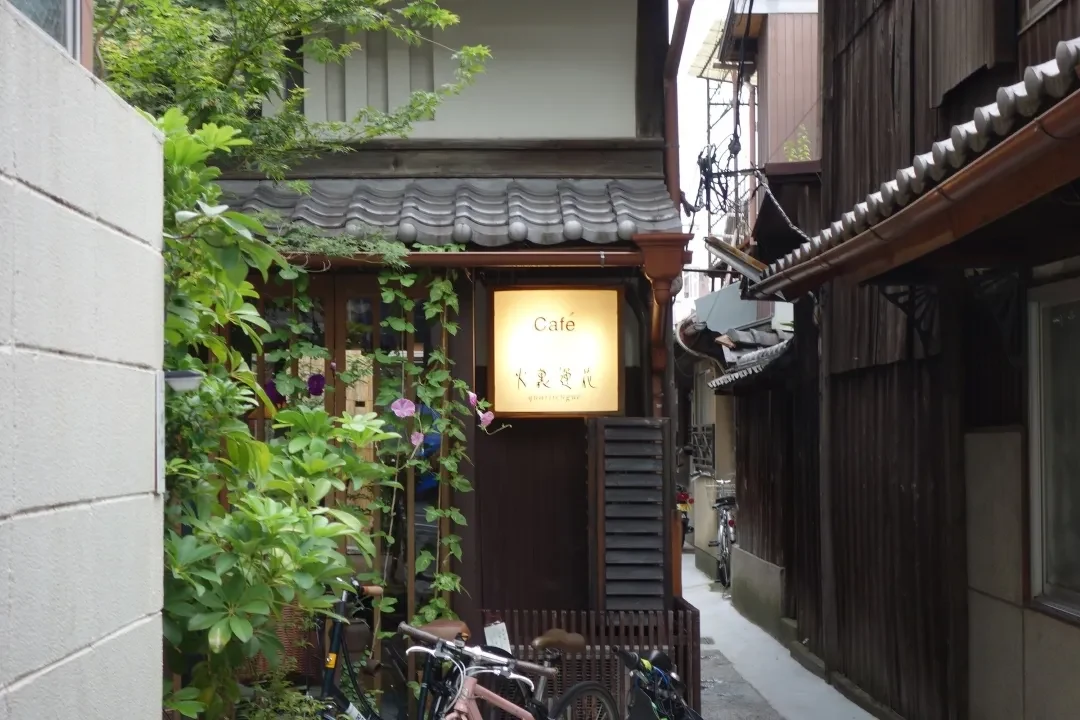
The gallery director's stated view, that kimono is a dress, gives that programming a personal curatorial voice rather than a decorative backdrop. The result is a Kyoto café shaped by seasonal material culture: you sit for a sweet, then encounter a rotating presentation of objects. The room itself is quiet and understated, with simple wooden interiors, soft lighting and a small garden outlook, which is the machiya idea applied to a sweet shop.
Dango first, then decide how sweet to go
Order the mitarashi dango first. Grilled rice dumplings under a sweet soy glaze are the clearest expression of the kanmi tradition the house belongs to, and they sit well before anything richer.
From there the question is how sweet to go. Matcha sweets are the natural second order and the reason many people come, while the hotcakes turn the visit into something closer to a meal. A compact stop is one sweet and a look at the current exhibition; a longer one uses the café as a landing between Kyoto errands, shopping and cultural browsing. Either way the pace is the point, since nothing about the room encourages hurrying, so order in stages rather than all at once.
Tags
Frequently asked questions
What should I order at Umezono?
Start with the mitarashi dango, grilled rice dumplings under a sweet soy glaze and the clearest expression of the kanmi tradition the house works in. Matcha sweets are the natural second order, and the hotcakes turn the visit into something closer to a meal if you arrive hungry rather than curious.
What is the gallery side of it?
The CAFE&GALLERY name is literal: the venue gives real space to rotating gallery programming, and a recent showing centered on kimono accessories and summer dressing, bringing antique obidome into the room. The gallery director's view that kimono is a dress gives it a curatorial voice rather than decoration.
Compare nearby places
| Venue | Type | Area |
|---|---|---|
| Cafe Karirenge | Café | Nakagyo-ku |
| Mlesna Tea House Kyoto | Café | Nakagyo-ku |
| Rokuyosha Coffee Ten | Café | Nakagyo-ku |
| Maeda Coffee Muromachi honten | Café | Nakagyo-ku |
| Torinoki Coffee | Café | Nakagyo-ku |