Why go
A Probat roaster inside a former kimono wholesaler
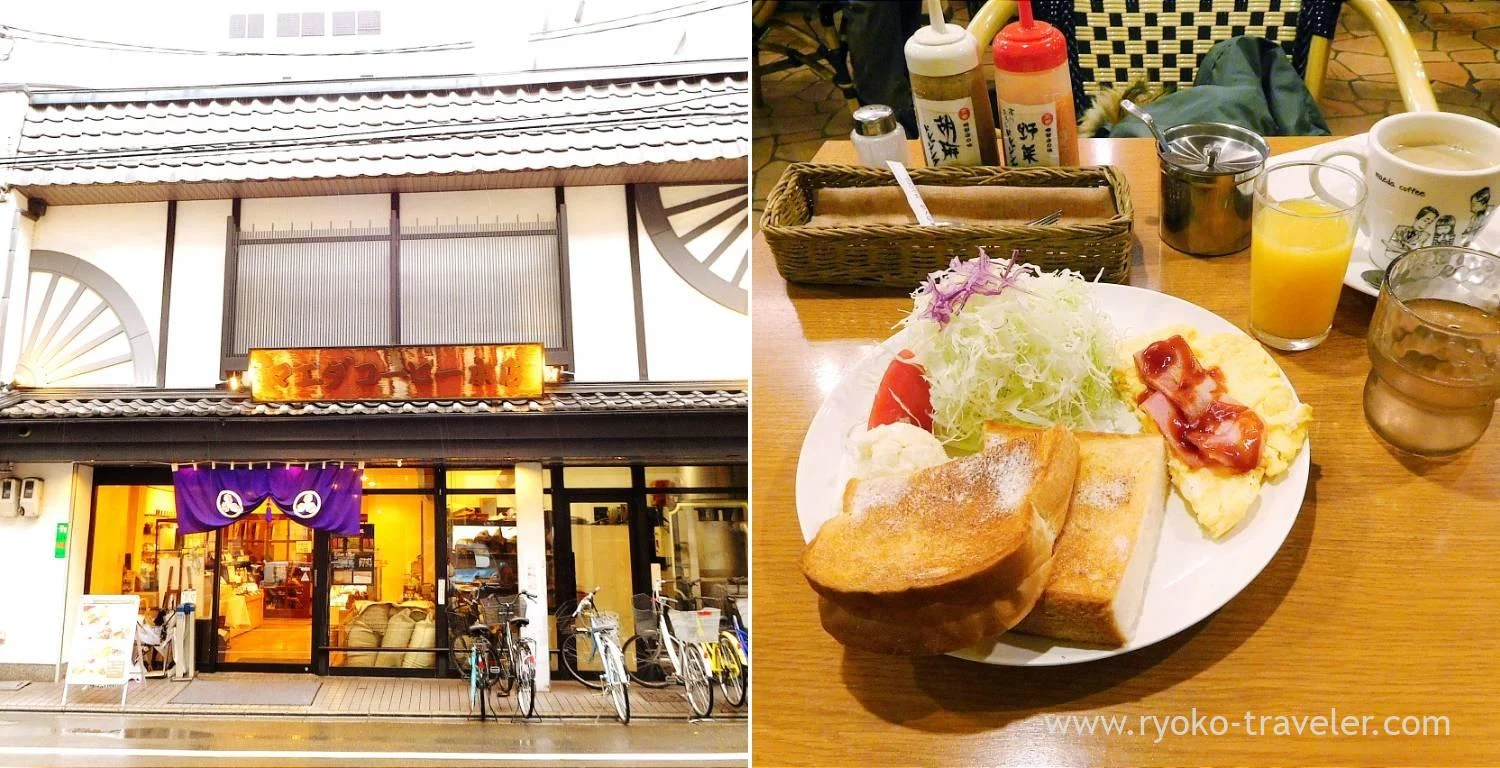
Coffee is roasted on site here, on a German Probat direct-flame machine, and the smell coming out of the roasting room is as much a part of the visit as anything in the cup. Maeda Coffee's Muromachi branch has been the company's main shop in central Kyoto since 1981, and the building was a kimono and textile wholesaler before it became a coffee shop, so the room carries a layer of Kyoto commercial memory underneath the kissaten. That is the argument for coming: a classic coffee house woven into everyday city life rather than a novelty. Tabelog 100 listed it at number 78 in 2022.
A hundred seats and an all-day rhythm
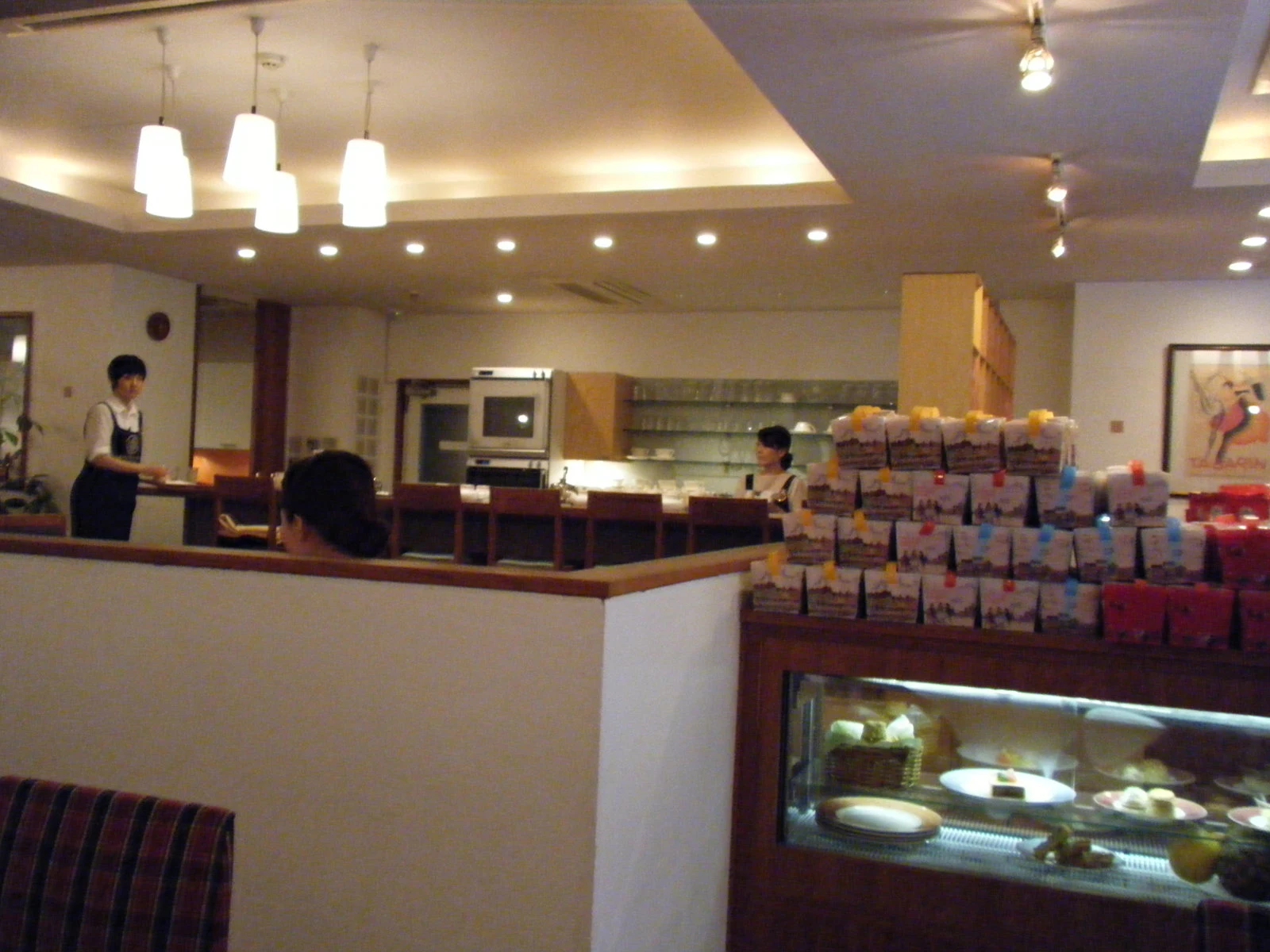
Scale is what makes this one work as a daily café rather than a destination. With 100 seats it absorbs coffee drinkers, lunch guests, families and people stopping for something sweet without anyone feeling hurried. The layout shows an older Japanese café culture in transition: smoking is still allowed, with non-smoking seating placed toward the back for families and anyone who wants it. Service is flexible rather than formal, with room for breakfast, lunch, an afternoon sweet or a long coffee break, and the central Kyoto setting keeps it full of office workers, shoppers and commuters. There is no chef's table and no tasting menu, because coffee, meals and sweets share the same everyday rhythm.
Napolitan first, then coffee and cake
For a savoury visit, start with the Napolitan, the clearly identified specialty among the meal items. Lunch sets are the other part of the menu architecture, substantial and served with a drink, which is how coffee ends up built into daytime meals rather than sold separately alongside them. Sandwiches are the lighter route. On the sweet side the shop makes seasonal cakes and pies, and a mousse wrapped in gyuhi mochi that brings a Japanese texture into a Western-style dessert. Those sweets double as omiyage, so they leave the building as often as they are eaten in it. Whatever the food, pair it with coffee from the house roast and pay attention to the aroma, because that is the through line from 1981 to now.
Tags
Frequently asked questions
What is Maeda Coffee Muromachi honten known for?
House roasting on a German Probat direct-flame machine, in a Kyoto kissaten that has been the company's main branch since 1981. The building was a kimono and textile wholesaler first, which gives the room its character, and Tabelog 100 listed it at number 78 in 2022.
What should I eat at Maeda Coffee Muromachi honten?
The Napolitan, which is the clearly identified specialty among the savoury items, or a lunch set if you want something substantial served with a drink. Sandwiches are the lighter route. For something sweet, the shop makes seasonal cakes and pies and a mousse wrapped in gyuhi mochi.
Compare nearby places
| Venue | Type | Area |
|---|---|---|
| Umezono Cafe and Gallery | Café | Nakagyo-ku |
| Cafe Karirenge | Café | Nakagyo-ku |
| Mlesna Tea House Kyoto | Café | Nakagyo-ku |
| Rokuyosha Coffee Ten | Café | Nakagyo-ku |
| Torinoki Coffee | Café | Nakagyo-ku |