Why go
The wall of tins decides the visit: French Blue, British Rose, Viennese Lemon, Fruits Garden, American Tea, Happiness Promise. Mlesna Tea House Kyoto is a Sri Lankan black tea room and a shop at once, where the cup at the table and the box for home come off the same shelf. It was ranked number 75 on the Tabelog 100 in 2025.
Sri Lankan black tea, flavoured with intent
The house style is flavour-led black tea rather than ceremony. The lineup runs from French Blue and Happiness Promise through British Rose, Viennese Lemon, American Tea and Fruits Garden to La France Cacao, white peach Earl Grey, caramel cream tea and a Kyoto shijo aroma made for this city. Fruit, flowers, herbs, citrus, coffee and cacao notes all appear, layered onto Ceylon leaf.
The origin side is taken seriously. Harvest and export conditions in Sri Lanka shape what arrives, and fresh tea comes in by air freight rather than sitting in transit. Loose leaf is sold from 150g upward, so a tea tasted at the table can go home in quantity.
A salon that works like a tea shop
This is a guided room rather than a passive counter. Guests are encouraged to ask about the teas and the house, and staff will steer a choice by aroma family, which matters when the list runs to dozens.
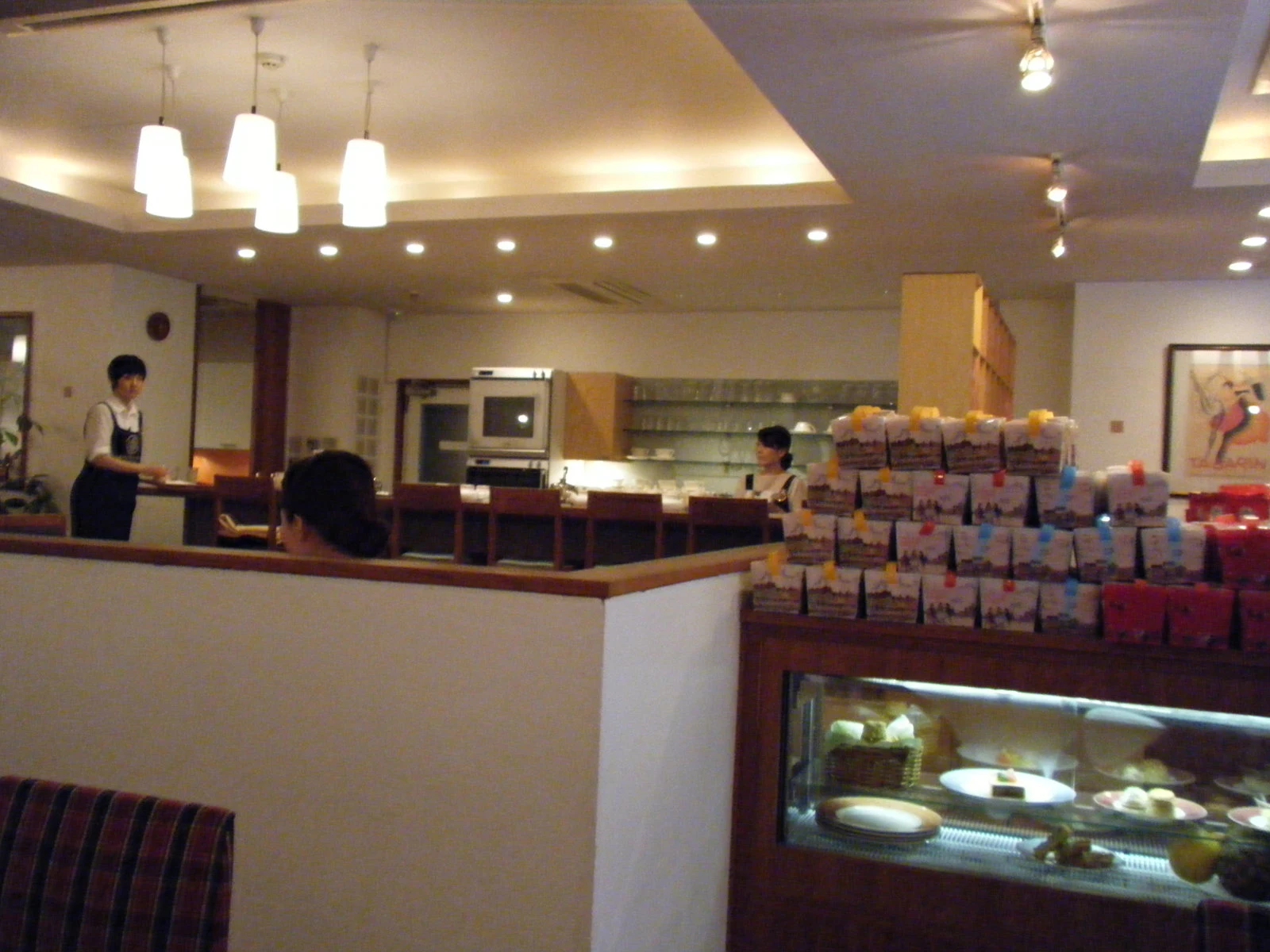
Retail shapes the atmosphere as much as the seating does. Cube boxes, assortment sets, seasonal wrapping and commemorative packages are designed to be looked at, and they fill the room. House rules keep it calm: entirely non-smoking, no pets, and families asked to keep small children from disturbing other guests. A visit can start with the packaged teas, move to a cup at the table, and end with a box for the tea drawer at home.
Choose by aroma family
Rather than hunting a single signature, pick the direction first. French Blue and Fruits Garden lean fruit; British Rose is the floral choice; Viennese Lemon brings citrus and herb; American Tea is the coffee-flavoured black tea; caramel cream tea is the dessert end; white peach Earl Grey sits between fruit and bergamot.
For something local, Kyoto shijo aroma gives the branch its own cue inside a Sri Lankan range. La France Cacao is bittersweet and fruity, and it is the one made for chilling, so it is the summer pick. If the visit is for a gift, the cube boxes and the larger assortments, including a forty-tea set, do that job better than a single tin.
Tags
Frequently asked questions
What tea should I choose at Mlesna Tea House Kyoto?
Choose by aroma family rather than hunting one signature. French Blue and Fruits Garden lean fruit, British Rose is floral, Viennese Lemon brings citrus and herb, and American Tea is the coffee-flavoured black tea. Caramel cream tea is the dessert end, and Kyoto shijo aroma is the blend made for this city.
Can I buy tea to take home?
Yes, and the shop is built around it. Loose leaf is sold from 150g upward, and the same flavours come as tea bags, cube boxes and assortment sets, including a forty-tea selection. Seasonal wrapping and commemorative packages are made for gifting, and staff will help match a tin to a taste you liked at the table.
Compare nearby places
| Venue | Type | Area |
|---|---|---|
| Umezono Cafe and Gallery | Café | Nakagyo-ku |
| Cafe Karirenge | Café | Nakagyo-ku |
| Rokuyosha Coffee Ten | Café | Nakagyo-ku |
| Maeda Coffee Muromachi honten | Café | Nakagyo-ku |
| Torinoki Coffee | Café | Nakagyo-ku |