Why go
Carrot cake and a salad plate, inside Dover Street Market
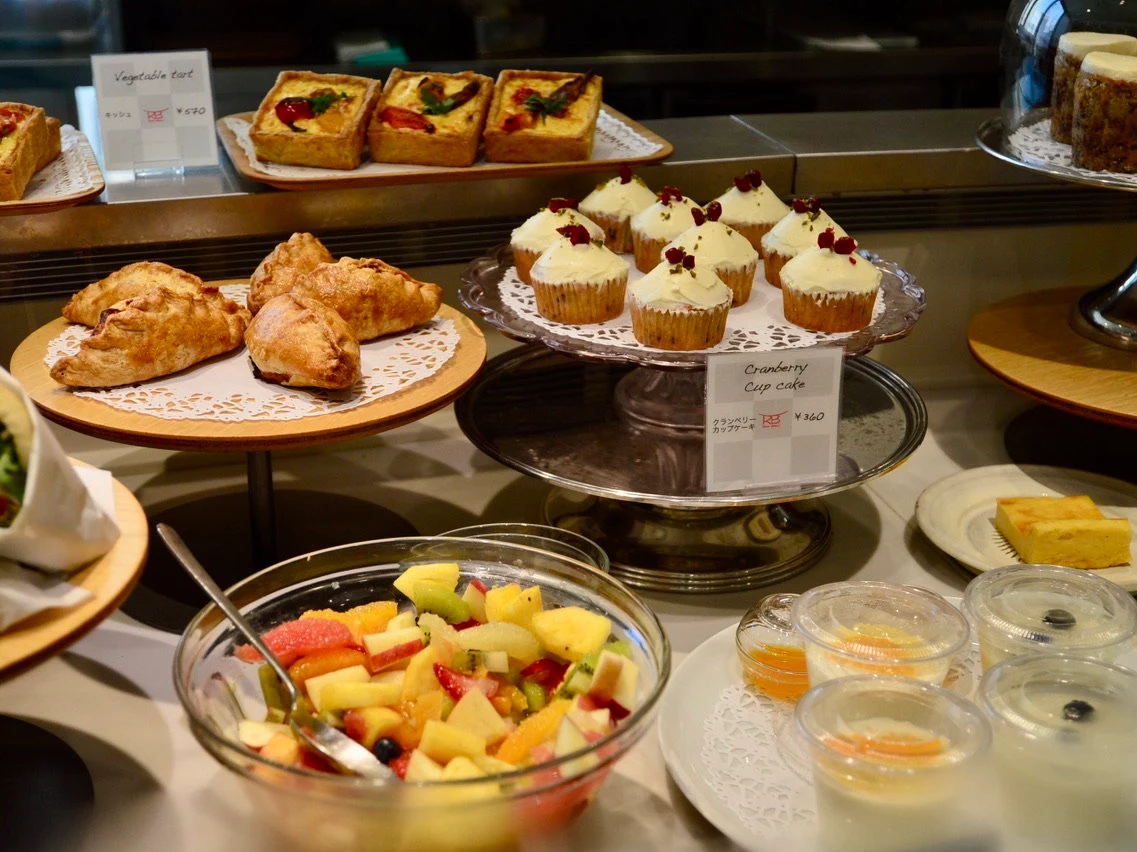
The counter at Rose Bakery Ginza runs on the short list that has followed the name since Paris: carrot cake, a salad plate, quiches and breads, made with an organic bias and sold on an upper floor of Dover Street Market Ginza. Rose Carrarini has described the intention plainly: “We wanted to create a place where people felt at home, somewhere that people came back to often and the quality of the food shone.” That is the measure to apply here. It is not a destination meal or a chef’s showcase; it is a bakery café built for people who will be back next week.
A canteen inside a luxury store
The setting does interesting work. Dover Street Market Ginza is a dense, deliberately styled retail environment, and the café inside it stays casual and canteen-like: plenty of space, daylight from the upper-floor windows, and a relaxed room that fills with shoppers rather than with people making an occasion of lunch. Ginza is one of two Rose Bakery addresses in Tokyo, alongside Rose Bakery Marunouchi, so this is a branch of a working Japanese operation rather than a one-off import. It took No. 84 on the Tabelog 100 in 2025. The appeal is directness: something lighter and less formal than a restaurant, in a district where that is harder to find than it should be.
Start with carrot cake, then decide how hungry you are
The carrot cake is the order that carries the Rose Bakery name, and it is the right first move whether you have come for a break between floors or for something closer to lunch. If you want a meal, the salad plate is the format the kitchen is built around, with quiches and breads filling the space between cake and plate. Think in bakery-café terms rather than menu terms: a cake and a coffee late in the morning, a salad plate at lunch, a slice and a pot of tea in the afternoon. The room suits all three. Ginza rewards that kind of stop, too: the district around it is dense and deliberate, and a plate of something plain halfway through an afternoon in it is a useful correction. The food here is designed to be eaten often rather than admired once.
Tags
Frequently asked questions
What should you order at Rose Bakery Ginza?
Carrot cake first, the item that has carried the Rose Bakery name since Paris. If you want a meal rather than a break, the salad plate is the format the kitchen is built around, with quiches and breads filling the gap between the two. The food leans organic and is meant to be eaten often rather than admired once.
What kind of room is Rose Bakery Ginza?
Casual and canteen-like, on an upper floor of Dover Street Market Ginza, with a lot of daylight and enough space that it reads as a break from the store rather than an extension of it. It fills with shoppers and with people who want something lighter than a full restaurant lunch.
Compare nearby places
| Venue | Type | Area |
|---|---|---|
| Juichibo Coffee Ten | Café | Ginza |
| Cafe Paulista | Café | Ginza |
| CAFE DE L’AMBRE | Café | Ginza |
| Coffee Senmon Ten Sanjikken Ginza honten | Café | Ginza |
| Blue Box Café | Café | Ginza |