Why go
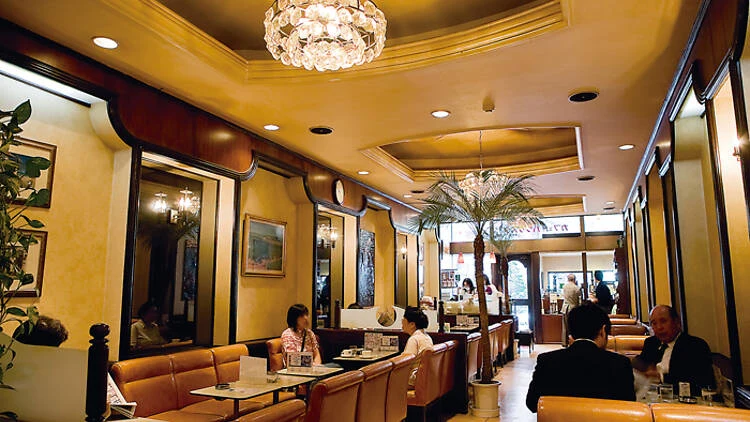
Coffee and nothing else. CAFE DE L’AMBRE has held that line in Ginza, Tokyo, since 1948: self-roasted beans, hand-stitched flannel drip, and a cup pursued without 雑味, the muddy off-flavours the shop refuses. Even the name points at the result, the clear amber colour it wants in the cup.
A kissaten that sells one thing
The clearest reason to visit is the narrowness. This is not a café built around lunch, pastry, cocktails or a wide menu, but a Ginza coffee room whose style has continued since 1948. The continuity is the story: not new formats or a rotating concept, but one product category handled with discipline for decades.
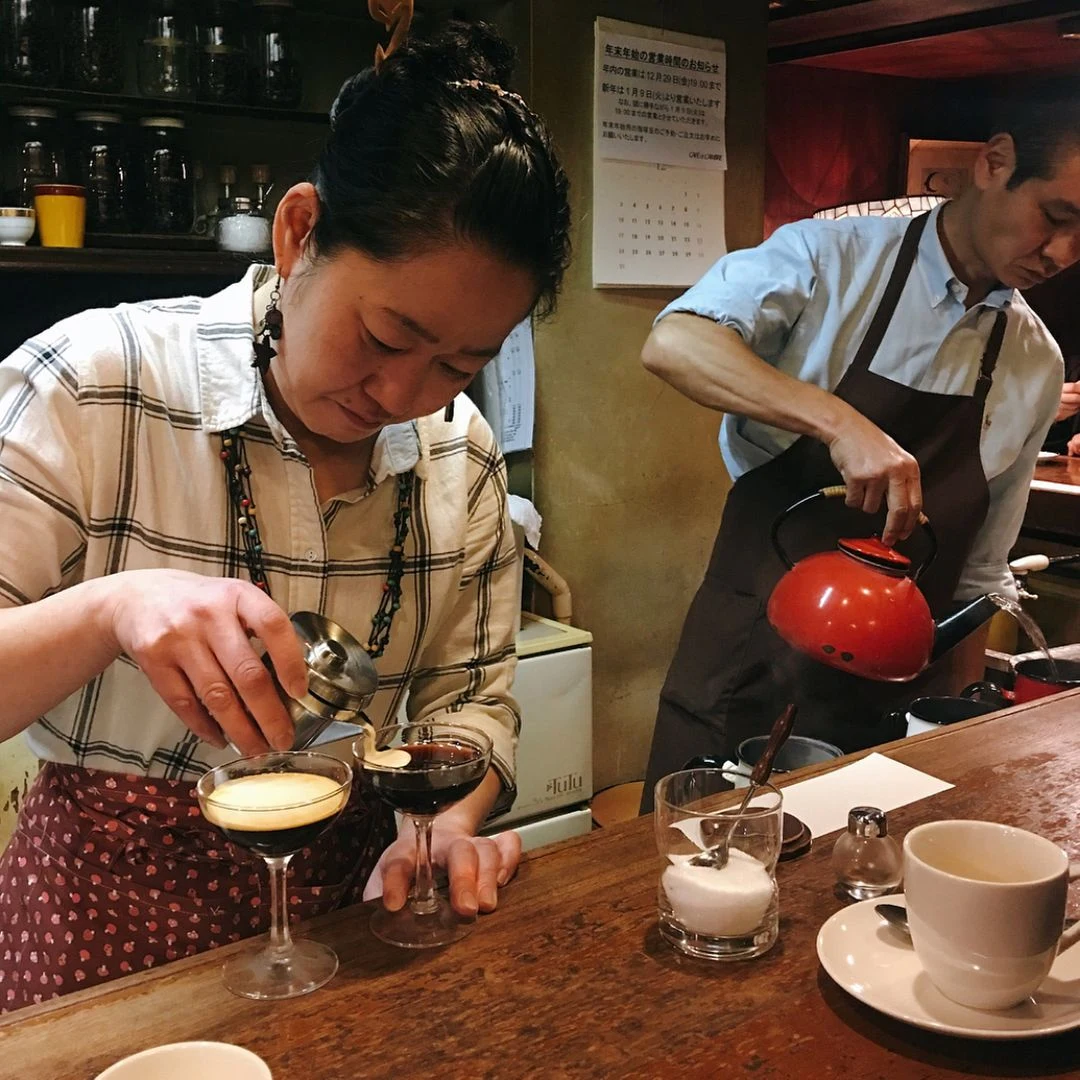
The techniques that define it are self-roasting and hand-sewn flannel drip. The craft sits in the roast and the extraction rather than in plated dishes or named chefs, and the house language is about a clean cup, free of muddiness, with an amber cast to it. That frames the experience precisely: restraint, clarity and repeated method instead of menu breadth.
Blend on one side, straight coffee on the other
The structure is simple: blend coffee and straight coffee. The house blend sits alongside origin coffees roasted in the shop, among them Brazil, Colombia and Tanzania in medium roast. Those names are the whole menu architecture, and the choice between blend and straight is the only real decision to make.
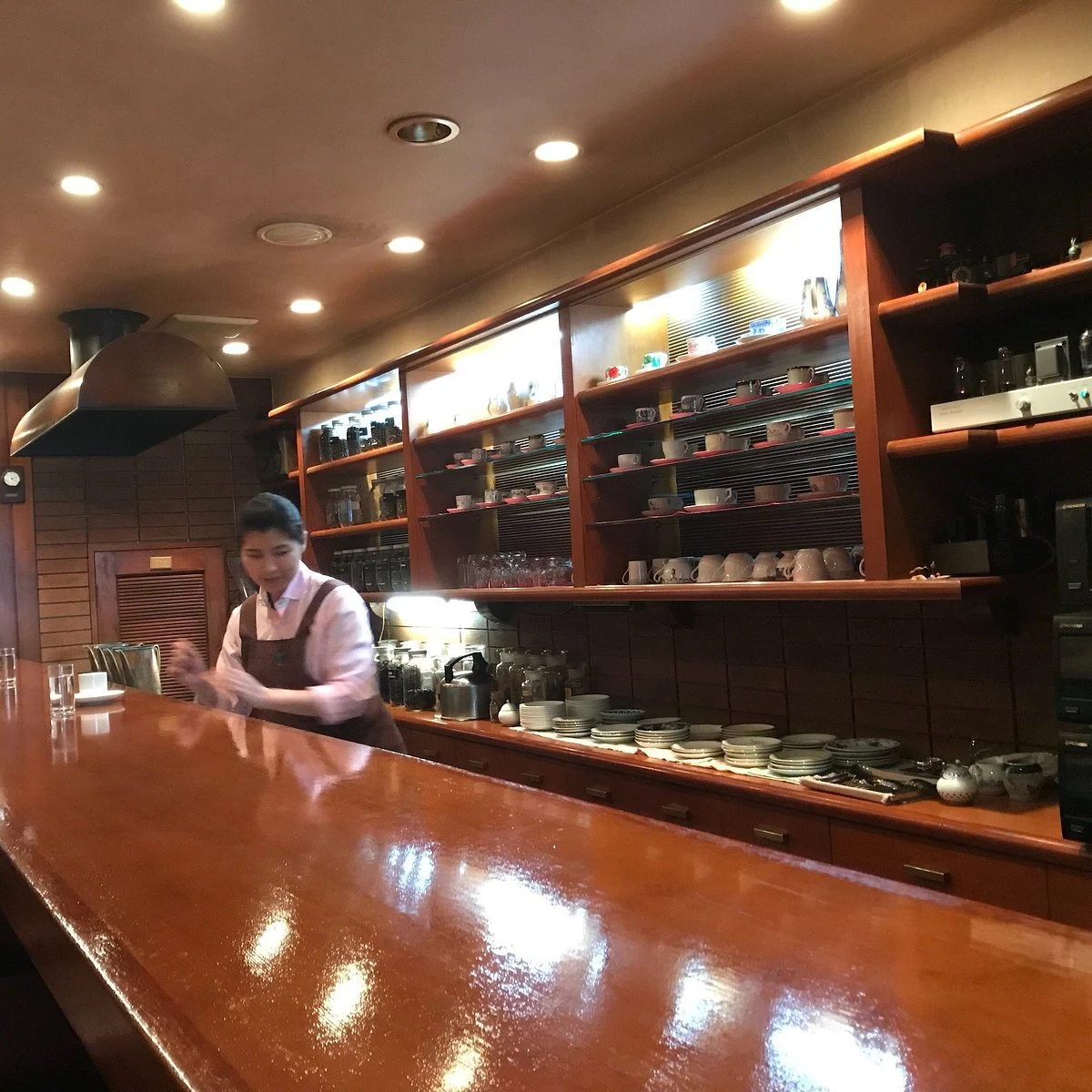
The service model is equally direct. For a straight coffee, you tell the staff the flavour you are after, bitterness or acidity or something between, and they point you to a coffee at an appropriate drinking stage. The exchange is guided rather than self-directed: instead of reading a long list, you describe a preference and let roast character and readiness do the rest.
Order the straight coffee first
For the most direct read on the place, start with a straight coffee and use that preference-based guidance. Say whether you want bitterness, acidity or another direction, and take the recommendation. Brazil, Colombia and Tanzania medium roasts are among the origin coffees the shop names, while the blend remains the other route into the house style.
Watch the flannel drip while you wait. The hand-stitched cloth places the cup in a manual brewing tradition built on control, consistency and the pursuit of clarity, and it is the reason the coffee tastes as it does rather than a piece of theatre. The blend gives one expression of the roaster’s balance; the straight coffees give a more origin-specific path. Either way the subject stays the same: self-roasted beans, flannel extraction, and a clear amber cup.
Tags
Frequently asked questions
What should I order at CAFE DE L’AMBRE?
A straight coffee. Tell the staff whether you want bitterness or acidity and they will point you to a coffee at the right drinking stage, drawn from origins including Brazil, Colombia and Tanzania in medium roast. The house blend is the other route in, and everything is self-roasted and brewed through flannel.
Compare nearby places
| Venue | Type | Area |
|---|---|---|
| Cafe Paulista | Café | Ginza |
| Coffee Senmon Ten Sanjikken Ginza honten | Café | Ginza |
| Juichibo Coffee Ten | Café | Ginza |
| Rose Bakery Ginza | Café | Ginza |
| Sumibi Baisen Coffee Rin | Café | Ginza |