Why go
Robuchon in a café and patisserie register
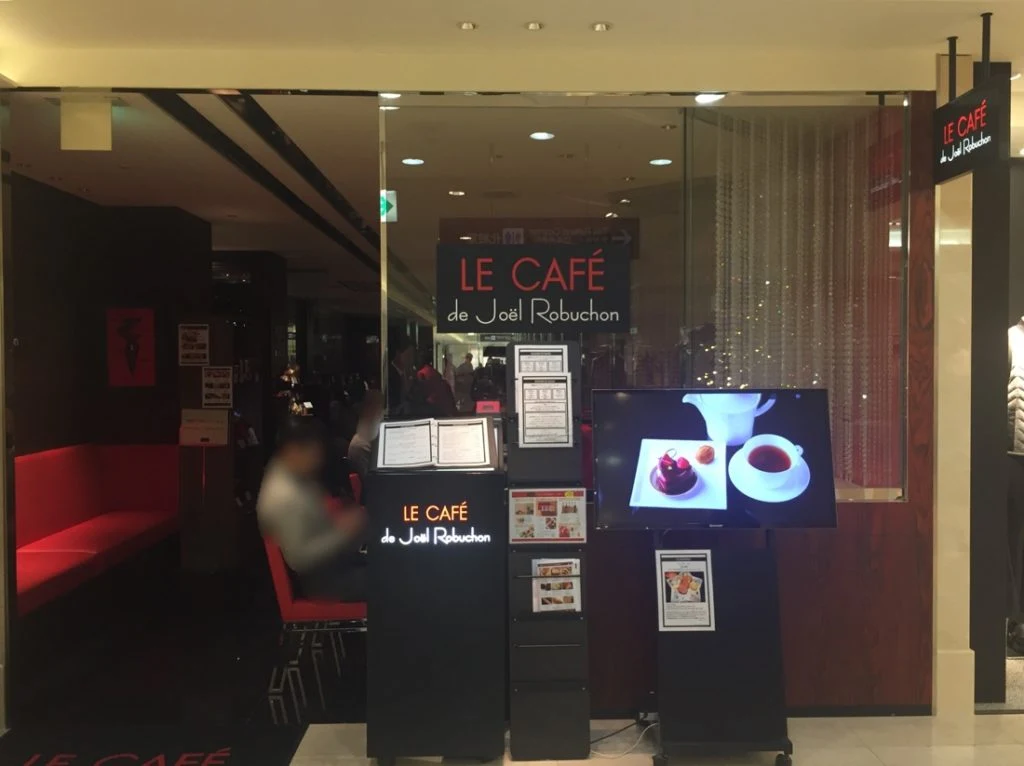
Order a galette and you get lunch. Order a dessert set and you get the reason most people come. LE CAFE de Joel Robuchon at Nihonbashi Takashimaya is the Joël Robuchon name in its café and patisserie form, with cakes, dessert sets and seasonal parfaits on one side, savoury plates such as galettes and sandwiches on the other, and course menus available for a longer sit. It is neither a cake shop alone nor a formal French dining room, and that middle position is the point.
The range means the room can absorb several kinds of visit. A galette makes a light lunch. A course menu turns the stop into a proper meal. A cake or a dessert set, taken on its own, is the version most people come for, and none of the three feels like an imposition on the others.
A casual Tokyo room for savoury plates and dessert
The mood stays approachable rather than ceremonial. Galettes and sandwiches sit alongside course menus, and the patisserie side runs to cakes, dessert sets and seasonal parfaits, so nobody has to commit to a full meal to justify a table. It is a café built to be dropped into, which is not always true of a room carrying this much name.
That split between savoury plates and patisserie is worth thinking about beforehand, because it changes the shape of the visit. One stop is built around a galette or a sandwich and finished quickly. Another is centred on a cake or a parfait and lasts as long as the coffee does.
Order from the patisserie side, or build around a galette
Start with a cake or a dessert set on a first visit. It puts the patisserie at the centre, which is where this café translation of Robuchon makes the clearest sense, and it is the least complicated way to see what the pastry section is doing.
If the day calls for something savoury, take a galette or a sandwich first and move to dessert afterwards. Seasonal parfaits change with the calendar, so they are worth a look before defaulting to the usual order. Course menus are there when the visit is meant to last longer than a coffee break, and they are the one route that turns this from a stop into a meal.
Frequently asked questions
What is LE CAFE de Joel Robuchon Nihonbashi Takashimaya known for?
It is known as the café and patisserie form of Joël Robuchon's Tokyo presence. The menu spans savoury plates such as galettes and sandwiches, full course menus, and a patisserie side of cakes, dessert sets and seasonal parfaits, which makes it usable for a light lunch or a dessert stop.
What should I order on a first visit?
Order a cake or a dessert set first. The patisserie is the clearest expression of what this café does, and a dessert set shows several things at once. If you want something savoury, start with a galette or a sandwich and move to dessert afterwards, or look at the seasonal parfaits before defaulting.
Compare nearby places
| Venue | Type | Area |
|---|---|---|
| The Peninsula Boutique & Cafe | Bakery | Marunouchi / Yurakucho |
| PATISSERIE ASAKO IWAYANAGI | Bakery | Setagaya |
| Patisserie Les Annees Folles Ebisu honten | Bakery | Ebisu |
| patisserie Paris S'eveille | Bakery | Jiyugaoka |
| Liberte Patisserie Boulangerie Tokyo honten・kichijoji | Bakery | Kichijoji |