Why go
Jinbocho shifts register quickly: university foot traffic, second-hand bookshops, curry houses, office workers cutting through side streets, and readers who know how to spend an hour with a cup. Here, the cafe is less stage than pause point. Kanda Coffee fits the neighbourhood’s scale: compact, direct, and built for people who want coffee to anchor a morning or break up a bookshop circuit, not perform as a destination ritual.
Tokyo cafe culture is often framed through extremes: immaculate kissaten nostalgia on one side, design-forward specialty counters on the other. Jinbocho’s more useful category is the working cafe, where the sequence is short, clear, and repeatable. Coffee comes first, time follows, and food or take-out supports rather than turning the visit into a restaurant occasion. That matters in Chiyoda, where the audience changes by the hour: commuters before work, students between classes, solo readers in the afternoon, and weekend visitors moving between stations and bookstores.
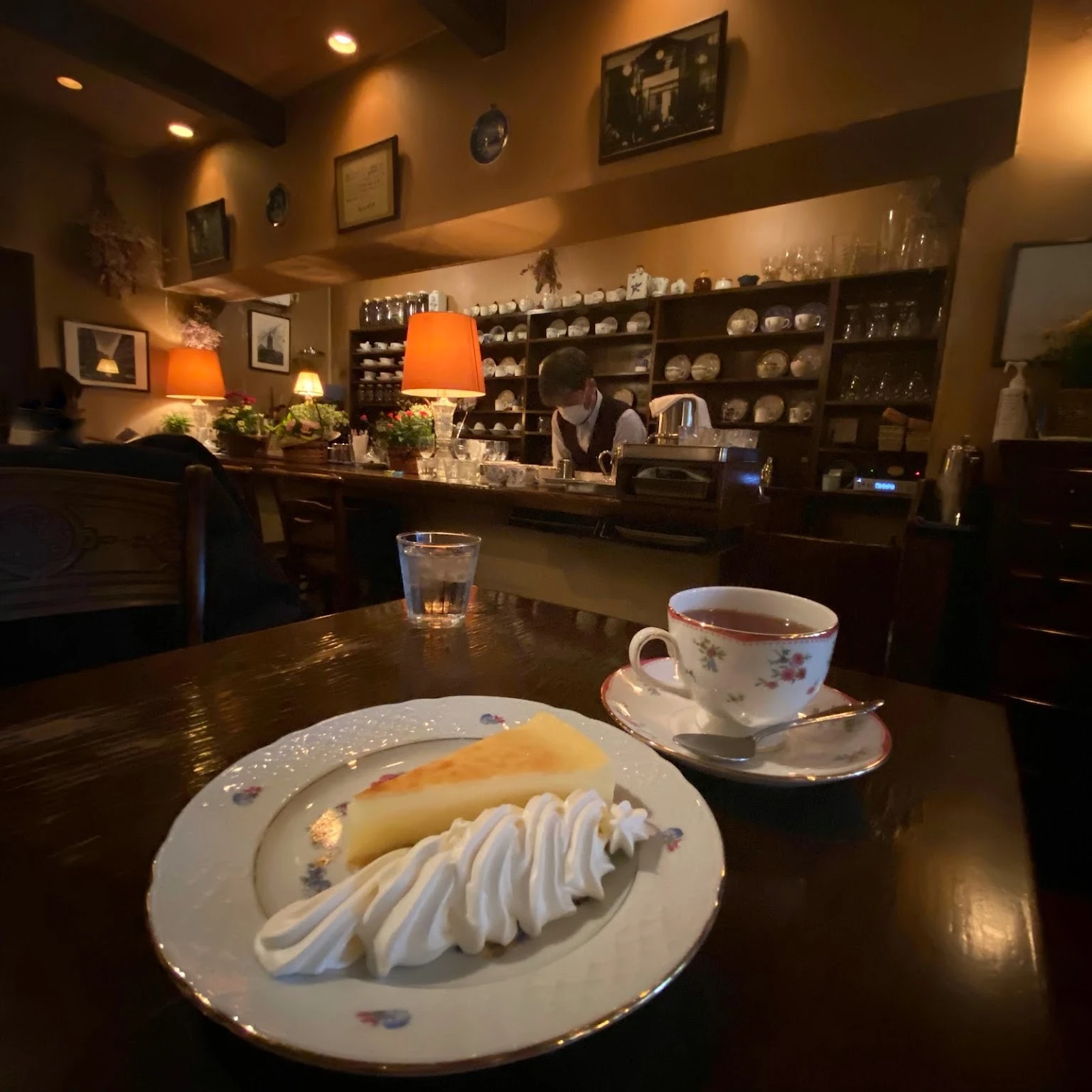
A compact Jinbocho coffee stop with a clear progression
The tasting progression here is not a multi-course restaurant arc; it is the stripped-down cafe version. The first decision is coffee, then pace of stay, then whether the visit remains a counter pause or becomes take-out for the street. That narrow sequence is part of the appeal. Tokyo has many cafes that ask for aesthetic attention before the cup arrives. This one belongs to the opposite tradition, where the small footprint and counter seating make the experience efficient without feeling anonymous.
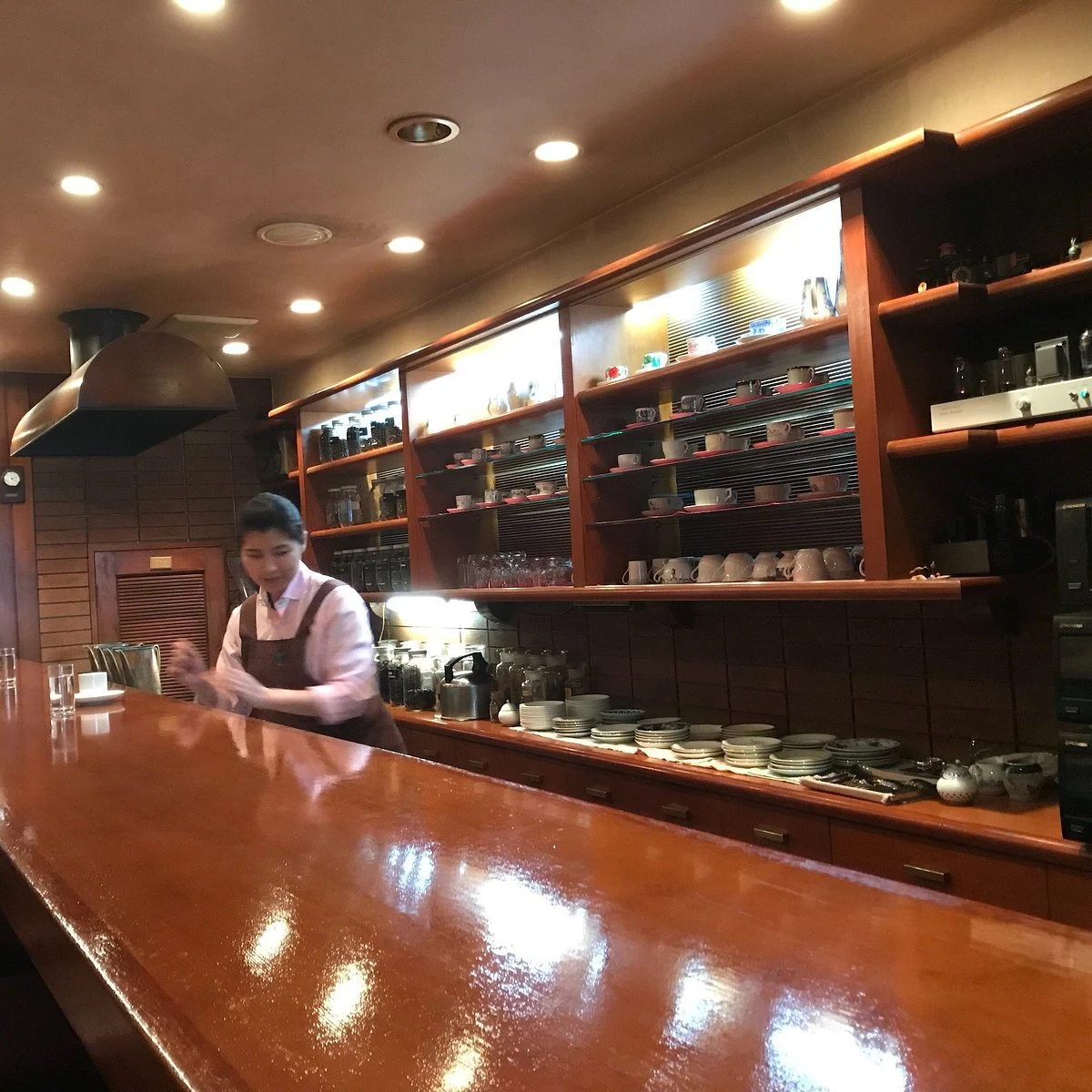
Scale matters. With 12 seats, including counter seating and a single terrace seat, the cafe sits closer to a neighbourhood counter than a lounge. It works for solo dining and brief social stops, while the mood depends on timing and turnover rather than reservation theatre. Reservations are unavailable, which suits the category: this is a walk-in cafe, not a planned tasting menu. In a city where coffee can be grab-and-go commodity or elaborate subculture, the middle ground is often where local character shows.
Tabelog’s recognition gives the place a useful external signal. Kanda Coffee was selected for Tabelog Cafe EAST 100 in 2025, with earlier Cafe 100 selections in 2021 and 2022, and carries a Tabelog score of 3.73. Those numbers do not make a small cafe a luxury venue, but they separate it from ordinary convenience in a competitive Tokyo cafe field. Recognition here tends to reward consistency, repeat use, and neighbourhood relevance as much as technical novelty.
Why Jinbocho makes this kind of cafe work
Jinbocho is one of Tokyo’s few districts where coffee still feels tied to reading culture rather than lifestyle branding. Used-book commerce, publishing offices, universities, and curry institutions create customers who value repetition: the same route from station exit to shopfront, the same table if free, the same short break before another errand. A cafe here has to absorb different speeds without losing identity.
The comparison with Tokyo’s wider dining map helps. A sushi counter such as Sushi Yoshino, a yakitori room such as Jimbocho Gokita, and a higher-spend grill format such as Tori Aroma ask diners to commit to a meal structure. A Jinbocho cafe asks for a smaller decision, but that can reveal more about the city’s daily habits. The point is not ceremony; it is frequency. Coffee becomes part of how the district functions.
The price band reinforces that role. With average spend listed under JPY 999 for both lunch and dinner periods, the cafe operates where repeat use is credible. This is not the Tokyo coffee experience built around rarity or limited allocations. It is a low-friction stop with enough recognition to justify a detour if the day already points toward Jinbocho, Kudanshita, or central Chiyoda.
For a broader day, use the cafe as a hinge rather than an endpoint. It pairs naturally with a Jinbocho bookshop route, a curry lunch nearby, or a later dinner elsewhere in Tokyo. For wider planning, Our full Tokyo restaurants guide gives the city-level restaurant frame, while Our full Tokyo bars guide, Our full Tokyo hotels guide, Our full Tokyo experiences guide, and Our full Tokyo wineries guide place the stop inside a longer itinerary.
How to read the room, not just the cup
The strongest way to assess a Tokyo cafe is to see how it handles pressure. Small rooms reveal operational discipline quickly: counter seats, take-out flow, payment speed, smoking policy, and whether a solo guest can enter without every visit becoming a wait. Kanda Coffee’s non-smoking room, take-out service, and broad payment options make it practical without stripping away Jinbocho’s slower cafe rhythm.
There is restraint in what the venue does not ask of the guest. There is no chef mythology to decode, no tasting-menu language, no hotel-lobby polish. The value is a short progression executed in a district that rewards small habits. In EP Club terms, this is a cafe to understand as part of Tokyo’s everyday food culture, not as a trophy stop. Its awards history gives the trust signal; Jinbocho gives the reason to care.
If the day calls for a larger Tokyo sequence, contrast helps. A quick cafe stop can precede casual dining at 3 Chome no Curry Ya San, a visual cafe detour at 2D Cafe, or a later meat-and-fire meal at. 鮪と炭火焼き うお炭 秋葉原店. More structured dining threads might run through 12/10 Shinjuku ten or 124. KAGURAZAKA (Yakitori). Outside Tokyo, similar category shifts show up at -Grilled beef Sukiyaki- KAMAKURA TANUKIAN 鎌倉 たぬき庵 in Kamakura,.cafe in Osaka,.know in Kumamoto, (Shoku) Vietnam in Kawasaki, [Curry Senmon Ten] Maruyama Kyoju. in Sapporo, [ki:] in Kyoto, Jōdo Saké Bar in Los Angeles, and Onigiri Time in Pasadena.