Why go
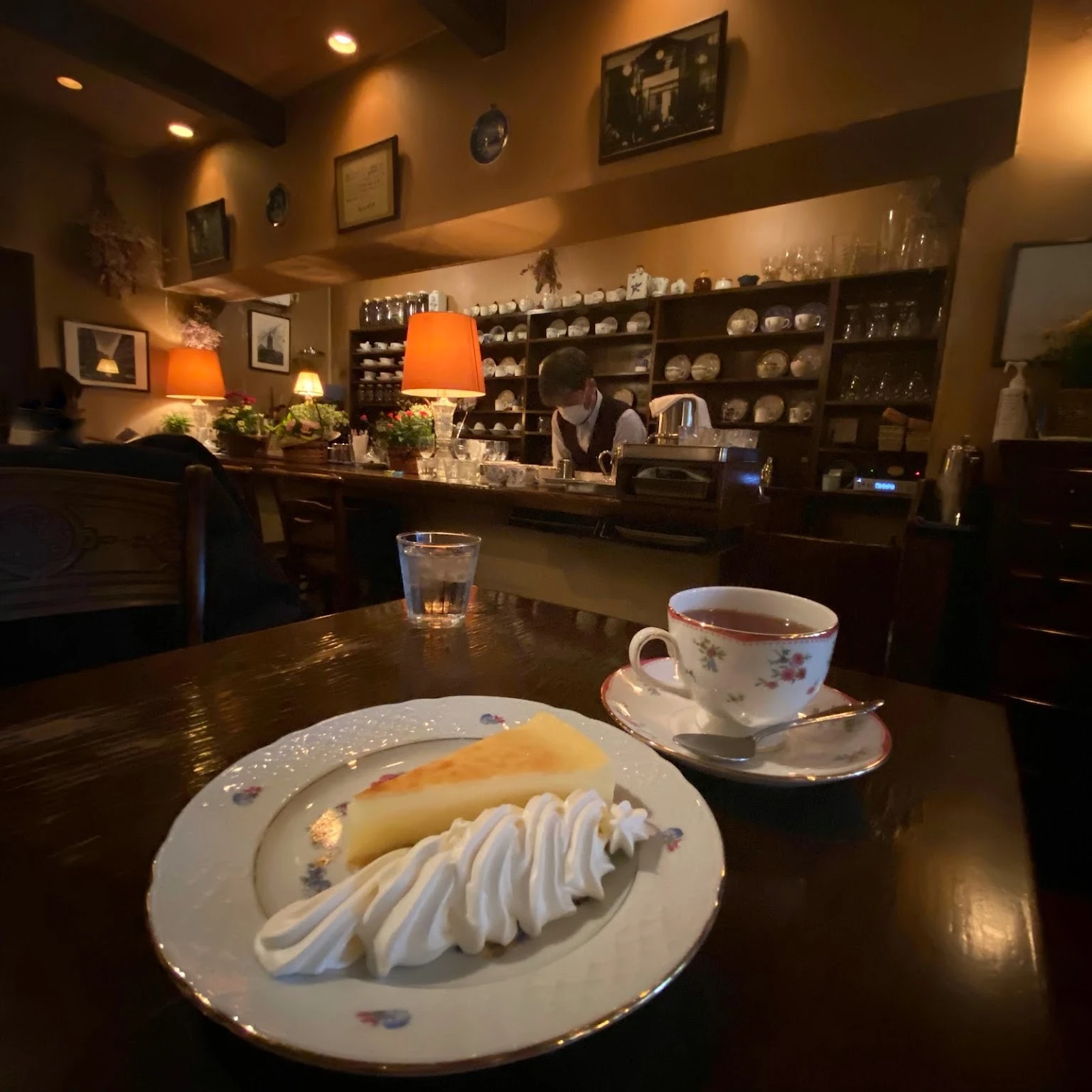
Approaching Kanda Sudacho, the city changes register. The station-side rush of Kanda and Awajicho gives way to older commercial blocks where small restaurants, curry counters, soba shops, and kissaten still fit into the working day rather than the dinner itinerary. Here, coffee is not globalised design language. It is a pause with rules: limited seats, daytime service, no smoking, and a room for people who know why they came.
Tokyo’s kissaten tradition sits apart from the city’s third-wave coffee boom. Newer cafés foreground origin, extraction method, and barista vocabulary; older rooms operate through continuity, quiet, and repetition. Takayama Coffee sits in the latter camp. Its selection for Tabelog’s Kissaten 100 in both 2021 and 2022 matters because that list separates old-school Japanese coffee shops from broader café culture, placing the address in a category where consistency outweighs novelty.
Kanda's kissaten circuit rewards patience over spectacle
Kanda and Awajicho suit this kind of room. The area has long supported compact specialist addresses: narrow menus, short service windows, and a clientele that treats lunch, coffee, and a solo seat as part of the workday. Within Tokyo, that creates a different rhythm from Shibuya’s trend-cycle cafés or Ginza’s polished counters. The value is not maximal choice; it is a format that has resisted becoming lifestyle content.
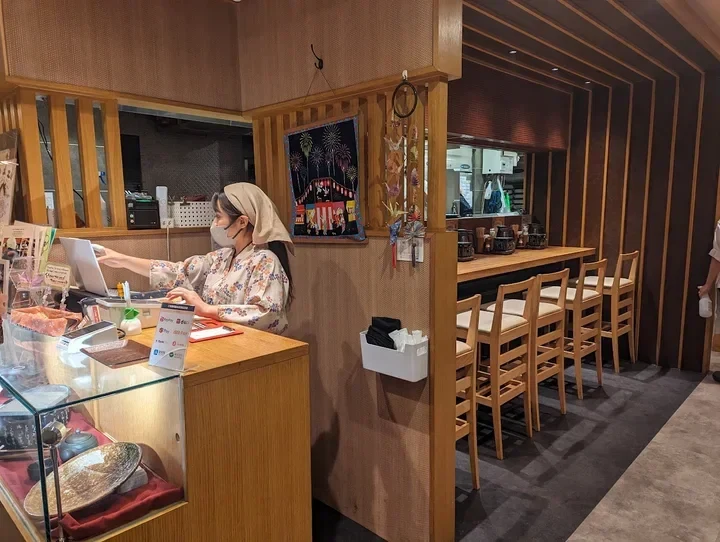
Takayama Coffee is categorised as a kissa and café, and the distinction matters. A kissa, in Tokyo terms, is closer to a coffee salon than a casual espresso stop. The room is modest, with 20 seats split between two counter seats and 18 table seats, keeping the scale intimate without becoming a reservation-only performance. The venue is also listed as solo-dining friendly, useful in a city where the strongest small-format food and drink rooms often work well for one person.
The editorial point is not that this coffee bar competes with cocktail-level technicality or wine-list depth. It is almost the opposite. In a city increasingly fluent in provenance-driven drinks programmes, the kissaten remains a curated cellar of habit: house preferences, fixed routines, a specific pace of service, and a narrow field of choices. The curation is not displayed through a long list; it is felt through what the room chooses not to expand.
The appeal is old Tokyo discipline, not café abundance
Many international travellers arrive in Tokyo expecting coffee to mean either convenience-store precision or minimalist specialty cafés. The kissaten layer requires another reading. These rooms preserve a mid-century idea of coffee as an adult public interior, closer in spirit to a bar at midday than a takeaway counter. The appeal lies in measured service, a controlled environment, and permission to sit quietly.
That control shows in the operating details. The room is non-smoking, private rooms are unavailable, and private use is not part of the format. Payment is cash-only, with credit cards, electronic money, and QR code payments not accepted. Children under 12 are not allowed, and school uniforms are not permitted. These rules may sound severe to visitors used to flexible café culture, but in Tokyo they often mark a venue protecting a settled atmosphere rather than chasing volume.
Price places the experience in a specific bracket. The listed average price runs to JPY 999, while review-based spending is JPY 1,000 to JPY 1,999. Against the Kanda comparison set, that keeps it below casual meal addresses such as THE GRABBER hamburger pub, Nemurian, Tonkatsu Yamaichi, and Topca Kanda honten, and closer to low-priced specialist stops such as Fukuo Shoten. In practical terms, the commitment is less budget than timing: the room works for a focused daytime stop, not a long evening plan.
For readers mapping a wider Tokyo day, this address pairs naturally with a compact neighbourhood itinerary rather than a cross-town detour built around a single table. Nearby planning can sit alongside broader restaurant notes in Our full Tokyo restaurants guide, while travellers building a longer city stay can cross-reference Our full Tokyo hotels guide, Our full Tokyo bars guide, Our full Tokyo wineries guide, and Our full Tokyo experiences guide. The point is sequencing: Kanda rewards walking, short stops, and category-specific rooms.
How to place it in a Tokyo food day
Takayama Coffee works as a corrective to over-scheduled Tokyo dining. The city can push travellers toward hard-booked sushi, tasting menus, and late-night bars; the kissaten reminds them that some of Tokyo’s sharper pleasures happen before evening, at smaller prices, and with fewer moving parts. Reservations are unavailable, so the decision is immediate: go during service, accept the room’s limits, and have a second plan if seats are full.
That broader plan might include casual and specialist addresses rather than only formal dining. In Tokyo, the useful contrast is between quick-service cafés such as 2D Cafe, curry-focused rooms like 3 Chome no Curry Ya San, grilled and izakaya-leaning meals such as. 鮪と炭火焼き うお炭 秋葉原店, polished neighbourhood formats like 12/10 Shinjuku ten, and yakitori-specific addresses including 124. KAGURAZAKA (Yakitori). Read together, they show why Tokyo is better understood by format than by a single hierarchy.
Travellers extending the same logic beyond Tokyo can trace similar specialist patterns elsewhere: -Grilled beef Sukiyaki- KAMAKURA TANUKIAN 鎌倉 たぬき庵 in Kamakura for beef sukiyaki,.cafe in Osaka for café culture outside the capital,.know in Kumamoto, (Shoku) Vietnam in Kawasaki, [Curry Senmon Ten] Maruyama Kyoju. in Sapporo, and [ki:] in Kyoto. Even outside Japan, concise Japanese formats have translation points, from Jōdo Saké Bar in Los Angeles to Onigiri Time in Pasadena.
The verdict is simple: this is not the address for travellers seeking a maximal café menu or a scene-driven room. It is for readers who understand that Tokyo’s older coffee culture is built on compression: few seats, a daytime rhythm, clear house rules, and recognition history within the kissaten category. In Kanda, that restraint is the point.