Why go
Hayashi rice is the order
Hayashi rice is what people come to M & C Cafe Marunouchi oazo for: beef and onions in a dark, wine-deep sauce poured over rice, and a dish the Maruzen bookshop has claimed as part of its own history for well over a century. Order it before you look at anything else.
The rest of the list stays in the same register. Curry rice, the hamburger steak set and omurice, the thin omelette laid over fried rice, are the other yoshoku plates to know. Yoshoku is the Japanese reworking of Western dishes that took hold from the late nineteenth century, and this is one of the rooms where it never went out of style. It is comfort food with a long memory, and hayashi rice is its clearest example: European technique filtered through a Japanese kitchen until it stopped reading as foreign at all.
A café on the bookshop floor
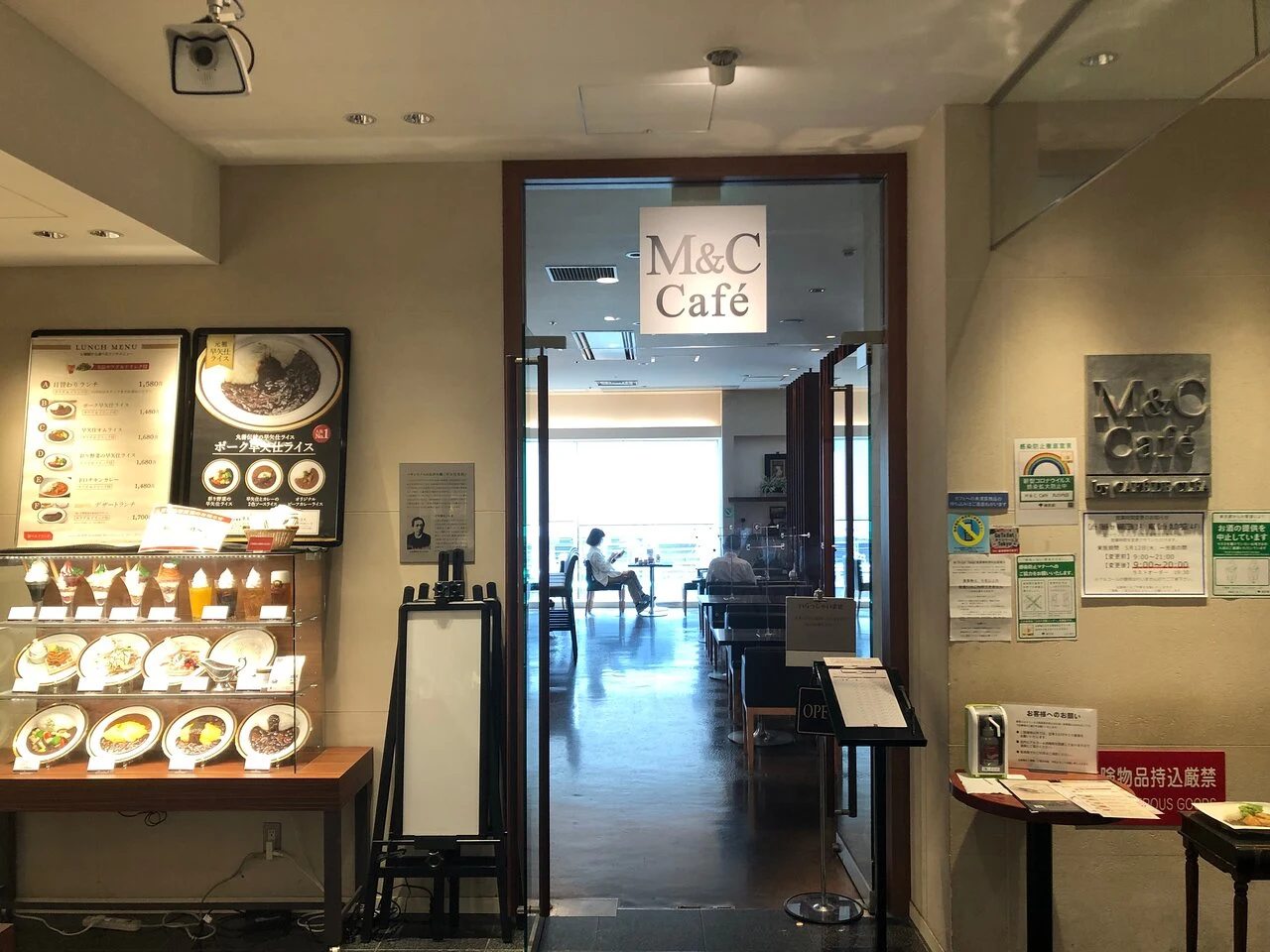
The café sits inside the Maruzen bookshop in Marunouchi Oazo, with shelves and books in view from the tables. That setting explains the pace of the place: people arrive with something to read and stay through a full plate rather than eating and leaving, and nobody minds a book propped against the water glass.
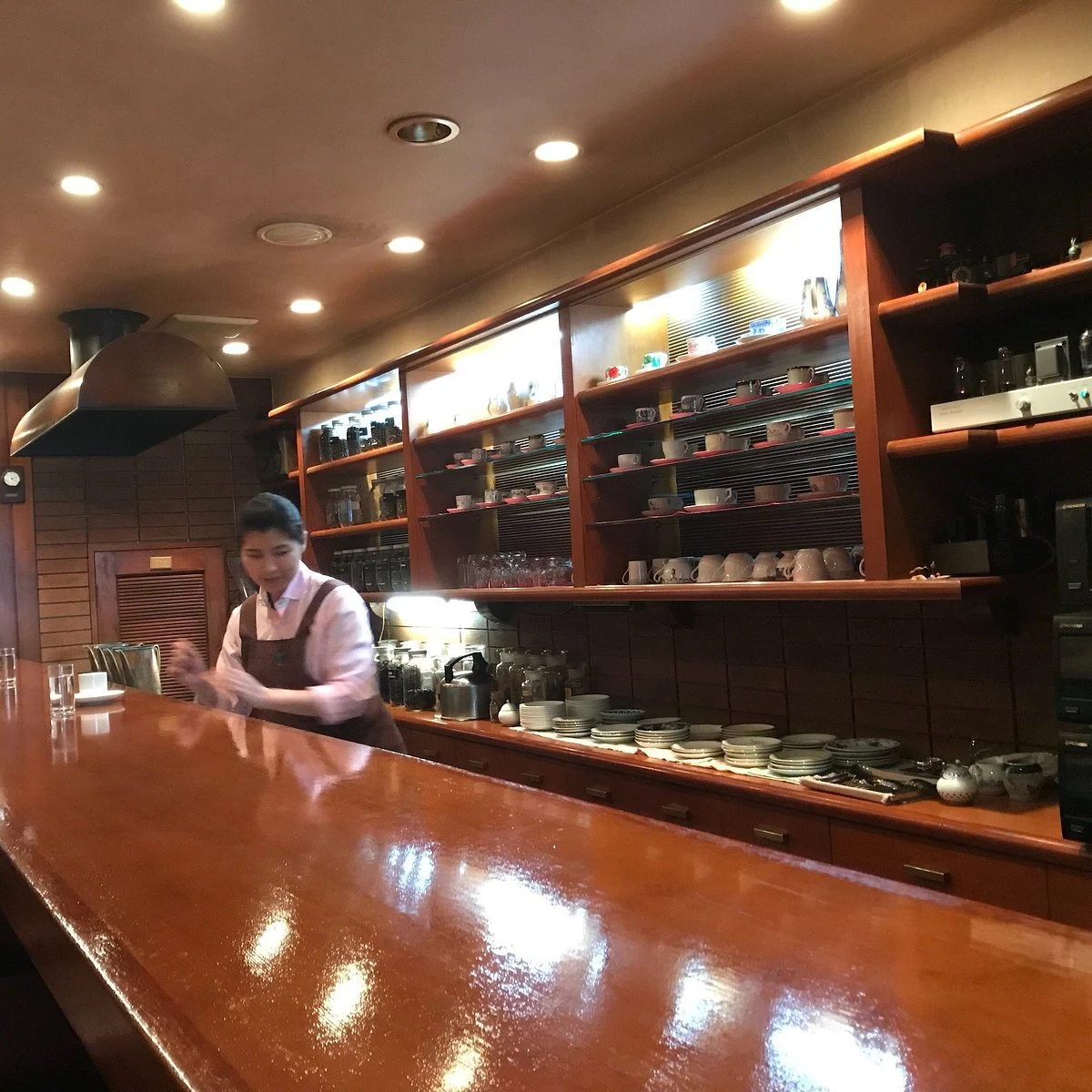
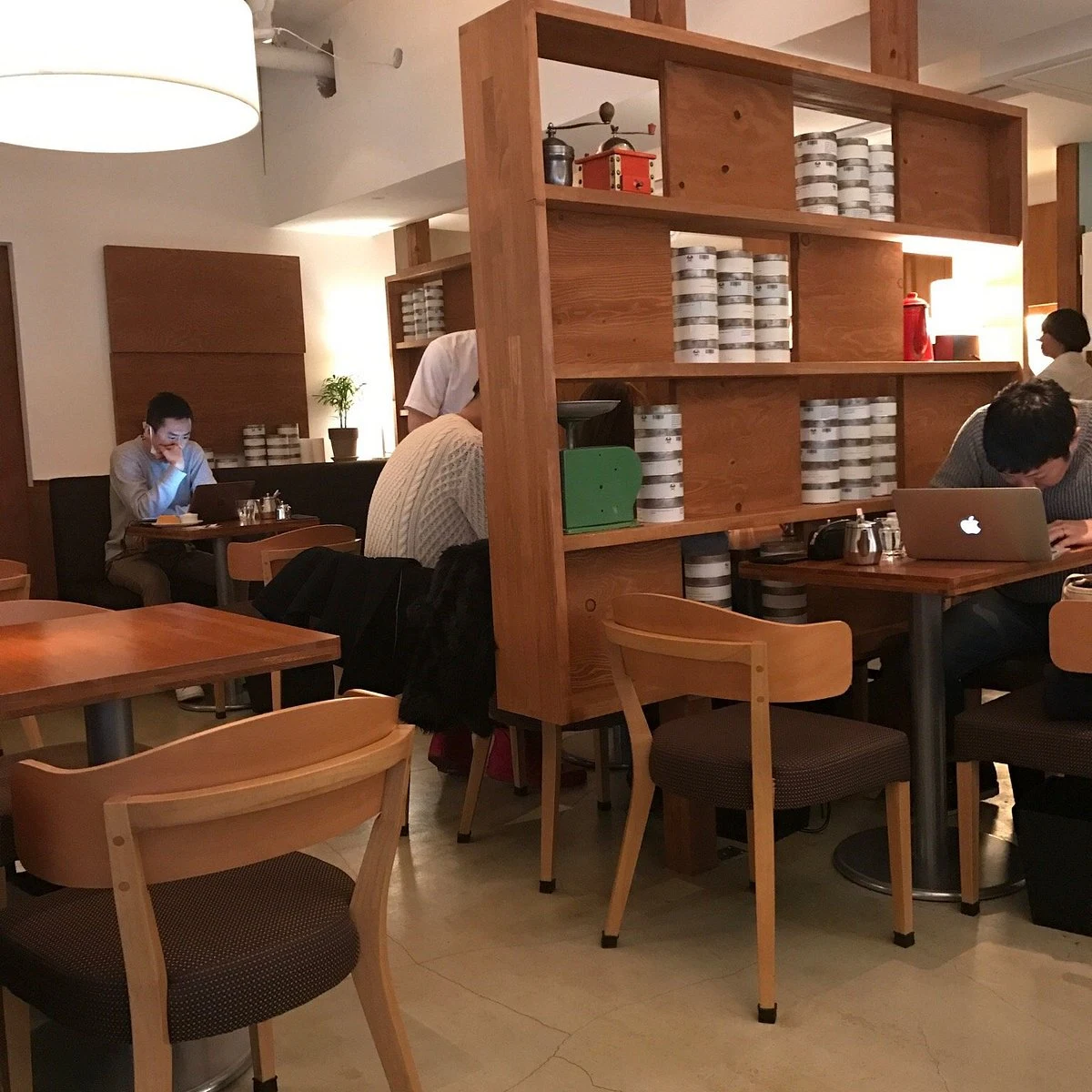
The room itself is plain in the best sense. Bright indoor lighting, simple wooden tables and a classic coffee-shop feel, closer to an old kissaten than to a modern café, and untroubled by whatever design is fashionable outside the doors.
Marunouchi rhythm
Marunouchi Oazo is a large mixed-use complex in a polished business district, so the café sits in a flow of office workers, shoppers and travellers moving through the Tokyo Station area. It absorbs all three without changing character, which is the useful thing about a room this settled.
Use it as a pause rather than a destination: a plate of hayashi rice and a coffee between meetings, errands or trains. The distinction here is not a chef or a tasting menu but the combination of an old yoshoku repertoire, a bookshop floor and a central Tokyo position that makes stopping easy. It is also one of the simpler lunches to manage in Marunouchi without planning ahead, which counts for a great deal in the streets around Tokyo Station at midday.
Tags
Frequently asked questions
What should I order at M & C Cafe Marunouchi oazo?
Order the hayashi rice, beef and onions in a dark, wine-deep sauce over rice, which is the dish tied most closely to the bookshop the café belongs to. Curry rice, the hamburger steak set and omurice are the other yoshoku plates worth knowing if you are ordering for a table.
What is yoshoku, and why does this café serve it?
Yoshoku is the Japanese reworking of Western dishes that took hold from the late nineteenth century, hayashi rice and omurice among them. This café keeps that repertoire on a bookshop floor in Marunouchi, where the plates have stayed unchanged long enough to become the reason people keep coming back.
Compare nearby places
| Venue | Type | Area |
|---|---|---|
| Rose Bakery Marunouchi | Café | Marunouchi |
| Pâtisserie Sadaharu AOKI | Bakery | Marunouchi |
| Juichibo Coffee Ten | Café | Ginza |
| Coffee Senmon Ten Sanjikken Ginza honten | Café | Ginza |
| Kanda Coffee | Café | Kanda |