Why go
Kyoto’s grand-hotel cafes occupy a different rhythm from the city’s narrow tea rooms and counter restaurants. The room is broader, the service cadence less hurried, and the menu language often borrows from Europe while staying calibrated to Japanese expectations around portion, presentation and seasonality. cafe LEC COURT belongs to that lineage: a hotel restaurant setting where cafe, European, side-dish and delicatessen categories overlap rather than compete.
That hybrid category matters in Kyoto. The city’s dining reputation is often reduced to kaiseki formality, soba craft and confectionery ritual, yet its daily eating culture also depends on adaptable rooms that work for light meals, afternoon conversation, family use and take-out. A Tabelog Cafe WEST 100 selection in 2025 gives cafe LEC COURT a useful external signal in a category that rarely receives the international attention granted to sushi counters or ryotei dining rooms.
European cafe grammar, Kyoto pacing
The editorial interest here is not a chef-driven manifesto. It is the way Kyoto absorbs imported formats without surrendering local tempo. European cafe technique in Japan often shows up through composed deli plates, baked goods, salads, sandwiches, soups and sweets, but the successful versions are less about imitation than control: cleaner portions, quieter seasoning, and a service model that lets the room function across several parts of the day.
cafe LEC COURT is listed across cafe, European, side dishes and delicatessen, with a health-and-wellness menu noted among its food attributes. That combination places it closer to the urban hotel-cafe tradition than to Kyoto’s specialist kissaten culture. The distinction is useful for visitors planning meals around the city’s heavier dining commitments. A cafe like this can fill the space between a morning temple route, a late kaiseki booking, or a shopping day around the city center without asking for the same emotional or financial bandwidth as a full tasting-menu restaurant.
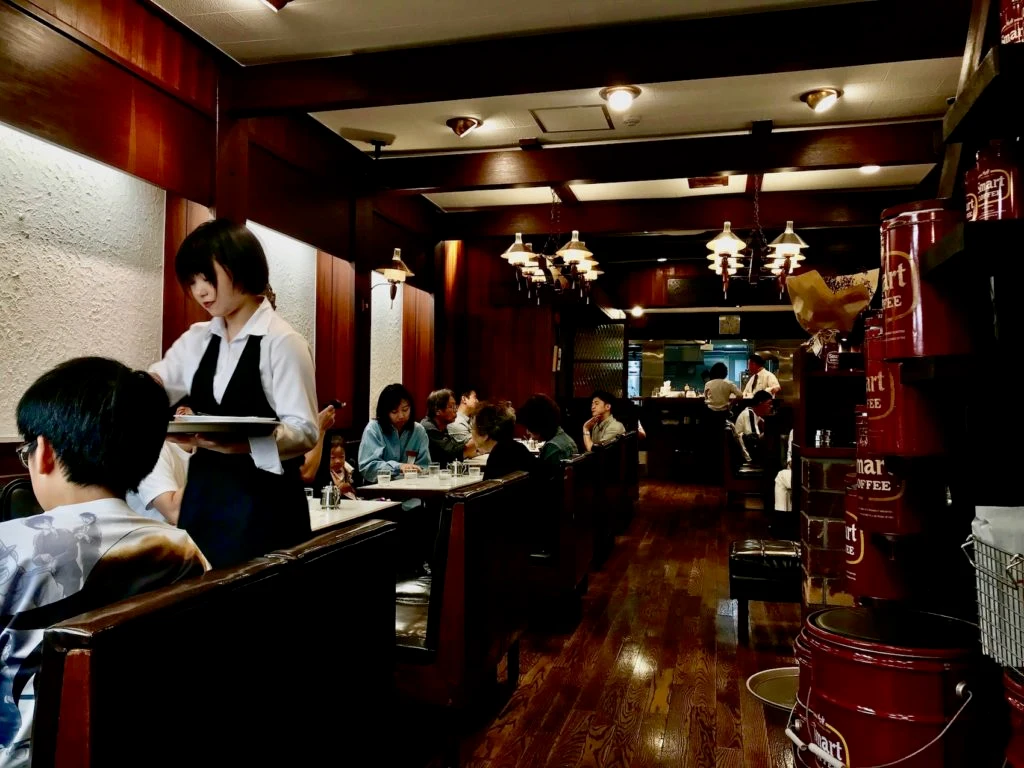
Kyoto’s cafe scene is broad enough to make comparisons slippery. Some addresses lean into roasted coffee and sweets, others into inherited confectionery, and others into contemporary lunch plates. For a more granular read on the city’s restaurant range, Our full Kyoto restaurants guide is the better map. Within that wider field, cafe LEC COURT’s advantage is format discipline: hotel infrastructure, a 90-seat room, non-smoking policy, sofa seating, children welcome, and take-out service point toward reliability rather than scarcity theater.
Nakagyo-ku's useful middle ground
Nakagyo-ku is where Kyoto’s civic, commercial and hotel life compresses into a walkable central district. It is not the hushed east-side temple itinerary, and it is not only the department-store orbit around Shijo. The area supports a practical dining layer: places that work for meetings, family meals, solo pauses and multi-stop days. That makes the cafe category more important than it first appears.
The nearby competitive set shows how varied Kyoto hotel and city-center dining can be. Irifune and Tokiwa point toward the traditional hotel-restaurant side of the city, while Orizzonte and Pittoresque sit closer to European dining languages; Toh-Lee represents the Chinese dining thread that has long been part of Japanese hotel gastronomy. cafe LEC COURT occupies the lighter, more flexible end of that spectrum, where the decision is less about occasion dining and more about how a traveler manages the day between planned meals.
That same logic explains why cafe recognition deserves attention. Tabelog’s Hyakumeiten lists are category-specific, and the Cafe WEST 100 selection frames this address against western Japan’s cafe field rather than against Kyoto’s formal restaurants. In a city where tourists often over-schedule elaborate meals, an awarded cafe with a broad format can be the smarter move: less ceremony, more utility, and a clearer role in the day.
Kyoto’s dining web also rewards contrast. A central cafe pause can sit beside casual city eating at 551蓬莱, contemporary local cooking at [ki:], French-inflected dining at Abbesses, or meat-focused meals such as 3TOKU6MI Shijo karasuma ten. For older Kyoto food traditions, Aburi Mochi Honke Nemoto Kazariya pulls the itinerary toward shrine-side sweets and a different sense of time.
How to use it in a Kyoto itinerary
The strongest case for cafe LEC COURT is not as a destination meal in isolation. It is a central Kyoto utility address with enough recognition to matter, especially for travelers who value calm rooms, payment flexibility and a menu that does not force a single dining mode. The 2025 Tabelog Cafe WEST 100 selection supplies the trust signal; the format supplies the reason to go.
Use it as a reset point when Kyoto’s reservations, queues and transit hops start to distort the day. The room’s scale and hotel setting make it better suited to conversation and mixed-age groups than many compact independent cafes. The absence of private rooms keeps the experience public and open, but the seating format and family-friendly note are more relevant for many travelers than a chef’s biography would be.
Readers building a wider Kyoto plan should pair restaurant choices with the city’s hospitality and drinking circuits: Our full Kyoto hotels guide, Our full Kyoto bars guide, Our full Kyoto wineries guide and Our full Kyoto experiences guide help separate central convenience from destination-led planning. For broader Japan context, compare how casual formats shift by city through.cafe in Osaka,.know in Kumamoto, (Shoku) Vietnam in Kawasaki, [Curry Senmon Ten] Maruyama Kyoju. in Sapporo,. 鮪と炭火焼き うお炭 秋葉原店 in Tokyo and -Grilled beef Sukiyaki- KAMAKURA TANUKIAN 鎌倉 たぬき庵 in Kamakura. The Japanese cafe and casual-dining conversation even travels abroad in focused ways, visible at Jōdo Saké Bar in Los Angeles and Onigiri Time in Pasadena.
The critical read is simple: cafe LEC COURT is for travelers who want Kyoto’s European-influenced hotel-cafe mode rather than another high-friction reservation. It is not the city’s ceremonial face, and that is the point. Kyoto also needs rooms that make the day easier.