Why go
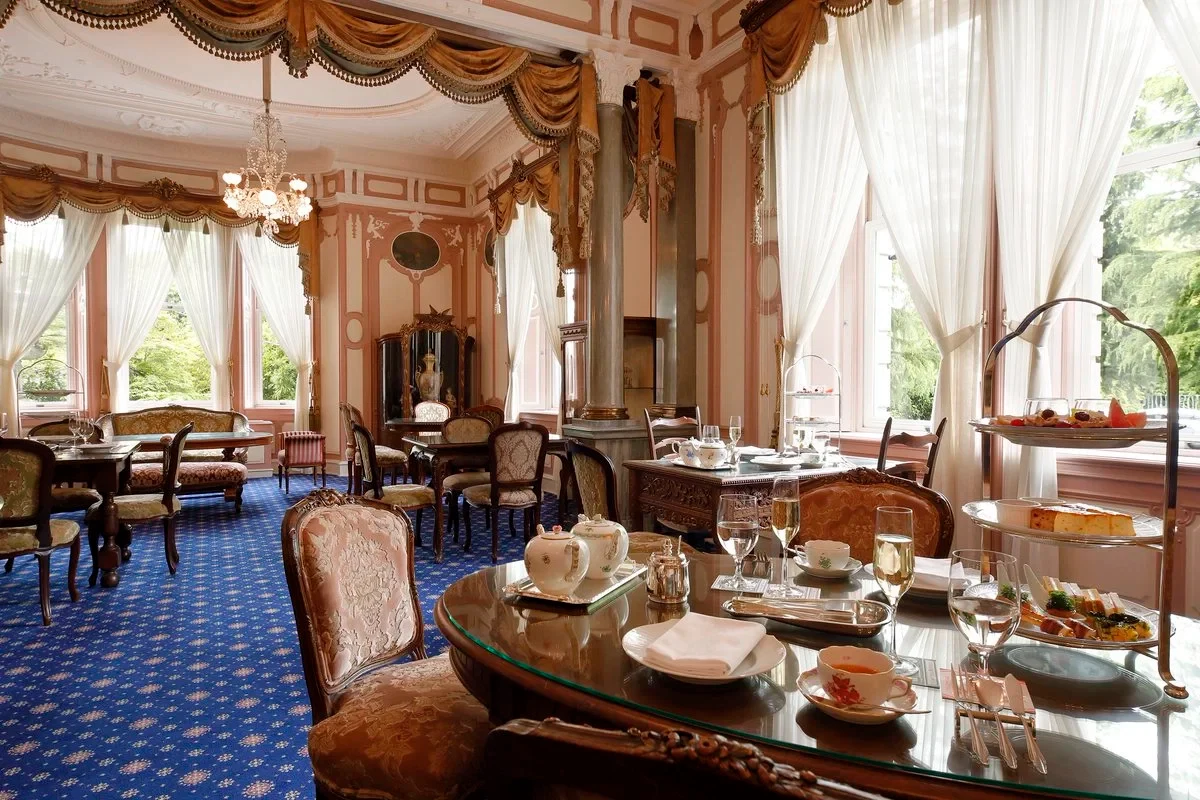
Approaching the former Murai family villa beside Maruyama Park shifts Kyoto’s café conversation away from machiya minimalism and toward Meiji-era cosmopolitan display. The building was completed in 1909 for tobacco magnate Yoshihira Murai, when Kyoto’s elite were absorbing Western architecture, salon culture, and hotel-style hospitality without surrendering the city’s appetite for ceremony. That tension is the point: Dessert Cafe Chourakukan is not simply a place for cake, but a surviving room in Kyoto’s long argument between imported form and local ritual.
Kyoto’s sweet culture is often framed through wagashi, tea schools, and temple approaches, yet the city also has a serious history of Western-style pastry rooms. The café-and-cake category here works differently from a quick coffee stop in Osaka or Tokyo. In Higashiyama, a dessert break often sits between shrines, gardens, and formal dining, which gives the afternoon table an almost architectural role. The room, not only the plate, carries the cultural weight.
A Meiji salon in a city better known for tea rooms
The strongest reason to pay attention is the setting’s documented place in Kyoto’s built history. Chorakukan, formerly the Murai family villa, was designated an Important Cultural Property of Japan on December 9, 2024. That designation changes how the café should be read. Kyoto has many atmospheric dining rooms, but nationally protected architecture turns a dessert service into a controlled encounter with early twentieth-century Westernization in Japan.
The format also sits outside the city’s familiar luxury axis. Higashiyama is heavy with kaiseki and Japanese dining, including comparison points such as Kodaiji Wakuden, Yoshizen, Salon de Muge, Chimera, and Kodaiji-area formal rooms where seasonality and service choreography dominate the meal. A café in this district has to justify itself differently. Here, the case rests on historic space, cake service, afternoon tea culture, and a pace that suits the pause between Gion, Maruyama Park, and the temple slopes.
Tabelog selected Dessert Cafe Chourakukan for Cafe WEST 100 in 2025, a useful signal in a category where critical attention is often scattered across pastry counters, kissaten, hotel lounges, and tourist-facing dessert shops. The listed score is 3.62, and the category is cafe and cake rather than restaurant gastronomy. That matters because it sets expectations correctly: this is a heritage café with recognized regional standing, not a chef-led tasting counter.
Kyoto dessert culture, seen through Western pastry and ceremony
Western-style sweets in Japan are not an imported novelty anymore; they are part of the country’s post-Meiji food vocabulary. Kyoto adds another layer because the city’s appetite for ritual makes afternoon tea, cake service, and private-room hospitality feel less like borrowed European habits and more like parallel ceremony. The building’s history as a guesthouse reinforces that reading. Hospitality here is tied to receiving visitors, not simply serving sugar and coffee.
The afternoon tea format is the clearest expression of that cultural overlap. It requires reservation and is available for parties of two or more, which places it closer to a scheduled social occasion than a casual café order. Children are welcomed generally, though afternoon tea does not accept guests under 12. That distinction is useful for families: the café can work across generations, but the formal tea service is set apart.
Capacity also shapes the experience. With 100 seats, private rooms for groups, and private-use options, the operation is larger than Kyoto’s small counter culture. That scale makes it practical for celebrations, multi-generation visits, and visitors who want a seated pause in Higashiyama without committing to a long kaiseki meal. The venue lists wine, a sommelier, birthday plates, takeout, English menus, live music, free Wi-Fi, and non-smoking interiors with an outdoor smoking area, details that put it closer to a hotel-style salon than a neighborhood kissaten.
The price band belongs to the approachable premium café tier rather than the city’s formal dining bracket. A separate 10 percent service charge applies, and private-room use adds a room fee. Credit cards are accepted, while electronic money and QR payments are not. Those details are not glamorous, but in Kyoto they often define the difference between an easy afternoon and a badly timed detour.
Where it fits in a Kyoto itinerary
The venue’s Higashiyama position makes it a cultural hinge rather than a destination that needs a full evening. It pairs naturally with the eastern side of the city, especially Maruyama Park, Gion, and temple-route walking. The nearest rail reference is Higashiyama Station, with access also commonly approached from Gion-Shijo and Kawaramachi on foot. For travelers building a food day around Kyoto, the smarter move is to treat this as the Western-dessert counterpoint to tea sweets, kaiseki, and late-night bars.
For a wider Kyoto dining map, EP Club’s city coverage is more useful than treating any single address as the whole story. The full context starts with Our full Kyoto restaurants guide, then branches into specific moods: Aburi Mochi Honke Nemoto Kazariya for shrine-side confectionery tradition, 3TOKU6MI Shijo karasuma ten for a different central-Kyoto meal shape, [ki:] and Abbesses for contemporary restaurant contrasts, and 551蓬莱 when the day calls for speed rather than ceremony.
Kyoto planning rarely stops at restaurants. Pair the café question with Our full Kyoto hotels guide, Our full Kyoto bars guide, Our full Kyoto wineries guide, and Our full Kyoto experiences guide. For readers comparing Japanese dining across cities, the wider index runs from -Grilled beef Sukiyaki- KAMAKURA TANUKIAN 鎌倉 たぬき庵 in Kamakura and. 鮪と炭火焼き うお炭 秋葉原店 in Tokyo to.cafe in Osaka,.know in Kumamoto, (Shoku) Vietnam in Kawasaki, [Curry Senmon Ten] Maruyama Kyoju. in Sapporo, plus Japanese-focused addresses abroad such as Jōdo Saké Bar in Los Angeles and Onigiri Time in Pasadena.
The editorial verdict is narrow but firm: this is the Kyoto café to understand as architecture, social ritual, and dessert service in one frame. Readers seeking a chef biography or avant-garde pastry lab will be looking in the wrong direction. Readers interested in how Kyoto absorbed Western forms, preserved them, and turned them into a formal afternoon setting will find the address unusually instructive.