Why go
The beef katsu sando leads the kitchen
Order the deep-fried beef katsu sandwich if the visit is built around eating. It is the clearest signature at Cafe Bibliotic Hello!, and it sits exactly where the kitchen is strongest, in yoshoku, the Japanese reading of Western food that turns cutlets, sauces and sandwiches into comfort cooking. The fried fish sandwich is the other savoury order worth knowing, and pasta bolognese is the fuller plate when the visit is a proper meal rather than a break between other things.
A converted townhouse full of books
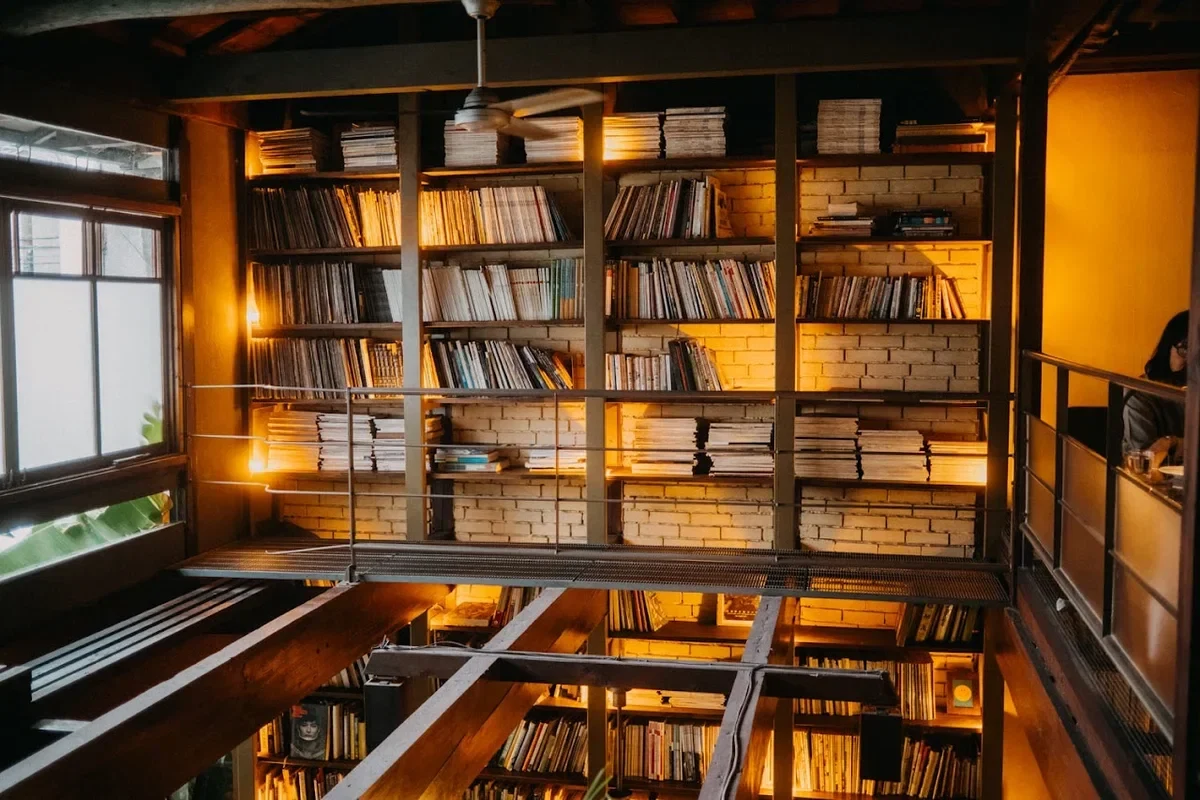
The café occupies a traditional Kyoto townhouse in Nakagyo, and the conversion is the reason people stay for hours. High ceilings, wood, bookshelves and soft light give the room a warm, slightly bohemian feel, and the books are structural rather than styling: this is a book café in the literal sense, arranged so that reading, working and eating can happen at the same table without any of them feeling out of place.
That combination is rarer than it sounds. Plenty of rooms this good move you along after a plate; this one is built for the long sit, and the menu is broad enough to support it, from a coffee and a cake through to a full lunch. The high ceilings do much of the work: a room this tall stays comfortable even when every table is taken, and the noise never quite gathers.
Bakery on one side, yoshoku on the other
The bakery is the other half of the identity. Cakes and pastries come from the same operation that supplies the café, which is why the sweet side holds up as well as the savoury, and why an afternoon visit can be as simple as a pastry and a seat under the high ceiling. Salads and sandwiches fill in the middle, keeping the menu usable whether you have come to eat properly or to read for two hours. Coffee runs underneath all of it, and it is what most tables are still holding an hour in.
Cafe Bibliotic Hello! was placed 24th on the Tabelog 100 in 2025, a strong showing for a café rather than a restaurant. The order of operations that works best is simple: the katsu sando first, something from the bakery second, and a book off the shelf while you wait.
Tags
Frequently asked questions
What should I order at Cafe Bibliotic Hello!?
The deep-fried beef katsu sandwich is the signature and the clearest first order. The fried fish sandwich is the other savoury option worth knowing, pasta bolognese is the fuller sit-down plate, and the bakery side supplies cakes and pastries if the visit is only for coffee and something sweet.
Can you read or work there?
That is what the room is for. It occupies a converted Kyoto townhouse with high ceilings, wood, bookshelves and soft lighting, and the relaxed, slightly bohemian setting suits reading or a long sit as much as eating. The book café identity is structural rather than decorative, so nobody moves you along after a plate.
Compare nearby places
| Venue | Type | Area |
|---|---|---|
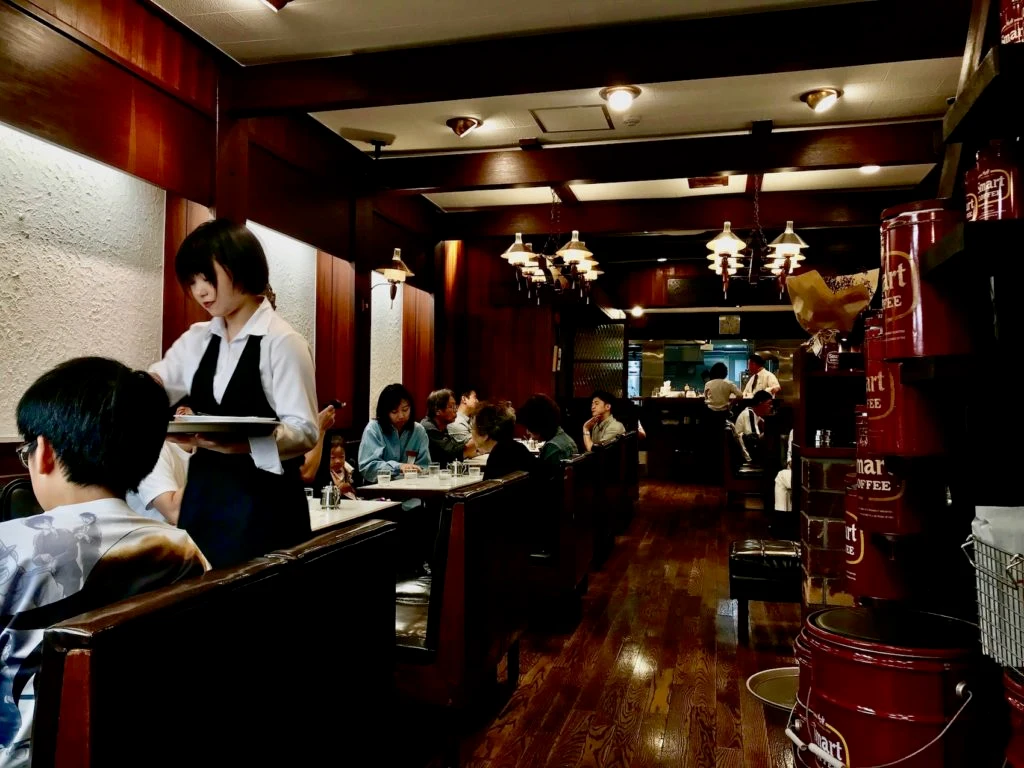
| Smart Coffee | Café | Downtown / Teramachi Shopping Arcade |
| Umezono Cafe and Gallery | Café | Nakagyo-ku |
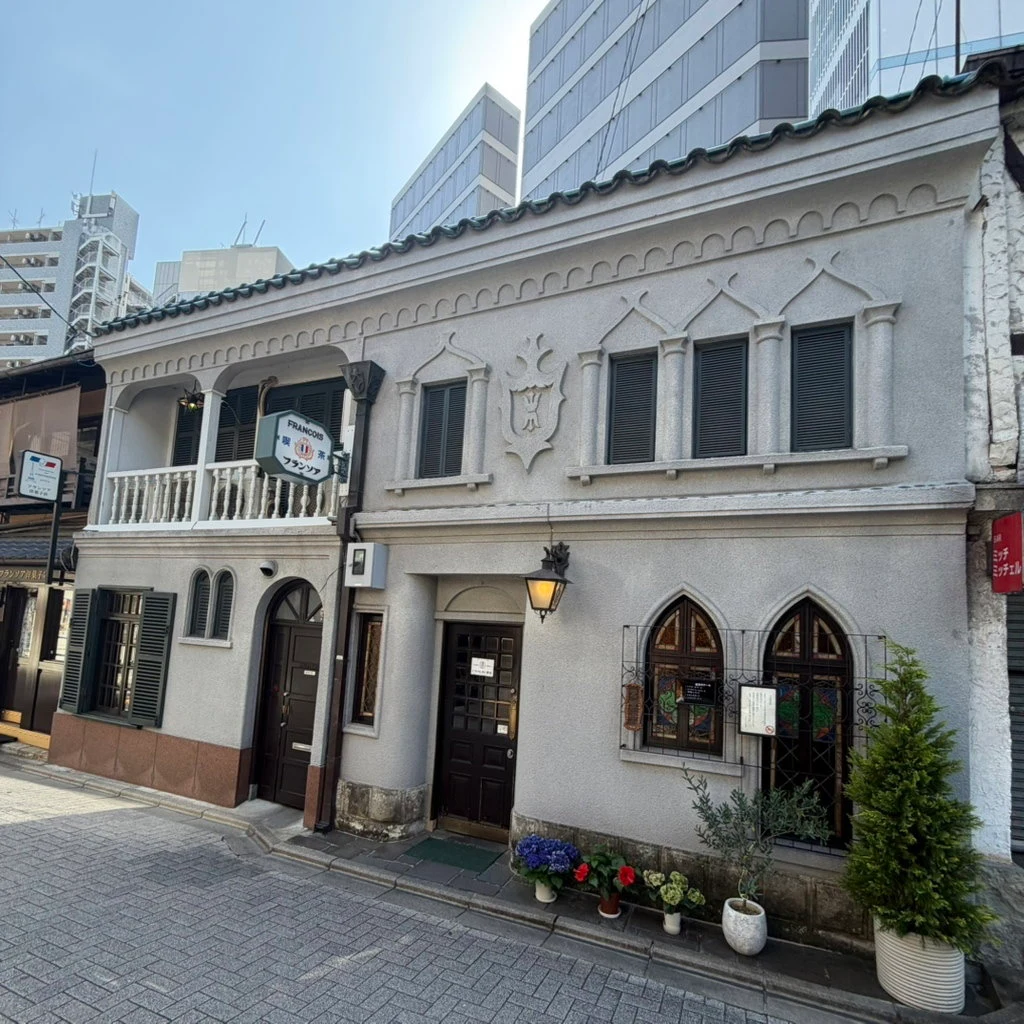
| Salon de the FRANCOIS | Café | Shimogyo-ku |
| Ichikawa Ya Coffee | Café | Higashiyama |
| Cafe Karirenge | Café | Nakagyo-ku |