Why go
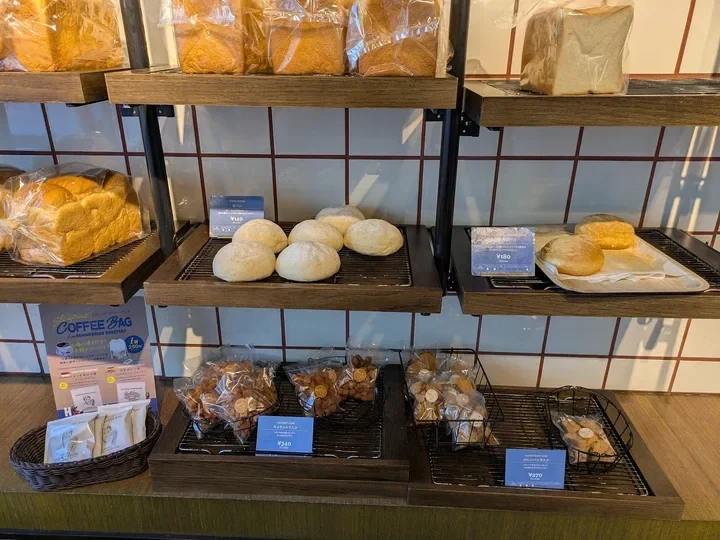
The racks do the talking
Bread is on display before anything else here, and the racks set the order of business: look, choose, pay, leave. BOULANGERIE SEIJI ASAKURA is a small boulangerie in Takanawa, on the quieter side of Minato City, built around what comes out of the oven rather than around a room to sit in. The French half of the shop shows in the shapes, with baguettes and croissants worked the classical way. The Japanese half shows in the savory end of the range, where a neighborhood bakery is expected to feed people through the whole day rather than only at breakfast. Neither side is treated as the novelty. They share the same shelves, and the shop moves between them without making a point of it.
A local errand with a national listing
The shop took the number 99 place on the Tabelog 100 list for 2022, which is unusual company for a bakery of this size and this far from the department store basements where Tokyo does a great deal of its bread shopping. Nothing inside plays up to it. The format stays what it was, a takeaway counter with a warm, classic feel, closer to an errand than a destination, and the regulars who come in for everyday loaves and pastries treat it that way. The pleasure is in that ordinariness: familiar work done carefully in a residential pocket of Takanawa, without the queuing theater attached to Tokyo's better known bread shops.
Start with the cheese curry bread
Cheese curry bread is the thing to try first, a Japanese bakery staple given the same attention as the French work. After that the choice divides cleanly. A baguette lets you judge crust and crumb on their own terms; a croissant shows how the lamination is handled. Both are fair tests of a boulangerie claiming two traditions at once, and taking one of each is the quickest way to understand which side the shop leans on. What is out changes through the day and the popular trays go early, so an unhurried look is worth more than a fixed plan, and it is worth asking what has just come out of the oven rather than reaching for the nearest thing. There is no seating and no attempt at a cafe: you take the bag and carry it home, which is exactly how the shop is built to be used.
Frequently asked questions
What should I order first at BOULANGERIE SEIJI ASAKURA?
Start with the cheese curry bread, the most distinctive thing on the racks and a Japanese bakery staple handled with the same care as the French work. From there, take a baguette to judge the crust and crumb, or a croissant to see how the lamination is done. Popular trays empty early.
Is there anywhere to sit at BOULANGERIE SEIJI ASAKURA?
No. This is a takeaway boulangerie built around its bread displays rather than a cafe with tables, so you order at the counter and carry the bag out. It suits a quick stop on the way home rather than a long sit, and the racks, not the room, are the reason to come.
Compare nearby places
| Venue | Type | Area |
|---|---|---|
| Patisserie Ryoco | Bakery | Takanawa |
| Patisserie Cacao et Paris | Bakery | Nakameguro |
| PÂTISSERIE BIEN-ÊTRE | Bakery | Shibuya |
| Boulangerie et Cafe Main Mano | Bakery | Yoyogi-Uehara |
| Katane Bakery | Bakery | Yoyogi-Uehara |