Why go
A double shot goes into the Turret Latte, finished with latte art and handed across a counter in a room that holds more standing drinkers than seated ones.
Espresso, roasted on site in Tsukiji
The menu runs on coffee rather than tea or matcha. Named drinks include the Turret Latte, the sea salt caramel latte, a spice mocha, a berry mocha and the espresso macchiato, with vanilla soy, almond and oat milk available for anyone skipping dairy. The house Turret blend is roasted on site, and beans, ground coffee and drip bags go out the door alongside the drinks.
The reputation rests on espresso craft and carefully poured milk. The sea salt caramel latte arrives under a rosette, balanced between froth, sweetness and salt, while the Turret blend is aromatic with a subtle spice note. Filter brewing and tea service are not what the shop is for, and the short list makes that plain.
A small room named for market trucks
Turret opened in 2013 in Tsukiji, in the Tokyo streets around the old fish market. The name comes from the turret trucks, the small flatbed vehicles that once ferried crates between the market stalls, and the shop keeps one as furniture: guests sometimes sit on the back of an actual turret rather than on a chair.
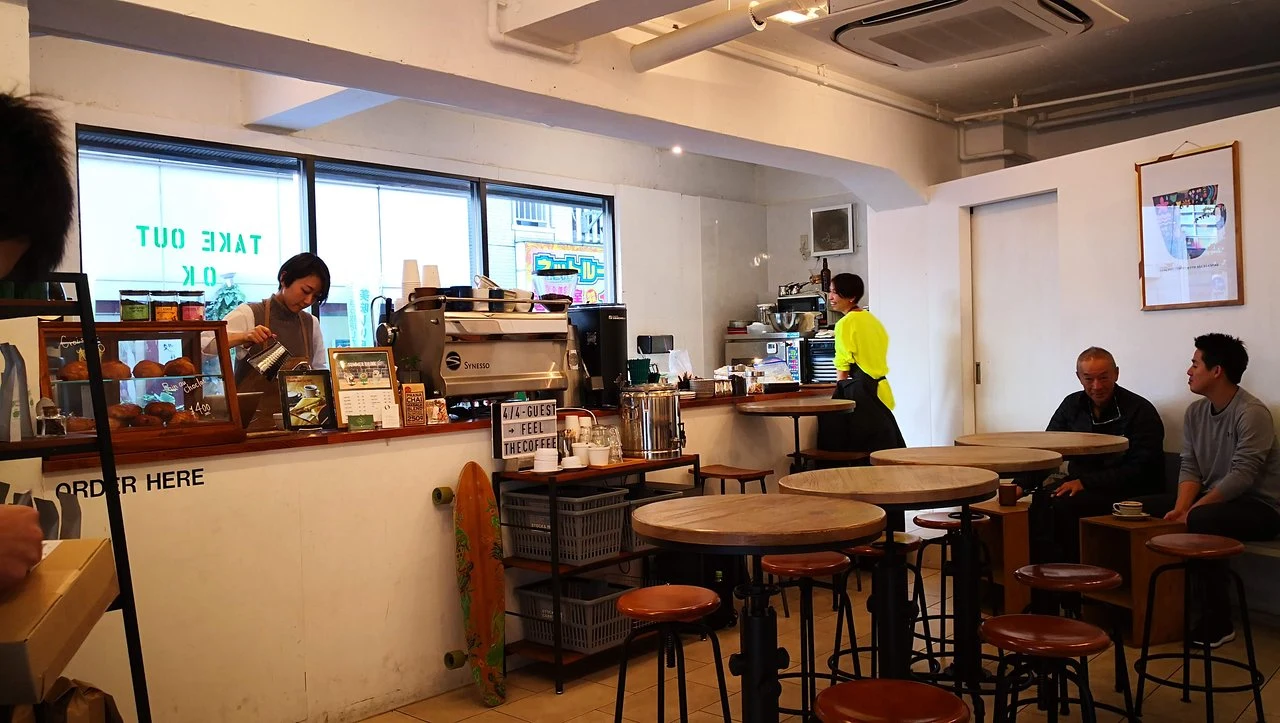
Space is the constraint. Six seats sit outside and four standing places line a side bar, so the room reads as funky and intimate rather than roomy, artsy rather than polished. The owner works the machine, pulling and pouring alongside baristas who finish drinks with visible latte art. Lines form outside at busy hours because there is nowhere inside for them to go.
Order the Turret Latte, then a dorayaki
Start with the Turret Latte, the clearest expression of the shop: a double shot of the house blend, poured with latte art. The sea salt caramel latte is the flavored drink with the most behind it, and the spice mocha, berry mocha and espresso macchiato give a deliberately short list several espresso-led paths.
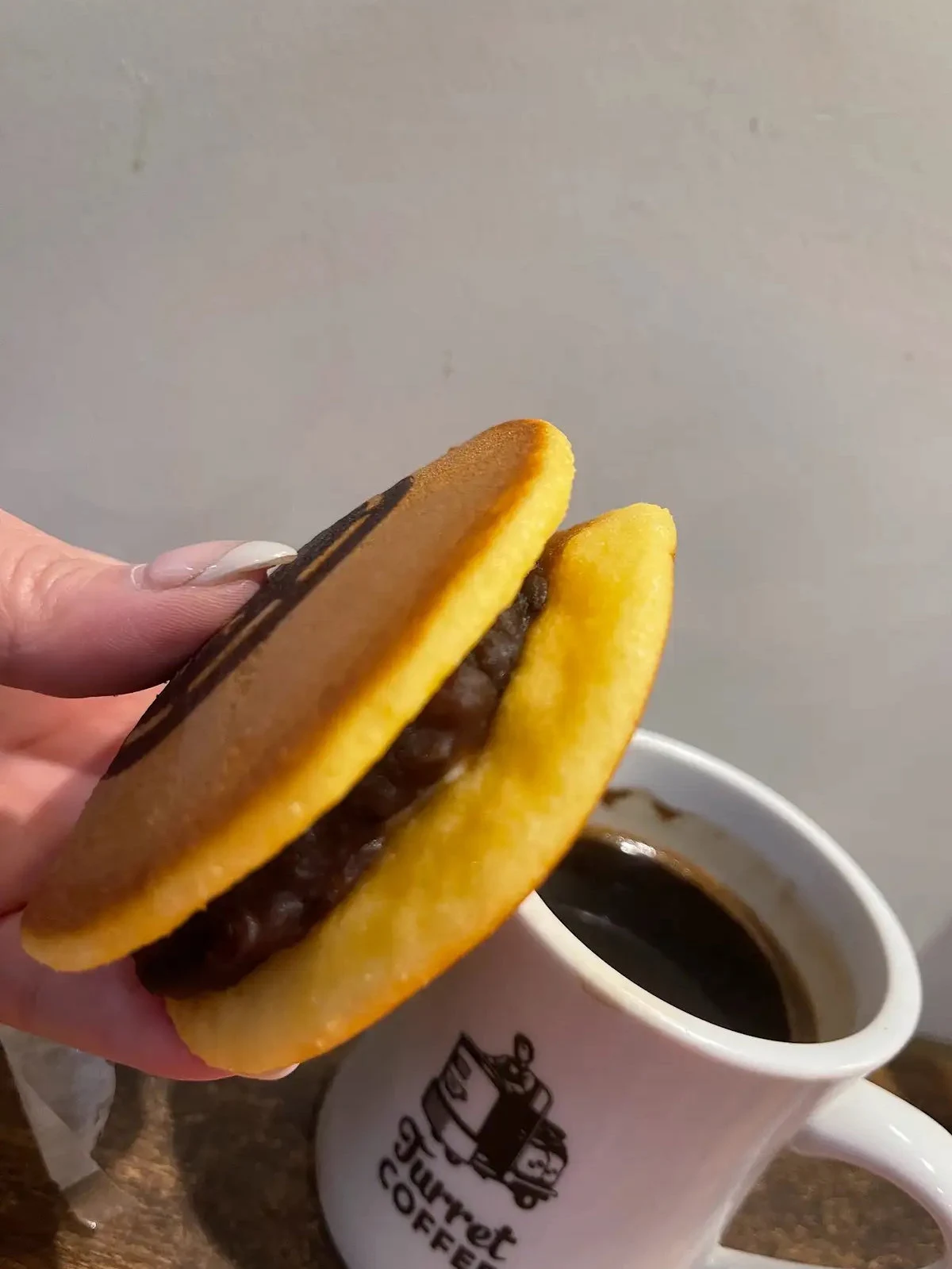
The sweet side is small and specific. Dorayaki, the pancake sandwich filled with sweet azuki bean paste, is made especially for Turret and comes fluffy and buttery. Chocolate chip cookies and chocolate chunk scones round out the case, with seasonal sweets appearing beside them. Food stays at coffee-pairing scale rather than stretching to meals.
Tags
Frequently asked questions
What should I order at Turret Coffee?
Start with the Turret Latte, a double shot of the house blend poured with latte art and the drink the shop is built around. After that the sea salt caramel latte is the flavored one worth ordering, and the spice mocha, berry mocha and espresso macchiato fill out a deliberately short espresso list.
Does Turret Coffee roast its own beans?
Yes. The house Turret blend is roasted on site, in the same small Tsukiji room where the drinks are made, and it is sold to take away as whole beans, ground coffee and drip bags. The blend is aromatic with a subtle spice note, and it is what sits under the milk in the Turret Latte.
Is there anywhere to sit at Turret Coffee?
Barely. Six seats sit outside and four standing places line a side bar inside, so most people drink standing or carry the cup away. Some guests perch on the back of an actual turret truck kept in the room. Treat it as a stop for a drink rather than a place to settle in with a laptop.
Compare nearby places
| Venue | Type | Area |
|---|---|---|
| All Seasons Coffee | Café | Shinjuku |
| Gelateria Sincerita | Café | Asagaya |
| UNISON TAILOR Coffee and Beer NINGYOCHO | Café | Nihonbashi Ningyocho |
| Jikaseibaisen Coffee Mijinko | Café | Bunkyo / Yushima |
| FEBRUARY CAFE | Café | Asakusa / Taito |