Why go
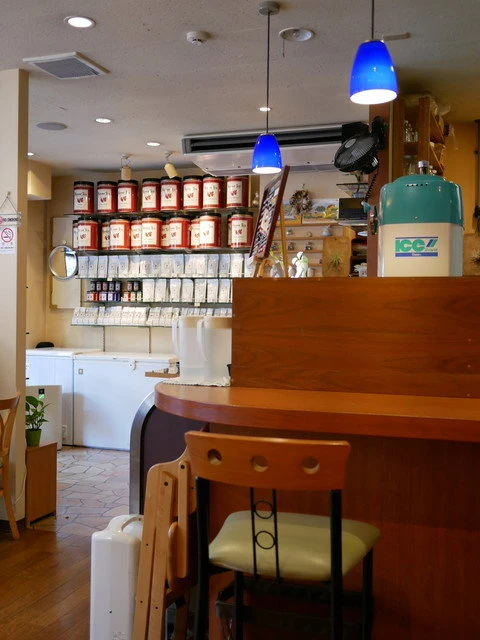
Approaching Miyazakidai, the rhythm is suburban Den-en-toshi rather than central-Tokyo spectacle: apartment blocks, commuter foot traffic, and the quiet pull of a neighbourhood room that asks for planning instead of impulse. In that setting, Tea House Mayur Miyazakidai ten belongs to a Japanese café category that has grown more exacting in the past decade, where tea service and kakigori are treated with the seriousness once reserved for patisserie counters and coffee specialists.
Kawasaki is often read through transit lines and residential districts, but its dining map is broader than that suggests. The city can carry a high-spend sushi room such as Sushi Fukuhara, casual regional cooking like KING LION Sri Lanka Restaurant & Bar, and lower-priced everyday counters such as Match Bo Mizonokuchi ten without forcing them into one downtown narrative. Tea House Mayur Miyazakidai ten sits at the lighter end of that spectrum, not as a consolation prize to Tokyo, but as evidence that specialist café culture has moved comfortably into commuter neighbourhoods.
Tea and kakigori as a specialist café format
Japan’s modern kakigori scene is no longer just a summer refreshment culture. The serious end of the category now overlaps with tea sourcing, dairy technique, fruit seasonality, syrup texture, and temperature control. That is why a café and shaved-ice listing matters: it signals a room judged not only on sweetness, but on balance, consistency, and whether the drink program can carry the same attention as the dessert counter.
Tea House Mayur Miyazakidai ten is listed in the café and kakigori category, a pairing that explains its place in the local food conversation. Tea gives the room its spine; shaved ice gives it season-to-season variation. The venue’s public details note that shaved ice is offered year-round, which places it outside the usual hot-weather-only habit and closer to the specialist kakigori shops that treat ice as a recurring craft rather than a seasonal novelty.
The ingredient-sourcing angle matters because tea cafés live or die by restraint. Stronger flavours are easy to sell; calibrated bitterness, fragrance, milk, fruit, and ice texture are harder to keep coherent. Without naming unlisted menu items, the relevant point is the structure: a café that places tea and kakigori together has to make the base ingredients do the work. That separates this format from dessert cafés built around decoration or portion size.
The recognition is specific. Tea House Mayur Miyazakidai ten was selected for Tabelog Cafe EAST 100 in 2025 and Tabelog Sweets EAST 100 in 2020, with a Tabelog score of 3.64. In Japan, where Tabelog’s scoring culture is famously conservative, that combination is a credible signal for a modestly priced specialist room. It does not put the café in the same conversation as a formal tasting counter; it places it among serious everyday addresses where repeat visits, narrow focus, and consistency carry weight.
Where Kawasaki's casual food scene gets serious
Useful comparison in Kawasaki is not luxury versus cheap eats. It is format discipline. A restaurant like Sushi Fukuhara operates in a higher price band and belongs to the reservation-led sushi economy. FUJIMORI Saginuma ten and KING LION Sri Lanka Restaurant & Bar occupy different casual lanes. Tea House Mayur Miyazakidai ten works in the café register, but its Tabelog 100 selections push it beyond the generic kissaten or station stop.
That distinction is helpful for travellers building a Kawasaki day around food rather than a single destination meal. The city’s range is better understood by linking small, focused places: bread and pastry at Boulangerie Metier Pa-ku shiti musashi kosugi za ga-den, Vietnamese cooking at (Shoku) Vietnam, French-leaning casual dining at C'EST UNE BONNE IDEE!, and pork-led comfort at Buta Boshi. Add Belmatine and the pattern becomes clearer: Kawasaki’s interest lies in compact specialization, not grand culinary theatre.
For wider planning, Our full Kawasaki restaurants guide gives the restaurant layer, while Our full Kawasaki hotels guide, Our full Kawasaki bars guide, Our full Kawasaki wineries guide, and Our full Kawasaki experiences guide help place the neighbourhood stop inside a broader itinerary. That matters because Miyazakidai is not a dining district that announces itself loudly; its appeal comes from choosing a specific reason to get off the train.
How to read it against Japan's broader café map
Across Japan, serious casual food increasingly travels through narrow categories: curry specialists, onigiri counters, sake bars, dessert cafés, and single-focus bakery projects. The Kawasaki café fits that national pattern more than it fits a classic restaurant hierarchy. A traveller comparing it with.cafe in Osaka,.know in Kumamoto, [Curry Senmon Ten] Maruyama Kyoju. in Sapporo, or [ki:] in Kyoto is comparing how far a city will let a small format specialize.
The same logic applies beyond Japan. Jōdo Saké Bar in Los Angeles and Onigiri Time in Pasadena show how Japanese formats are increasingly understood abroad through focus rather than scale. In Kanagawa, that focus can look quieter: a tea-and-ice room selected for a regional Tabelog 100 list, operating in a residential pocket, with a price band that keeps the experience accessible.
Day trips can also be built around contrast. A heavier meal in Kamakura, such as -Grilled beef Sukiyaki- KAMAKURA TANUKIAN 鎌倉 たぬき庵 in Kamakura, frames the café as a lighter counterpoint, while Tokyo options like. 鮪と炭火焼き うお炭 秋葉原店 in Tokyo sit in a different urban register altogether. Tea House Mayur Miyazakidai ten is better read as a precise stop in a Kanagawa itinerary than as a substitute for a capital-city dining night.
The editorial call is simple: this is a specialist café for travellers who care about Japan’s dessert and tea culture as much as ramen, sushi, or wagashi. Its value is not drama. It is the way a small Kawasaki room turns tea, ice, and measured sweetness into a category with enough discipline to earn repeat recognition.