Why go
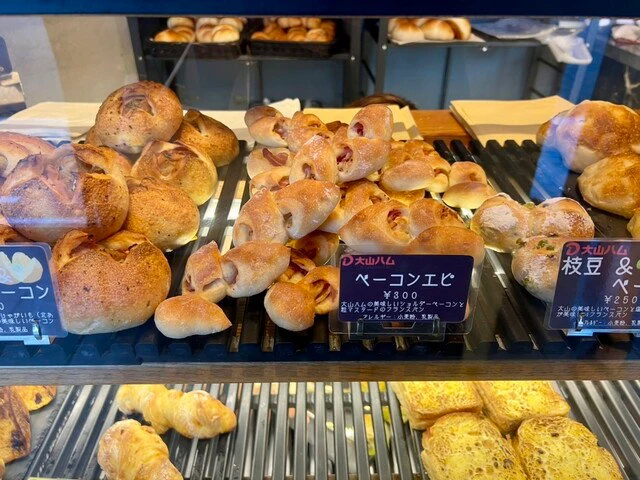
Approaching the retail floor of Park City Musashi Kosugi The Garden, the bakery format is immediately legible: glass frontage, trays, tongs, a quick decision rhythm, and the quiet choreography of people buying bread for the day rather than sitting down for an occasion. In Japan, that rhythm matters. The country’s bakery culture has long treated bread as both Western import and local daily staple, from shokupan and filled rolls to French-leaning viennoiserie translated for commuter life. In Kawasaki, where residential towers and rail access shape eating habits as much as restaurant ambition, a serious boulangerie can function less like a destination dining room and more like a neighbourhood utility with standards.
Boulangerie Metier Pa-ku shiti musashi kosugi za ga-den sits inside that category. Its Tabelog Bread EAST 100 selections in 2020 and 2022 place it among a curated group of eastern Japan bakeries, a meaningful signal in a field where many shops compete on habit, proximity, and morning availability rather than tasting-menu theatrics. The listed price band below JPY 1,000 also tells part of the story: this is not luxury coded through rarity, but craft judged at the scale of daily purchase.
Musashi Kosugi's commuter bakery culture, judged by repeat use
Musashi Kosugi has become one of Kanagawa’s defining rail-and-residential districts, a place where Tokyo access and Kawasaki address meet in a dense vertical neighbourhood. That setting changes the role of food. Restaurants serving longer meals compete with work schedules and family routines; bakeries fit into the gaps. Bread bought before a train, after school, or on the way home becomes part of the district’s edible infrastructure.
That is why the bakery’s take-out format matters more than any invented romance about artisanal seclusion. The service model belongs to a Japanese urban pattern: compact shops, fast turnover, clear visual merchandising, and a clientele that often knows what it wants before reaching the tray stack. The strongest bakeries in this genre are not merely selling carbohydrates. They are calibrating texture, portion size, and price for repeat visits in a neighbourhood where convenience alone is not enough.
Within Kawasaki, the comparison set is broader than bread. Low-priced ramen counters such as Menya Deko and noodles kitchen GUNNERS occupy the same sub-JPY 1,000 affordability tier, while L’atelier Hiro Wakisaka and Pan Jabi Daba sit in a higher bakery price band. That spread is useful for travellers: the decision is not only what to eat, but what kind of Japanese everyday dining format fits the day. For a wider city view, Our full Kawasaki restaurants guide maps the area beyond bakeries, while neighbouring categories sit separately in Our full Kawasaki hotels guide, Our full Kawasaki bars guide, Our full Kawasaki wineries guide, and Our full Kawasaki experiences guide.
Why a Bread EAST 100 selection matters in this price tier
Tabelog’s Bread EAST 100 list does not turn a bakery into a formal restaurant. It does something more useful: it identifies shops that have earned attention in a category where much of the evaluation happens through small, repeatable decisions. Bread is unforgiving in that way. A tasting menu can build drama over two hours; a bakery has to make sense in a paper bag, on a park bench, at home, or on a train platform after the fact.
The 2020 and 2022 selections put Boulangerie Metier Pa-ku shiti musashi kosugi za ga-den in the conversation with eastern Japan’s stronger bread specialists, but the useful editorial reading is restraint. Awards in this field should be treated as a quality filter, not a promise of spectacle. The better expectation is precision within an accessible format: a shop where the price band stays modest, the offer is take-out driven, and the cultural reference is the Japanese adaptation of European bread technique into daily urban life.
That distinction separates this kind of stop from full-service dining in Kawasaki. (Shoku) Vietnam, Belmatine, Buta Boshi, C'EST UNE BONNE IDEE!, and Chinese Santuru point toward the city’s range of sit-down and specialist cooking, while this bakery belongs to a faster, more domestic register. The contrast is part of the pleasure of eating in Japan: a serious food day can be assembled from a bakery counter, a ramen shop, a department-store basement, and a reservation-led dinner without treating any one format as secondary.
How to read it into a wider Japan itinerary
For travellers moving through Japan, Kawasaki often gets treated as connective tissue between Tokyo and Yokohama. That is a mistake when reading food culture. The city’s strength is not only destination dining; it is the accumulation of practical, high-standard formats that locals use without ceremony. A bakery selected for Bread EAST 100 inside Musashi Kosugi’s residential-commercial grid says something precise about that culture: craft can be embedded in routine rather than separated from it.
The same lens helps when comparing across Japan and beyond. Kamakura’s dining can lean toward leisure and day-trip pacing, as seen in -Grilled beef Sukiyaki- KAMAKURA TANUKIAN 鎌倉 たぬき庵 in Kamakura; Tokyo’s breadth includes highly specific casual counters such as. 鮪と炭火焼き うお炭 秋葉原店 in Tokyo; and regional stops such as.cafe in Osaka,.know in Kumamoto, [Curry Senmon Ten] Maruyama Kyoju. in Sapporo, and [ki:] in Kyoto show how local formats carry different expectations. Even outside Japan, the appeal of Japanese everyday food culture travels through focused operators such as Jōdo Saké Bar in Los Angeles and Onigiri Time in Pasadena.
The editorial case here is therefore modest but firm. This is a bakery to understand as part of Kawasaki’s daily food system: accessible, award-noted, take-out oriented, and tied to Musashi Kosugi’s commuter-residential identity. It is not trying to behave like a grand restaurant, and that is exactly the point. In a country where humble formats are often held to exacting standards, a sub-JPY 1,000 bread stop can tell a traveller as much about local taste as a longer reservation.