Why go
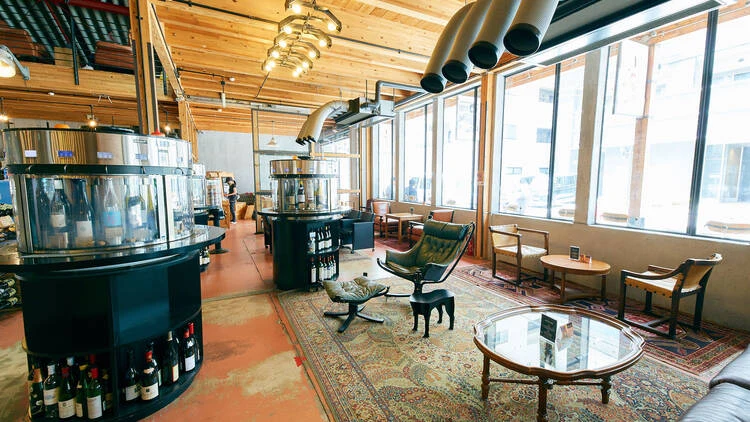
Coffee is sold here the way wine is, by origin, cultivar, process and roast, at Takamura Wine & Coffee Roasters, a roasting counter set inside an Osaka warehouse lined with wine bottles.
Chosen like wine, roasted in Osaka
The house line, ワインを選ぶように、コーヒーを選ぼう, means choose coffee the way you choose wine, and the whole counter follows it. Beans are presented by producing country, variety, processing method, roast level and flavour rather than as a house blend with a name on it. The range covers Brazil, Colombia, Ethiopia, Burundi, Mexico, Guatemala, Panama, Kenya, Rwanda, Indonesia, Nicaragua, El Salvador and Thailand, and the varieties are named on the bag: Geisha, Sidra, Pacamara, Bourbon, Typica, Catuai, Mundo Novo, Ethiopian heirlooms, SL28 and SL34, Maracaturra, Castillo. Processing belongs to the same vocabulary, with natural, washed, sun dried, pulped natural, aerobic fermentation and lactic lots in rotation. Flavour families do the sorting for anyone who would rather taste than read: fruit, floral, sweet, nuts, fermented.
A warehouse counter with the roaster in the room
The setting explains the approach. High ceilings, shelves of wine running the length of the space, and roasting equipment working in plain sight give the bar the pace of a shop rather than a dining room. Ordering is closer to browsing than to a set sequence: a cup at the counter, then a decision about beans to carry out, usually after a question about what is drinking well that week. Staff selections and monthly selections do the work of a recommendation, and there is a deliberately easy entry point for anyone new to filter coffee, which keeps the room from tipping into connoisseurship. It appears on the Tabelog 100 list at number 93 for 2025.
Start with hand-drip, then choose beans
Order a hand-drip first. It is the preparation that shows the roast most plainly, and it makes the shelf easier to read afterwards. Espresso drinks are on the bar for anyone who wants milk or a shorter cup. The lots worth asking about are the competition and estate coffees: a Guatemalan Geisha with tropical, passion-fruit aromatics, pear-like sweetness and a muscat finish, placed seventh in the 2024 Cup of Excellence; a Salvadoran Geisha with jasmine, honey and lemon-tea notes, seventh in the 2025 Cup of Excellence; and a Thai natural Catuai with juicy red grape and cinnamon as it cools, fourteenth in the same year. The Panamanian Geisha from La Esmeralda's private collection is the showpiece, jasmine and lemon on the nose, yuzu and lime acidity, honeyed at the finish. Drip bags, decaf and coffee sets cover the takeaway end.
Tags
Frequently asked questions
What should you order at Takamura Wine & Coffee Roasters?
Start with a hand-drip, which shows the roast most plainly and makes the retail shelf easier to read afterwards. Espresso drinks are on the bar for a shorter cup. Ask about the Cup of Excellence and estate lots, including Geisha from Guatemala, El Salvador and Panama, then take beans or drip bags home.
Compare nearby places
| Venue | Type | Area |
|---|---|---|
| Boulangerie Takagi | Bakery | Nishi-ku |
| wad omotenashi cafe | Café | Shinsaibashi / Minamisenba |
| Le Premier Cafe Shinsaibashi honten | Café | Shinsaibashi |
| cocoo cafe | Café | Hommachi / Utsubo Park area |
| MOTO COFFEE | Café | Kitahama |