Why go
Shibuya’s cafe culture is not quiet in the old kissaten sense. It moves at street speed: station traffic, shopping bags, laptop hours, dogs on leads, and constant exchange between counter seats and takeaway cups. Here, coffee is a sourcing test as much as a social habit. The cafes that last are not just places to pause; they show Tokyo’s casual drinking culture can treat beans, milk, and extraction with the seriousness it applies to noodles, sushi, and soba.
STREAMER COFFEE COMPANY SHIBUYA belongs to that newer Tokyo cafe language. Its Tabelog Cafe 100 recognition in 2021, 2022, and 2025 puts it on a public shortlist of cafes Japanese diners revisit and rate carefully. The price band, listed under JPY 999, also matters. Shibuya offers many ways to spend heavily; this format stays close to daily use, where repeatability counts and a cafe is judged across mornings, work breaks, and late-afternoon resets rather than one planned meal.
Shibuya coffee after the kissaten era
Tokyo’s older coffee tradition centered on dark roasts, siphons, flannel drip, and long-stay rooms with measured service. Shibuya’s contemporary cafe scene is less ceremonial, borrowing from espresso-bar speed, American specialty-coffee scale, and Japanese consistency. Sourcing becomes visible differently: not through tableside explanation, but through how a cafe handles volume while keeping drinks aligned order to order.
At this tier, the meaningful comparison is not tasting-menu restaurants or hotel lounges, but compact specialist rooms and casual counters that survive heavy footfall. Tamawarai represents another Tokyo discipline: soba as tightly focused craft. Eric South Masala Diner sits elsewhere, where spice, regional Indian cooking, and an affordable lunch-to-dinner rhythm shape the decision. Shibuya cafes compete on a lighter but demanding axis: bean choice, extraction, milk texture, seating turnover, and whether the room can absorb solo customers and small groups without becoming dead space.
The ingredient question is central because coffee leaves little room for disguise. Poor sourcing shows quickly, as does sloppy handling. In Tokyo, where convenience coffee is everywhere, a cafe in this category must justify itself against vending machines, chain counters, and department-store basements. Tabelog Cafe 100 selection signals that Japanese diners see enough distinction to separate it from ordinary station-area caffeine stops.
A large-format cafe in a city of small rooms
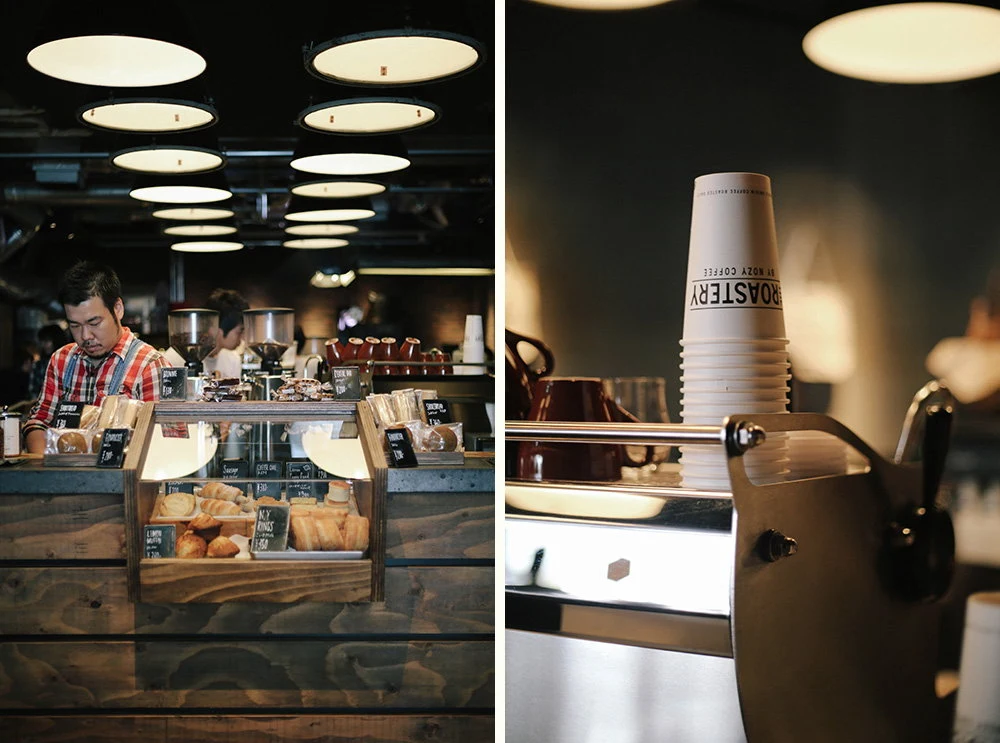
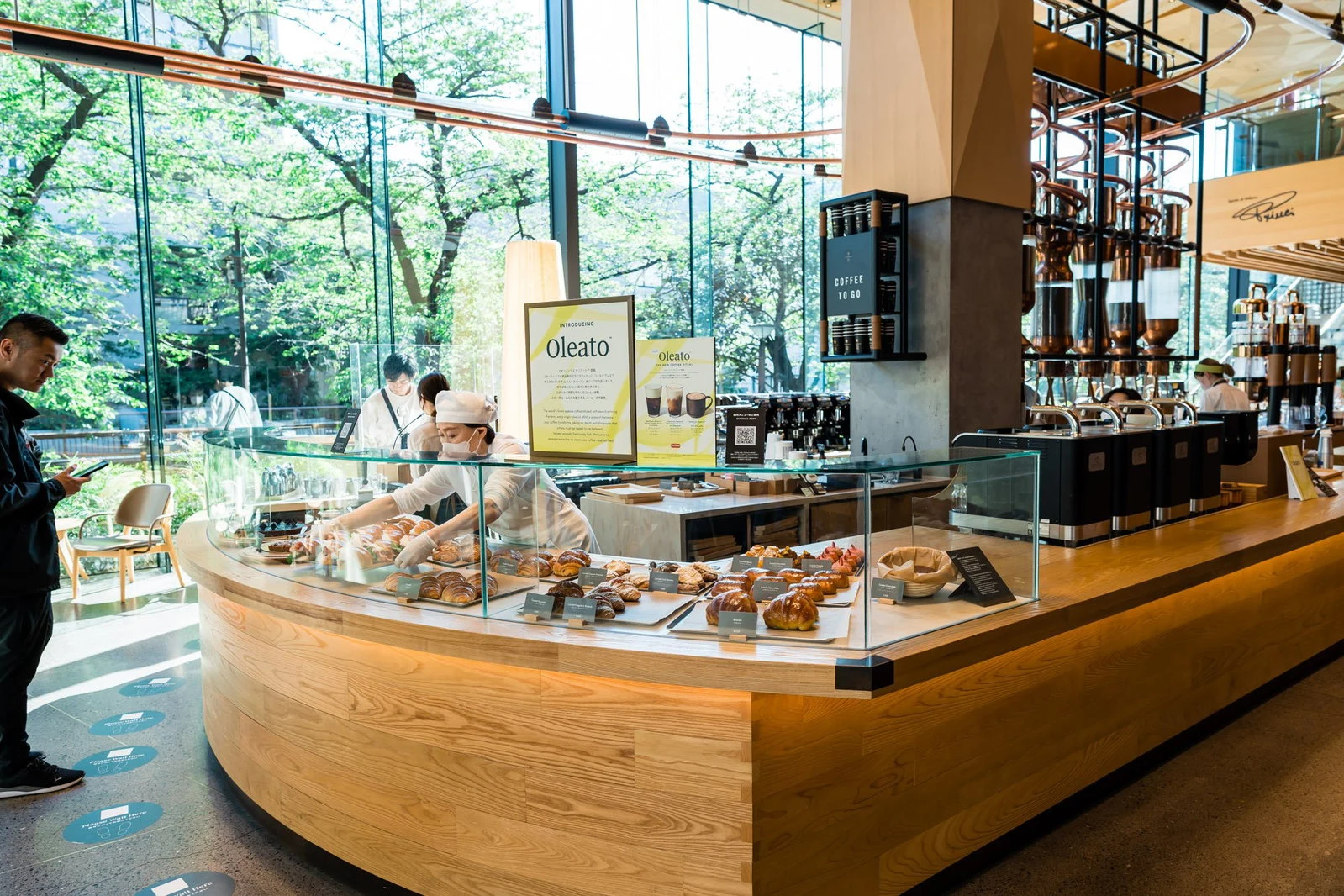
Scale matters. The room is listed at 56 seats across table seating, counter seating, and an outdoor terrace. That is sizable for a central Tokyo cafe and changes how the place functions. Counter seats suit solo coffee and short work intervals; tables suit friends or parents with children; the terrace broadens the mood without making the cafe a restaurant. In a neighborhood where many good counters favor speed over lingering, that range adds flexibility.
The service model is clear: take-out is available, reservations and private rooms are unavailable, and private use is listed for groups of 20 to 50. The cafe is built for walk-in movement rather than formal planning. It is close enough to Shibuya Station for a dense area day, while also within reach of Meiji-Jingumae and Omotesando. That overlap matters: Shibuya brings youth traffic and retail energy, Omotesando brings design-conscious cafe culture, and Harajuku’s edge keeps the area from feeling too corporate.
The listed opening date, April 22, 2010, gives it a different position from today’s short-cycle concept shops. Tokyo’s cafe market is ruthless: style is copied quickly, rent punishes weak weekday trade, and social-media novelty fades. A 2010 opening with later Tabelog Cafe 100 selections suggests durability across more than one coffee trend. That is not nostalgia; it is evidence of repeat custom in a city with little patience for average execution.
For a broader Tokyo food day, the cafe sits comfortably beside faster casual choices and structured meals. Akihabara drink-and-grill routes might include . 鮪と炭火焼き うお炭 秋葉原店, while Shinjuku pacing changes around 12/10 Shinjuku ten. Yakitori decisions can move toward 124. KAGURAZAKA (Yakitori), and graphic cafe culture has a different expression at 2D Cafe. Curry, another Tokyo comfort category where sourcing and technique separate serious rooms from casual ones, appears in another register at 3 Chome no Curry Ya San.
Where it fits in a Tokyo itinerary
The practical value is timing. A cafe open from morning into evening can anchor loose hours between restaurant bookings, shopping routes, and museum plans. Shibuya is often treated as transit, but its better cafes reward slowing down: arrive before the retail crush, reset, then move toward Omotesando, Harajuku, or station-side dining corridors.
The payment setup fits Tokyo’s current casual dining habits, with credit cards, transportation IC cards such as Suica, iD, QUICPay, and PayPay accepted. Parking is unavailable, normal for this part of the city, reinforcing the rail-and-walk pattern. Children are welcome, and furry friends are noted as welcome, giving the cafe neighborhood utility beyond the usual specialty-coffee script.
For a fuller Tokyo plan, use Our full Tokyo restaurants guide for meals, Our full Tokyo hotels guide for base selection, Our full Tokyo bars guide for evening drinking, Our full Tokyo wineries guide for wine-led planning, and Our full Tokyo experiences guide for cultural structure between meals. Regional comparisons sharpen the point: -Grilled beef Sukiyaki- KAMAKURA TANUKIAN 鎌倉 たぬき庵 in Kamakura is built around a different meal grammar,.cafe in Osaka shows how another Japanese city frames casual cafe time, and.know in Kumamoto points to a smaller-city register. For contrast, see (Shoku) Vietnam in Kawasaki, [Curry Senmon Ten] Maruyama Kyoju. in Sapporo, [ki:] in Kyoto, Jōdo Saké Bar in Los Angeles, and Onigiri Time in Pasadena, each showing how casual formats carry local expectations rather than one global script.
The editorial read is simple: this is not a destination for ceremony. It is a Shibuya cafe with enough scale, recognition, and price discipline to be useful repeatedly. In a city where coffee ranges from canned convenience to obsessive hand-drip counters, STREAMER COFFEE COMPANY SHIBUYA occupies the middle ground travelers often need: credible sourcing signals, broad seating, quick-service logic, and a room that fits the neighborhood tempo.