Why go
Reserve coffee across four floors
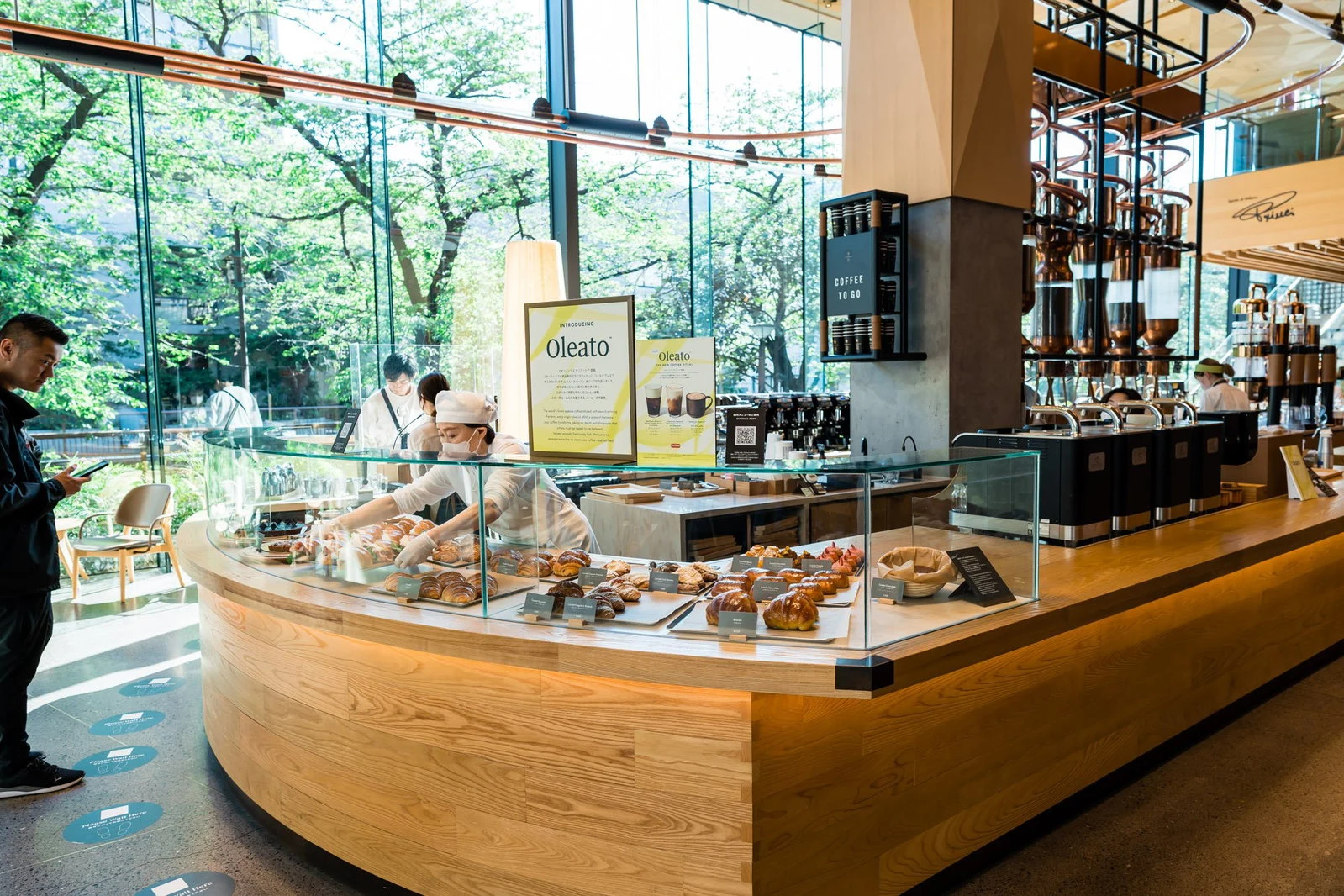
The order here starts with Starbucks Reserve whole-bean coffee on the first floor and then climbs. Japan's Reserve Roastery stands in Aobadai, Meguro-ku, in Tokyo, and gathers four branded parts into one building: Starbucks Reserve on 1F, Teavana on 2F, the Arriviamo Bar on 3F and Amu Tokyo on 4F. The point of the place is that vertical route. A visit moves from Reserve coffee and the roasting behind it up through colourful tea, Princi bakery, cocktails and retail collections, which makes it a sequence rather than a single counter transaction. The commitment the roastery makes is to beans and roasting first, with the rest of the building arranged around that.
Bakery, tea and bar, floor by floor
Princi supplies the bakery strand through its Dolce and Savory ranges, and Teavana carries the tea programme on the second floor. The clearest structured format is the Roastery Pasticcini Flight, a ninety-minute tasting that pairs Princi Dolce and Savory selections with Teavana tea, which is the easiest way to eat and drink here without assembling your own itinerary. In the evening, the Arriviamo Bar's Apericena brings cocktails, bakery and coffee together as a summer bread-and-drinks format. The menu architecture follows the building: Reserve coffee first, then tea pairings, then bakery, then cocktails, then the Roastery Collection retail at the top. Nothing about the space is incidental; it was built as a deliberately immersive room, and the movement between floors is part of what is being sold.
Choose by floor
For a first proper order, choose by format. If coffee is the point, stay on 1F with the Reserve whole-bean programme and the roastery-led drinks built around it. If bakery matters more, go to the Princi counter for the Dolce and Savory items, and take the Pasticcini Flight if you would rather have the bakes matched with tea than eaten alone. If tea is the priority, 2F Teavana is the route, and the same flight shows tea working as a pairing partner rather than an afterthought. For a bar-led visit, the Apericena on 3F is the named format, combining cocktail, bakery and coffee in one sitting. Amu Tokyo on 4F closes the journey with Roastery and Global Collection retail, which is also the easiest place to take the coffee home.
Tags
Frequently asked questions
What should I order at the Tokyo Reserve Roastery?
Start on the first floor with Starbucks Reserve whole-bean coffee, the programme the building is organised around. If you want structure rather than a single drink, take the Roastery Pasticcini Flight, a ninety-minute tasting pairing Princi Dolce and Savory bakes with Teavana tea. In the evening, the Arriviamo Bar's Apericena combines cocktail, bakery and coffee.
How is the building organised?
Across four floors, each with its own identity: Starbucks Reserve on 1F, Teavana on 2F, the Arriviamo Bar on 3F and Amu Tokyo on 4F. The visit is meant to be vertical, moving from Reserve coffee and roasting up through tea, Princi bakery, cocktails and the Roastery and Global Collection retail at the top.
Compare nearby places
| Venue | Type | Area |
|---|---|---|
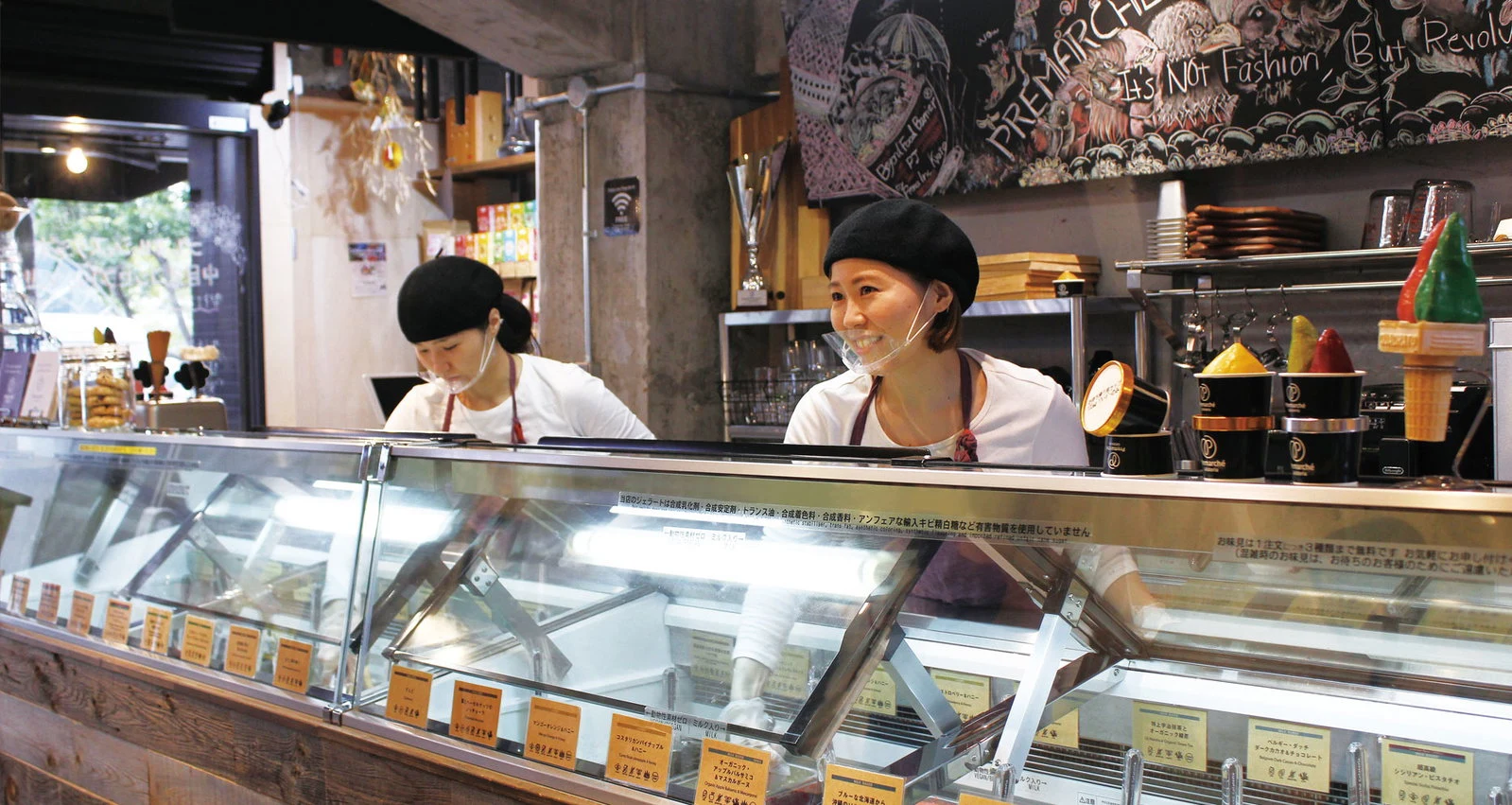
| Premarché Gelateria Toukyou nakameguro ekimae ten | Café | Nakameguro |
| CAFÉ FAÇON Nakameguro honten | Café | Nakameguro |
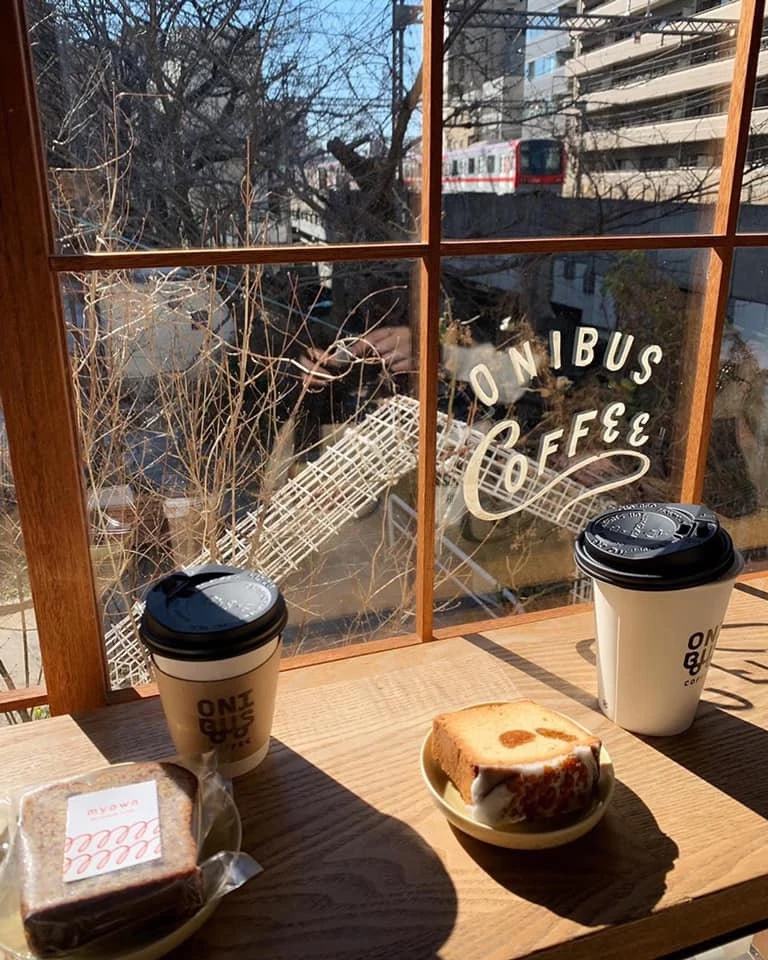
| Onibus Coffee | Café | Nakameguro |
| Patisserie Cacao et Paris | Bakery | Nakameguro |
| STREAMER COFFEE COMPANY SHIBUYA | Café | Shibuya |