Why go
A French case in an Itami neighbourhood
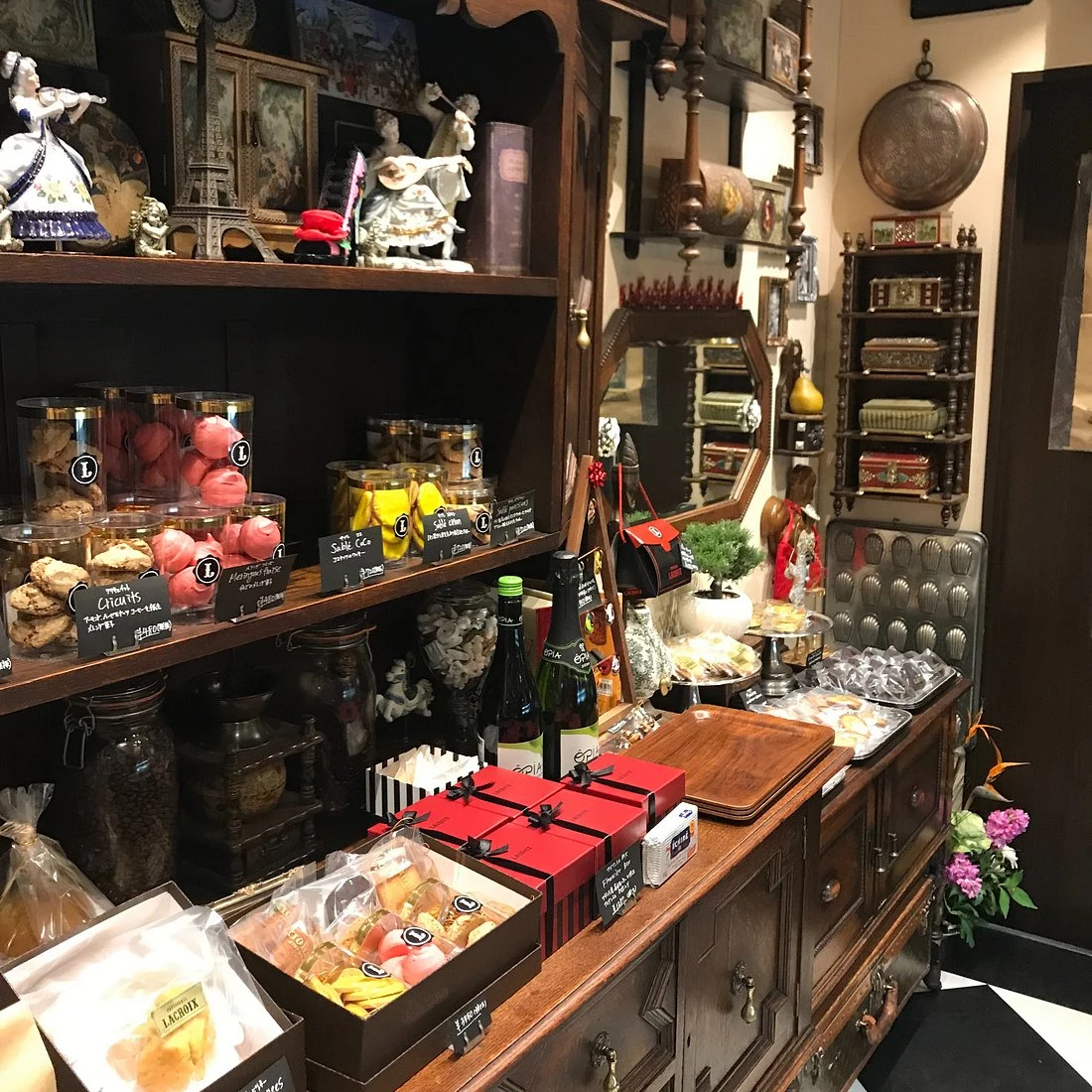
The showcases set the terms here. Patisserie Lacroix works from a room styled after a mid-century Paris pâtisserie, with antique details unified around the glass cases, so the cakes are displayed as objects rather than simply stocked. The shop opened in September 2011 under an owner-chef who trained through Osaka and Tokyo pastry kitchens before working at Joël Robuchon in Nagoya and then in Paris, and that route explains the direction: classical French technique presented for a Japanese neighbourhood. The name is the shop's own gloss, lacroix being the French for cross, chosen for the long historical relationship between French confectionery and Christianity, which fits a business built on interpreting a foreign pastry culture rather than importing it wholesale.
Looking, choosing, asking
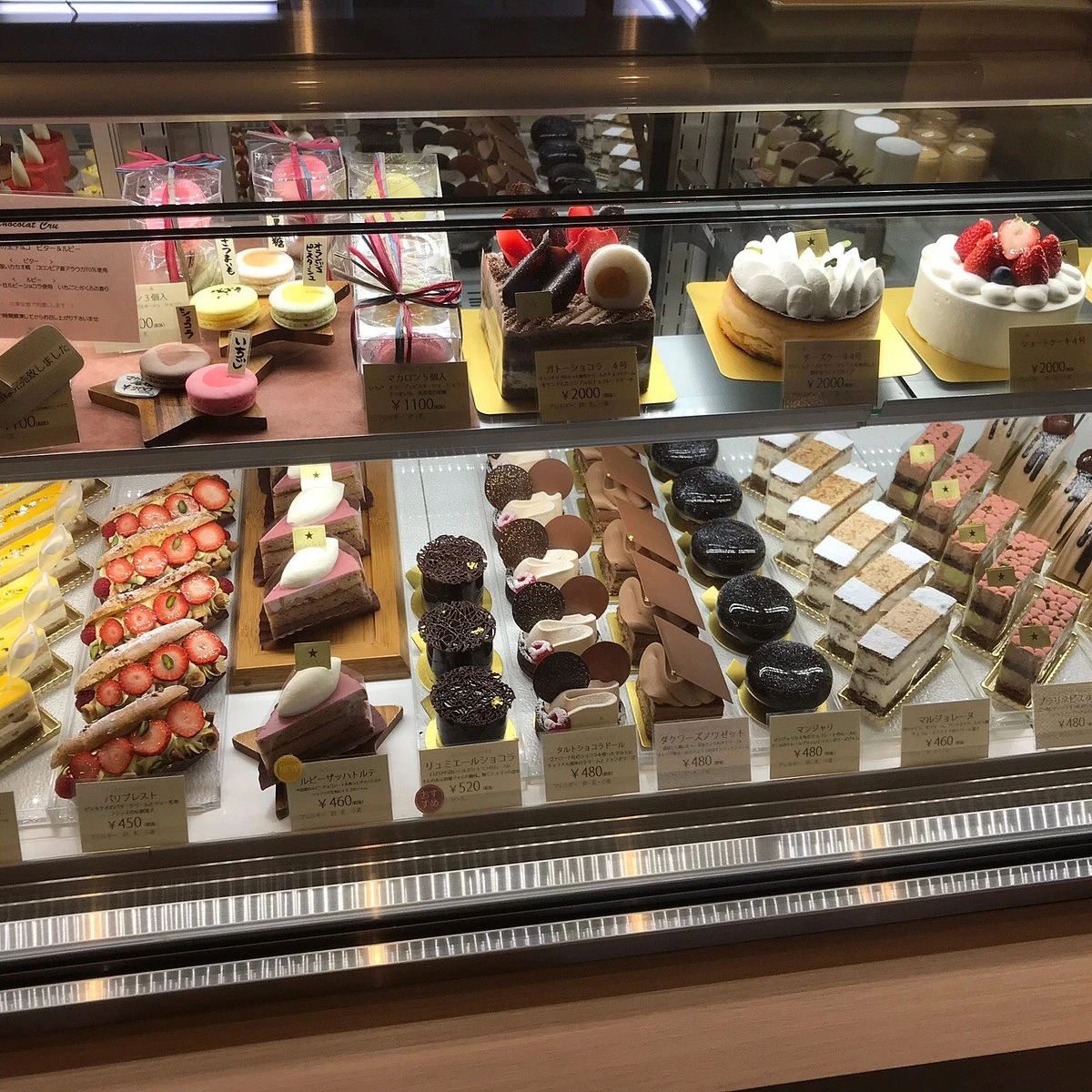
The guest experience runs on the case. You look, you select, and you ask at the counter, which matters more in a Japanese pâtisserie format where the display, the packaging and the gift function are all part of the purchase rather than afterthoughts. The assortment is deliberately broad rather than a fixed menu: French cakes, Japanese confections, breads, traditional French sweets, and the shop's own arrangements of all of them. Bread widens the role beyond dessert and makes the shop useful on an ordinary morning, while the cakes and sweets keep celebration at the centre. The room is small and boutique in feel, closer to a refined neighbourhood shop than a café to sit in, and the antique details are unified rather than scattered, so the effect is composed instead of nostalgic clutter.
Order the celebration cake first
The clearest planned purchase is a custom cake for a birthday or a commemorative day, since occasion work is what the shop puts forward first and what needs thinking about in advance. For an ordinary visit, start with the cake case that carries the French identity, then add a Japanese sweet or a loaf of bread to see how far the range stretches. That breadth is the whole point. Patisserie Lacroix works as a daily pastry counter and an occasion shop at once, shaped by French training, an antique room and an Itami address, and the pleasure is in seeing two pastry traditions handled by the same hand in the same case, French cakes on one shelf and Japanese confections on the next.
Frequently asked questions
What should I order at Patisserie Lacroix?
Start with the French cake case, which carries the shop's identity, then add a Japanese confection or a loaf of bread to see the full range. If the visit is tied to a birthday or another occasion, the custom celebration cake is the planned order and the thing the shop puts forward first.
What kind of pastry shop is Patisserie Lacroix?
A small boutique pâtisserie styled after a mid-century Paris shop, with antique details unified around the glass showcases. It opened in 2011 under an owner-chef trained in Osaka and Tokyo before Joël Robuchon in Nagoya and a spell in Paris, and the range mixes French cakes with Japanese confections and breads.
Compare nearby places
| Venue | Type | Area |
|---|---|---|
| Patissier Eiji Nitta | Bakery | Nishinomiya Kitaguchi |
| Patisserie de ESAKA SIROP D'ERABLE | Bakery | Esaka |
| Boulangerie Miyanaga | Bakery | Shukugawa |
| Cante Grande Bakery | Bakery | Kita-ku Nakatsu |
| Patisserie Crochet | Bakery | Fukushima Ward |