Why go
A sweets complex rather than a single counter
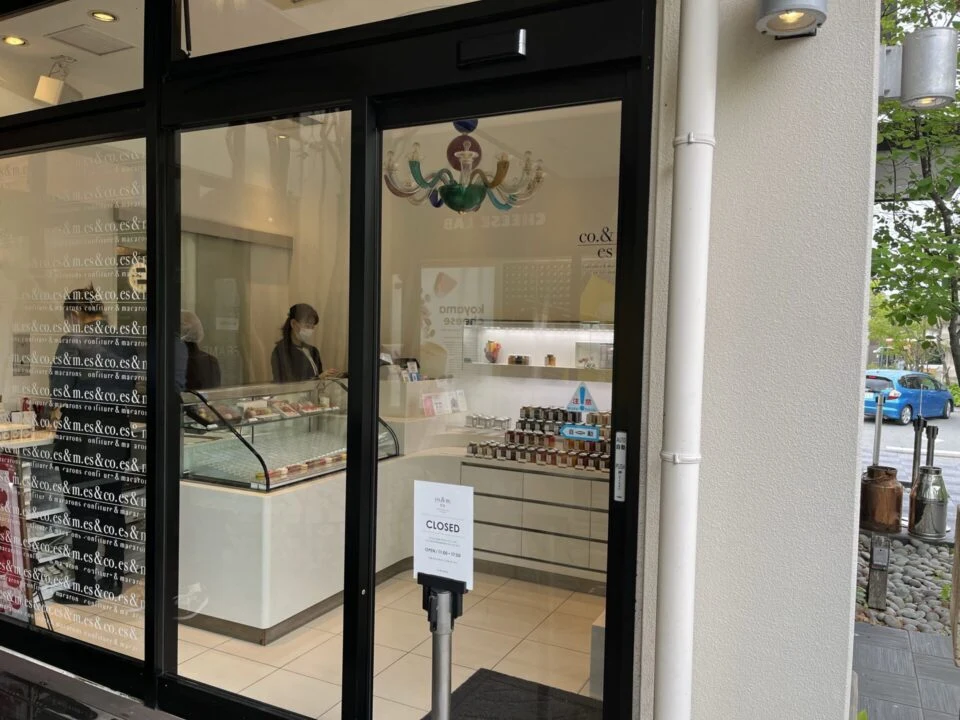
The first decision here is which door to use. Pâtissier Es Koyama works in Sanda as a cluster of small shops rather than one room, each given over to a different part of the same pastry idea: the cake case, the baked and packaged sweets, the chocolate work. Susumu Koyama's name sits behind all of it, and the house style is modern Japanese-French rather than either tradition on its own. That means French technique in the cakes and the viennoiserie, and a Japanese sense of proportion, seasonality and finish in how they are presented and boxed. The effect is a pastry destination rather than a café: sweets are the organising category, and choosing between them is most of what a visit consists of.
The signatures, and the boxes built around them
The Koyama Roll is the piece the house is best known for, a roll cake whose sponge and cream carry the whole thing rather than any decoration on top. Koyama Pudding sits in the same register, soft-set and plain enough to show immediately whether the custard is any good. The chocolate programme is the third leg, with bonbons made under Koyama's own hand and packaged with the same care as the cakes. A large part of the range is built to travel, which is why so many boxes leave intact rather than being eaten on the spot, and why the shop reads as a gifting stop as much as a dessert one. It was named at number 100 on the Tabelog 100 for 2023, unusual company for a suburban pâtisserie.
Start with the Koyama Roll
Order the Koyama Roll first, because everything else in the house is easier to judge once you have it. It is the plainest thing on sale and the hardest to fake, and it sets the standard for the sponge, the cream and the restraint that runs through the rest of the range. Follow it with the pudding if you want a second dessert with a different texture, cool and wobbling rather than soft and rolled. Then move to the chocolate side, where the bonbons show the more technical end of the work in single bites. If the visit is about taking something home rather than eating it there, build the order around the packaged sweets and the boxed assortments, which are the format the house has designed most deliberately.
Frequently asked questions
What should I order first at Pâtissier Es Koyama?
Order the Koyama Roll. It is the shop's best-known piece and the plainest thing on sale, so the sponge and the cream have nowhere to hide, and it sets the standard for the rest of the range. Follow it with Koyama Pudding for a different texture, then a few bonbons from the chocolate side of the house.
Is this a café or a pastry shop?
It is a pastry operation rather than a café, and it is spread across a small complex of shops instead of one room. Sweets are the organising category: the cake case, the packaged and baked goods, and the chocolate work each sit in their own part of the site. Much of the range is built to be boxed and carried away.
Compare nearby places
| Venue | Type | Area |
|---|---|---|
| eS Boulangerie | Bakery | Yurinokidai |
| arima gelateria Stagione | Café | Arima Onsen |
| Boulangerie Miyanaga | Bakery | Shukugawa |
| patisserie plein | Bakery | .芦屋市茶屋之町 (Chayanocho, Ashiya) |
| Cafe FREUNDLIEB Honten | Bakery | Chuo Ward (Ikutacho) |