Why go
Taiyaki with eight-hour anko
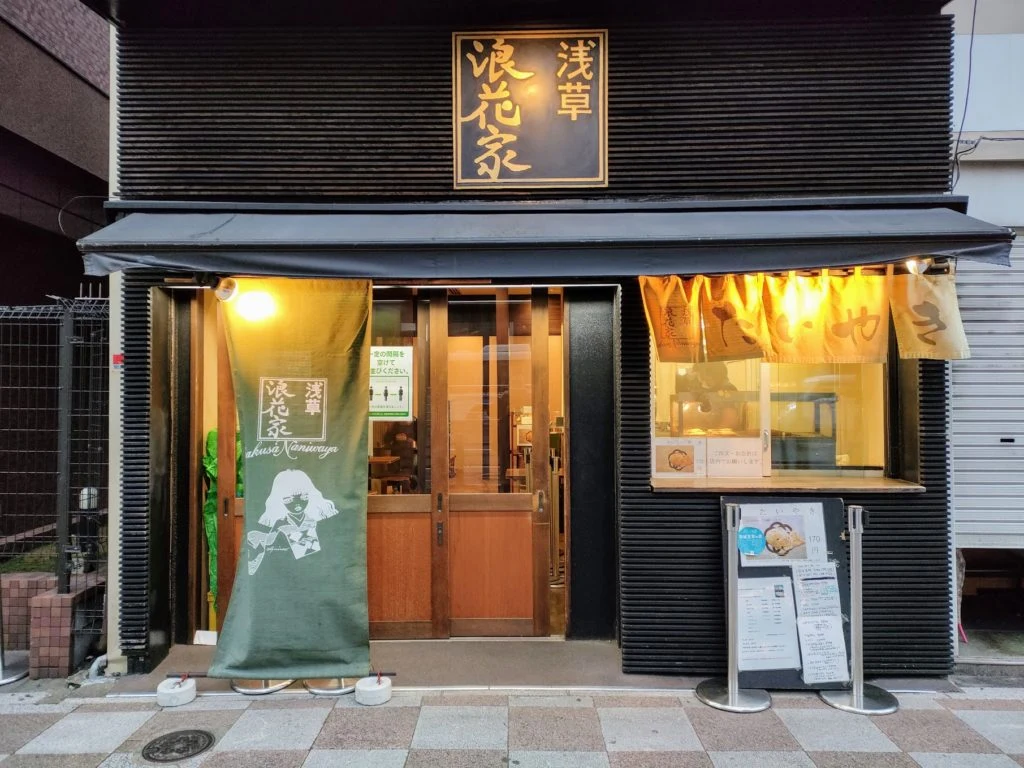
The taiyaki is the whole argument. The fish-shaped cake comes out with a thin, fragrant skin, pari-pari in the Japanese description, lightly charred at the edges and wrapped around red bean paste of moderate sweetness rather than the heavy kind. It is made by the traditional method, one cake at a time rather than in a tray, and the difference shows in the skin.
That anko is cooked in a single kettle over eight hours instead of being treated as a filling to be bought in, and it is the reason the shop has held its place in Azabu-Juban since 1909, or Meiji 42. Naniwaya cafe is the second-floor room above that counter, and the sweets served upstairs come out of the same tradition.
The upstairs room
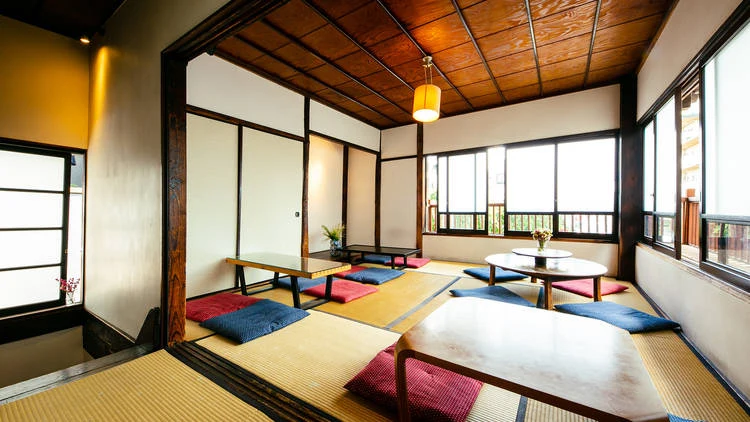
Downstairs is a griddle and a queue. Upstairs is a seat. The cafe turns a quick taiyaki stop into a slower break, with kakigori, anmitsu and yakisoba taken at a table rather than out of a paper sleeve. The room is unpretentious rather than polished, and the appeal is the continuity between the two floors rather than any change of register between them.
The menu upstairs stays inside the world of Japanese sweets and casual snacks rather than reaching for cafe standards. In summer the kakigori becomes the reason to climb the stairs, shaved ice against Tokyo humidity. The setting suits its Azabu-Juban shopping-street context: a neighbourhood confectionery serving locals, families and visitors, still working under a name that looks back to the founder's home city of Naniwa, now Osaka.
How to order upstairs
Start with the taiyaki, ideally fresh enough that the skin is still crisp and the bean paste still warm. After that, choose by season and appetite. Kakigori is the cooling order and the one summer visits are built around. Anmitsu gives the classic composed wagashi profile of beans, fruit and syrup.
Yakisoba is the savoury counterweight if the stop has turned into something closer to a light meal. The Azwitch is the modern outlier, a sable-cookie sandwich of anko and cream that moves the same bean paste into a different format. Order it last, as a comparison with the taiyaki you started on. If the queue downstairs is short, take a second taiyaki away with you, since it does not improve with waiting.
Tags
Frequently asked questions
What is the taiyaki like at Naniwaya?
Thin-skinned and lightly charred, crisp rather than cakey, wrapped around red bean paste of moderate sweetness. The anko is cooked in one kettle over eight hours, which is what separates it from a filled snack, and it is best eaten straight from the griddle while the skin still crackles.
What else can you order in the upstairs cafe?
Kakigori, anmitsu and yakisoba are the main additions, which turn a quick taiyaki stop into a seated break. Shaved ice is the summer order, anmitsu the classic composed sweet, and yakisoba the savoury option. The Azwitch, a sable-cookie sandwich of anko and cream, moves the same bean paste into another format.
Compare nearby places
| Venue | Type | Area |
|---|---|---|
| Kayaba Coffee | Café | Yanaka |
| Coffee Sha Kura | Café | Jimbocho |
| Jikabaisen Coffee Bon | Café | Shinjuku |
| Café Trois Chambres | Café | Shimokitazawa |
| Coffee Tei Ruan | Café | Omori, Ota City |