Yanaka

Kayaba Coffee

CafeSpecialty Coffee ShopAbout $15 a head
Kayaba Coffee

Why go

Yanaka changes tempo before the coffee arrives. The streets around Nezu and Nippori keep a lower roofline than central Tokyo, with temples, old shopfronts, and domestic scale doing more work than spectacle. In that setting, the kissaten is not a retro costume; it is a surviving urban rhythm. Kayaba Coffee belongs to that rhythm: a house-restaurant format, 35 seats split across two floors, breakfast available, and a menu category that sits between Japanese coffee shop, cafe, and kakigori rather than fine dining theatre.

That matters because Tokyo’s restaurant economy can push visitors toward scarcity: counters with fixed start times, prepaid courses, and prices that rise fast once sushi, tempura, or yakitori enters the conversation. Yanaka offers a different calculation. Compared with nearby specialist dining, the value proposition here is clear. Tempura Fukutarou sits in a far higher bracket at JPY 15,000 to JPY 19,999 for dinner and JPY 10,000 to JPY 14,999 for lunch; Nezu Yakitori Terusumi also plays in the JPY 10,000 to JPY 14,999 range. Kayaba Coffee’s listed spend, JPY 1,000 to JPY 1,999 at dinner and JPY 2,000 to JPY 2,999 at lunch, puts it closer to everyday Tokyo than occasion dining.

Yanaka's kissaten economy, measured against Tokyo's reservation culture

Kissaten culture rewards patience rather than novelty. The category sits apart from third-wave coffee bars and hotel lounges: slower, more domestic, and often tied to morning sets, desserts, and a room that feels continuous with the neighbourhood. Kayaba Coffee’s selection for Tabelog 100 Kissaten in 2021 and 2022 gives it a public recognition signal within that specific tradition, not a generic cafe badge. The Tabelog score of 3.75 also places it in the zone where local usage and category reputation matter more than international ceremony.

The practical value is not just the bill. A 35-seat room in Yanaka has a different kind of usefulness from an eight-seat counter in Ginza. It can hold a breakfast stop, a daytime pause between Ueno, Nezu Shrine, and Yanaka Ginza, or a low-pressure meal with children. The format is non-smoking, family friendly, and includes a multilingual English menu, which lowers the friction for travellers without turning the experience into a hotel lobby compromise.

There is history here, but it should not be over-romanticised. The cafe closed in 2006 and reopened on September 18, 2009, a timeline that gives the current operation a preservation angle without making nostalgia the whole story. Tokyo has many old-looking rooms; fewer retain enough daily function to appear in a category-specific Tabelog 100 list while charging in a modest cafe band.

What the room tells you before the menu does

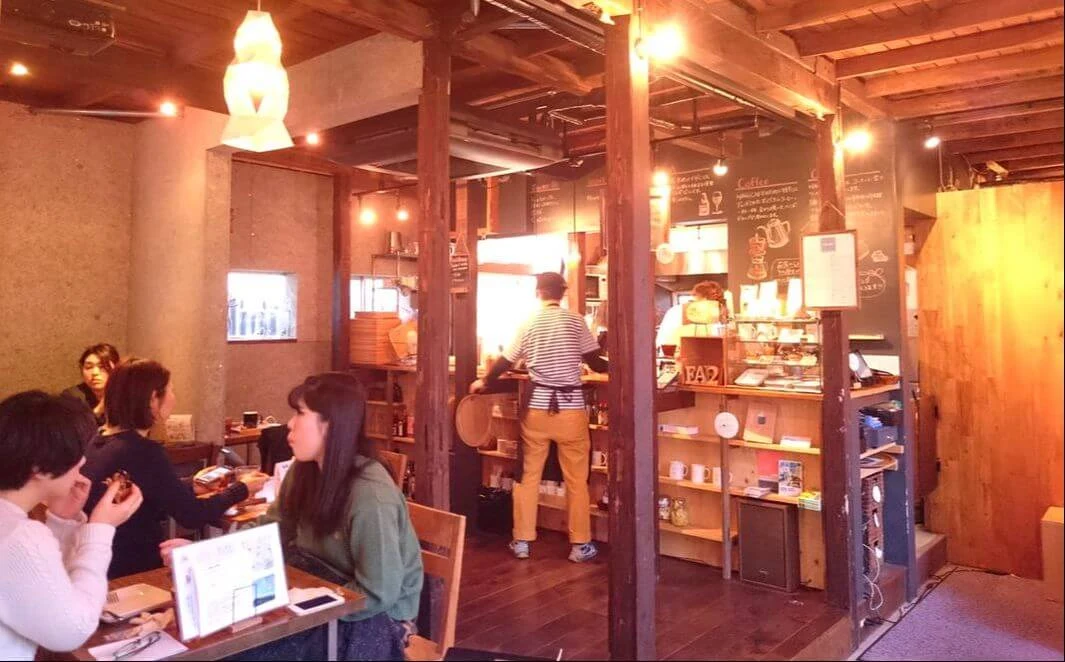
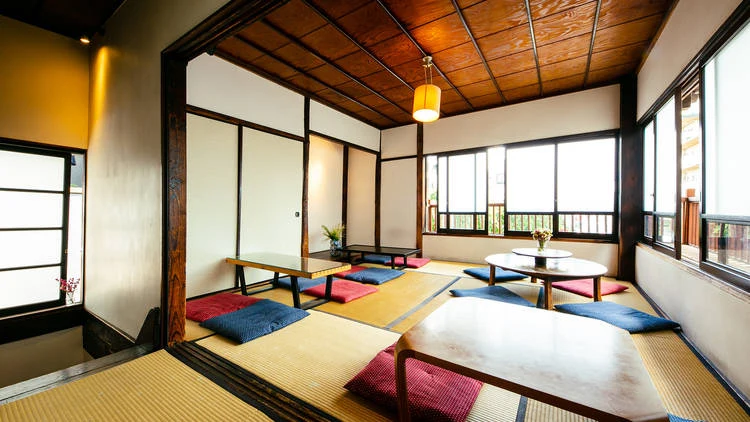
The seating plan says plenty about the experience: 16 seats on the first floor and 19 on the second, including table seating and a tatami room. That mix is central to how a kissaten works in an older Tokyo neighbourhood. It is neither a takeaway coffee hatch nor a formal restaurant. It is a place where the room, not the chef biography, carries the authority.

The food categories are broad but coherent: kissa, cafe, and kakigori. Breakfast availability extends the day earlier than many destination restaurants, while take-out adds flexibility. No private rooms and no private-use option reinforce the point: this is a public neighbourhood cafe rather than a controlled dining stage. Credit cards, major electronic money, transport IC cards, and QR payments are accepted, which is useful in an area where small older businesses can vary in payment habits.

For travellers building a day around eastern Tokyo, the smarter comparison is not another cafe with better latte art; it is the opportunity cost of a meal slot. Nezu Kamachiku and Teuchi Soba Nezu Takajo keep the decision in the neighbourhood and within a lower-to-mid price band, while Soba Kokoro moves slightly higher at dinner. A coffee shop selected for a kissaten list occupies a different lane: it gives Yanaka texture without demanding a full restaurant commitment.

How to place it in a Tokyo food itinerary

Kayaba Coffee works strongest as a daytime anchor in a city often planned around dinner. Use it to balance higher-cost meals elsewhere, especially if the itinerary already includes sushi, tempura, or yakitori. The surrounding area rewards walking rather than transfers, and the cafe’s Nezu/Nippori position makes sense before or after museums around Ueno, temple wandering in Yanaka, or a slower pass through the old shopping streets.

For a broader Tokyo dining map, pair this kind of kissaten stop with sharper category contrasts: charcoal and tuna at . 鮪と炭火焼き うお炭 秋葉原店, Shinjuku dining at 12/10 Shinjuku ten, yakitori at 124. KAGURAZAKA (Yakitori), visual cafe culture at 2D Cafe, and curry at 3 Chome no Curry Ya San. The city makes more sense when humble formats sit beside specialist ones.

For planning beyond one meal, use Our full Tokyo restaurants guide alongside Our full Tokyo hotels guide, Our full Tokyo bars guide, Our full Tokyo wineries guide, and Our full Tokyo experiences guide. The comparison also travels well across Japan and beyond: see -Grilled beef Sukiyaki- KAMAKURA TANUKIAN 鎌倉 たぬき庵 in Kamakura,.cafe in Osaka,.know in Kumamoto, (Shoku) Vietnam in Kawasaki, [Curry Senmon Ten] Maruyama Kyoju. in Sapporo, [ki:] in Kyoto, Jōdo Saké Bar in Los Angeles, and Onigiri Time in Pasadena.

The case for Kayaba Coffee is not that it competes with Tokyo’s high-ceremony counters. Its value lies in giving an older neighbourhood format real weight: recognised within the kissaten category, priced for repeat use, and flexible enough for breakfast, coffee, sweets, or a casual family stop. In a city where meals can become logistical projects, that restraint has its own authority.

Tags

ClassicCozyIconicRusticHidden GemSoloFamilyCasual HangoutAfter WorkBrunchHistoric BuildingDesign DestinationStandalone
Kayaba Coffee — Artefice