Why go
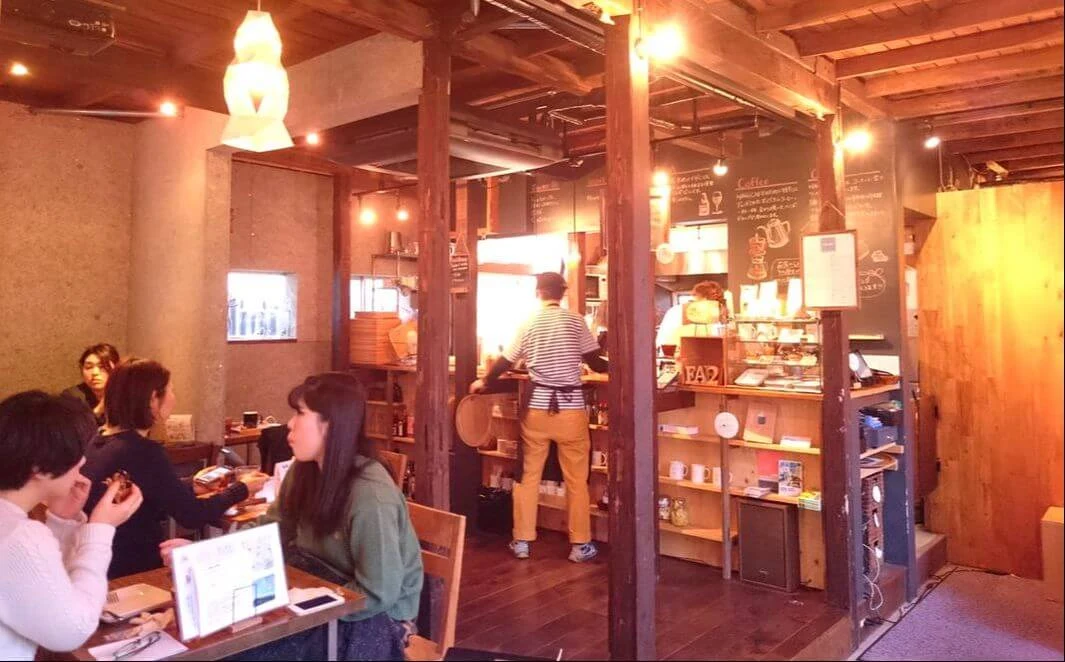
Coffee is drawn by hand, one cup at a time, on the ground floor of a 68-year-old wooden apartment building that its owners call the smallest cultural complex in Tokyo.
Hand drip, and a market a few streets away
HAGI CAFE is the cafe inside HAGISO in Yanaka, and it was never conceived as a stand-alone coffee shop. It shares the ground floor with HAGI ART, while the floor above holds the hanare reception and shop and HAGI SALON, so a coffee here sits inside a building shaped equally by food, art, architecture and the neighborhood around it.
The cooking is local in the most literal sense. The kitchen buys seasonal ingredients from the greengrocers, butchers and fishmongers a few streets away, which means the plates move with the market rather than a fixed menu. Coffee is prepared by hand drip, carefully, one cup at a time. The sweet side matters too, with house-made cakes and parfaits among the things people come back for.
Breakfast is the anchor
Morning is central to what HAGI CAFE is. Breakfast is treated as the daily anchor, including a traveling breakfast that takes its cues from regional Japanese cooking, so starting the day here is the intended use of the room rather than a side offer.
Later in the day the cafe leans into its place inside the cultural complex, where coffee, a seasonal plate, a parfait and whatever is hanging in the gallery can overlap in a single visit. The wooden building changes character with the light through the day, which is a real part of why people sit longer than they meant to.
Order the regional breakfast, then coffee and parfait
Take the breakfast if the visit is a morning one. It is the clearest statement the cafe makes, and the regional framing gives it more shape than a standard cafe plate.
Then hand drip coffee, which is the beverage signature and deserves to sit at the center of the table rather than arriving as an afterthought. For food outside breakfast, follow the season: vegetables from the neighborhood greengrocers, meat from local butchers, fish from nearby fishmongers, in whatever combination the kitchen has landed on that week. Finish with a house-made cake or one of the parfaits. That sequence, breakfast or a seasonal plate, then coffee, then something sweet, is what the building is set up to give you.
Tags
Frequently asked questions
What should I order at HAGI CAFE?
Breakfast if the visit is a morning one, since it is the cafe's daily anchor and takes its cues from regional Japanese cooking. Then hand drip coffee, prepared carefully one cup at a time, and a house-made cake or one of the parfaits to finish. Outside breakfast, follow whatever the season has brought in.
What is HAGISO, and how does the cafe fit into it?
HAGISO is a renovated 68-year-old wooden apartment building in Yanaka, described by its owners as the smallest cultural complex. HAGI CAFE shares the ground floor with HAGI ART, while the floor above holds the hanare reception and shop and HAGI SALON, so coffee, food, art and architecture sit in one building.
Compare nearby places
| Venue | Type | Area |
|---|---|---|
| Kayaba Coffee | Café | Yanaka |
| French Gashi Patissier Chocolatier Inamura Shozo | Bakery | Yanaka |
| caffe Michelangelo | Café | Daikanyama |
| Café Trois Chambres | Café | Shimokitazawa |
| COFFEE HALL Kugutsusou | Café | Kichijoji |