Why go
Kitahama’s food rhythm is quieter than Namba’s: more office-coat than neon. Around the river and business blocks, bakeries function less as café theatre than daily infrastructure: breakfast before meetings, sandwiches back to desks, loaves bought with the seriousness Osaka gives noodles, curry, and counters. Manpuku Bakery fits that pattern: a takeaway-only bread and sandwich shop in Chuo Ward, recognized by Tabelog Bread WEST 100 in 2020 and 2022, placing it in western Japan’s competitive bakery conversation, not casual snack territory.
Kitahama bread culture, judged by supply rather than spectacle
Osaka is often reduced to takoyaki, okonomiyaki, and late-night eating, but its bakery culture rewards quieter attention. Good shops are measured by turnover, repeat custom, and precision with flour, fat, filling, and texture across the day. Bread is not simply imported European form; it has been absorbed into Japanese convenience, gift culture, breakfast routines, and department-store food halls. The result is a city where a bakery can be modest in format and exacting in standards.
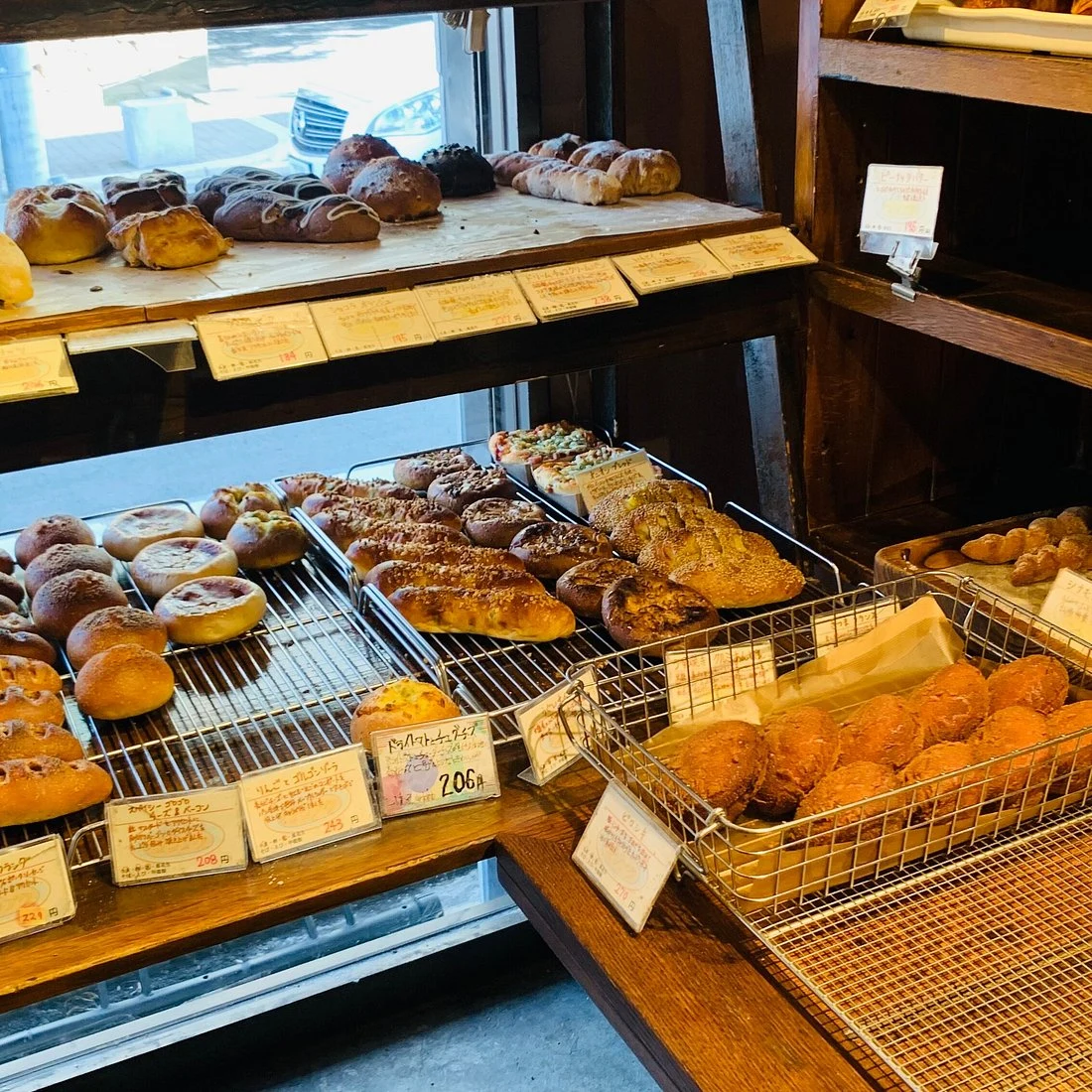
Ingredient sourcing is not only named farms or rare grains. In Japanese bakeries, quality shows through consistency: flour blends that hold structure, fillings portioned cleanly, bread that survives takeaway without collapsing, and sandwiches built for movement rather than dining-room ceremony. Manpuku Bakery’s Bread and Sandwich category signals that hybrid role. This is not a pastry salon for a long sit-down; it belongs to practical Osaka, where craft is judged by what can be carried out and eaten on schedule.
Tabelog’s Bread WEST 100 selection is a useful external marker. The list covers western Japan, not only Osaka, so inclusion implies performance in a regional field where Kyoto, Hyogo, Nara, and other Kansai bakery cultures are compared. Its Tabelog score of 3.70 adds another public signal, though the award carries more editorial weight because user-platform bakery rankings can favor volume and familiarity as much as technical ambition.
How it sits among Osaka's small-format food stops
For travelers, the sharper comparison is not with a luxury restaurant, but with short-form eating formats that reveal Osaka without demanding a full lunch or dinner. A bakery stop in Kitahama does different work from curry at Kashmir, a meal at Yokobori, or the neighborhood pull of Kitahama Choji and Numb. Those names occupy a broader Osaka map of low- to mid-priced eating, but bread can fit between coffee, transit, hotel check-out, and river walks without turning the day around.
Price clarifies the role. The spending band sits around JPY 999 to JPY 1,999, keeping it closer to everyday purchase than destination tasting format. That makes the recognition more interesting, not less. In a city where prestige dining can climb quickly, a low-cost bakery with regional award visibility says something about Osaka’s taste hierarchy: repeatable craft can matter as much as ceremony.
Kitahama helps. The area is close enough to central Osaka’s business and cultural routes to avoid becoming a detour, yet removed from the tourist compression around Dotonbori. That suits a takeaway bakery. The point is not table service; it is using the shop as an edible index of the neighborhood. Office workers, commuters, and food-focused visitors read the same case: what does this part of Osaka choose when a meal must be quick, portable, and still carefully made?
The comparison with other Osaka formats helps planning. For caffeine-first routing, .cafe and 52CHO-ME BAKERY point to other casual stops, while 551 Horai (551蓬莱) anchors a different Osaka comfort-food register. For a longer meal, the city moves toward Italian at 99 Pizza Napoletana Gourmet or a canto (Italian). Manpuku Bakery is strongest as the compact counterpoint: a bread stop that tells a serious Osaka story in minutes.
The case for seeking out a takeaway bakery
Travelers often over-plan Osaka around dinner and miss the daylit food culture that keeps the city moving. This shop corrects that bias. Bread and sandwiches are not substitutes for Osaka’s canonical dishes; they show another layer of local appetite, shaped by commuting patterns, compact retail spaces, and the Japanese habit of treating small purchases with precision. The absence of seats is format, not deficiency. It focuses attention on selection, turnover, and portability.
That changes how to judge value. A restaurant at JPY 2,000 to JPY 3,999 must justify time as well as money; a bakery in this band only has to justify attention. Against nearby venues such as Yokobori, Kitahama Choji, and Numb, the bakery asks less of the itinerary and gives a cleaner read on local routine. For visitors staying near Kitahama or moving between Osaka Castle, Nakanoshima, and central rail links, this stop can make the city feel less like a checklist and more like daily ritual.
For broader trip design, place the bakery inside a wider Osaka map rather than treating it as a standalone errand. The city guide rails are useful: Our full Osaka restaurants guide for meals, Our full Osaka hotels guide for base selection, Our full Osaka bars guide for evening structure, Our full Osaka wineries guide for wine-focused detours, and Our full Osaka experiences guide for cultural planning. Readers building a wider Japan food route can also compare regional formats through -Grilled beef Sukiyaki- KAMAKURA TANUKIAN 鎌倉 たぬき庵 in Kamakura, 鮪と炭火焼き うお炭 秋葉原店 in Tokyo,.know in Kumamoto, (Shoku) Vietnam in Kawasaki, [Curry Senmon Ten] Maruyama Kyoju. in Sapporo, [ki:] in Kyoto, Jōdo Saké Bar in Los Angeles, and Onigiri Time in Pasadena.
The editorial case is simple: Manpuku Bakery deserves attention because it compresses Osaka’s everyday food intelligence into a low-friction format. The award history supplies trust; the takeaway model supplies clarity; the Kitahama setting supplies context. It is not trying to compete with a full-service restaurant, and judging it that way misses the point. Its value lies in showing how seriously this city can take a small purchase.