Why go
Wa-pan made with Japanese-grown wheat
The flour is the first thing this bakery tells you about. 国産小麦, Japanese-grown wheat, is the sourcing rule Rakuraku builds its whole case on, and it calls itself a specialist in wa-pan, bread read through a Japanese lens rather than a European one. That means a counter shaped for Japanese tastes and textures instead of a French or German repertoire. The longer name the shop uses for itself, 「小江戸の和パン 楽楽」, ties it to Kawagoe's Little Edo identity before it names a single loaf. That order of priorities is the point. This is a bread shop with a sourcing rule and a regional accent, not a cafe with a bakery attached.
A bread stop in Kashiya Yokocho
Rakuraku sits in Kashiya Yokocho, Kawagoe's Candy Alley, a pedestrian lane of small confectionery shops that has been part of the city's old-town route for generations. The setting shapes a visit more than any interior could: a specialty bread counter embedded in a sweets district, on a street people walk slowly. There is no table service and no meal structure to plan around. You choose bread, pay, and carry it out into a lane built for eating while walking. Nothing about the shop points toward seating or a drinks list; the baked goods and the wheat behind them are the entire offer, which suits a lane where people eat standing up. Read it as one stop in the rhythm of Kashiya Yokocho rather than a destination in itself.
Start with the miso breads, then the sweet potato
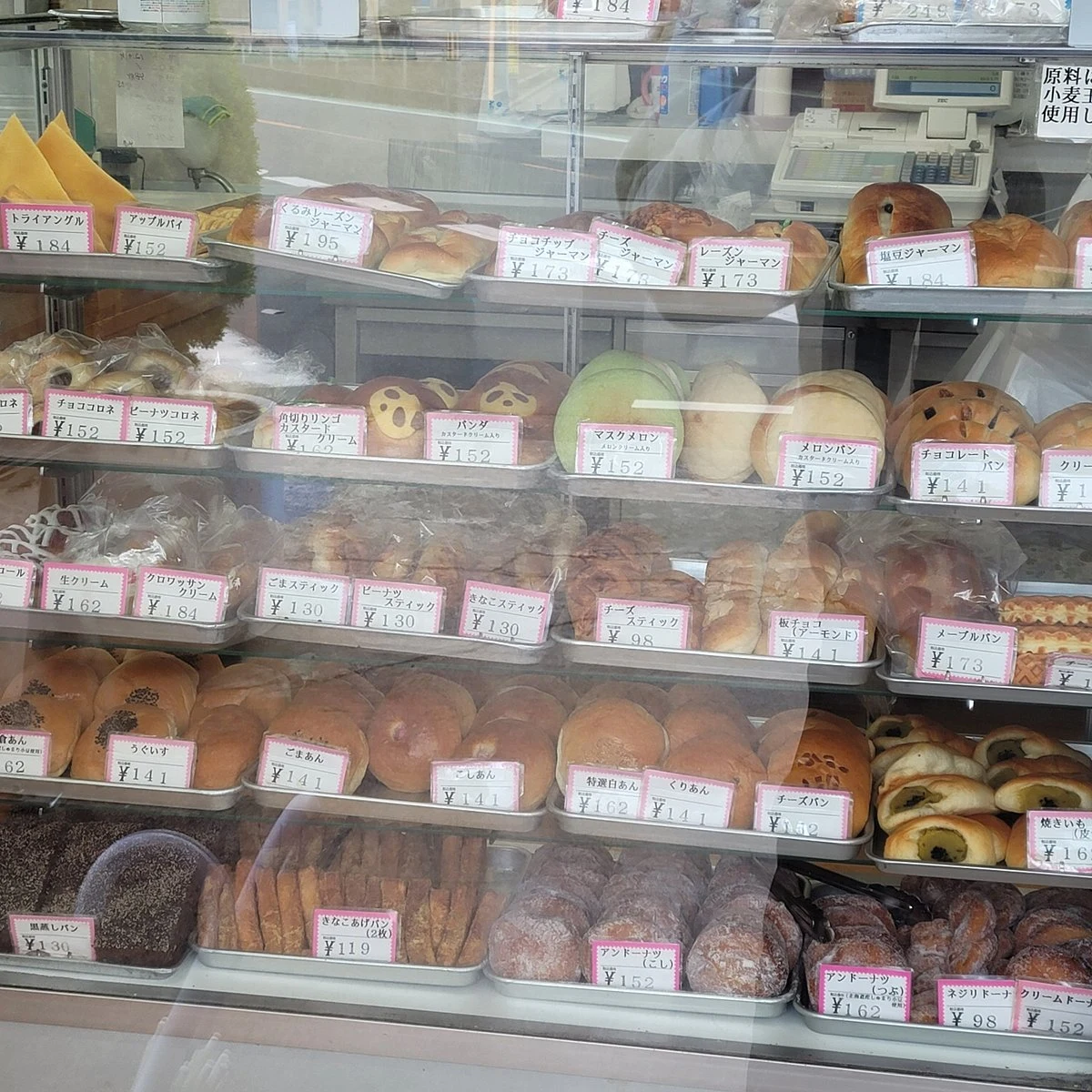
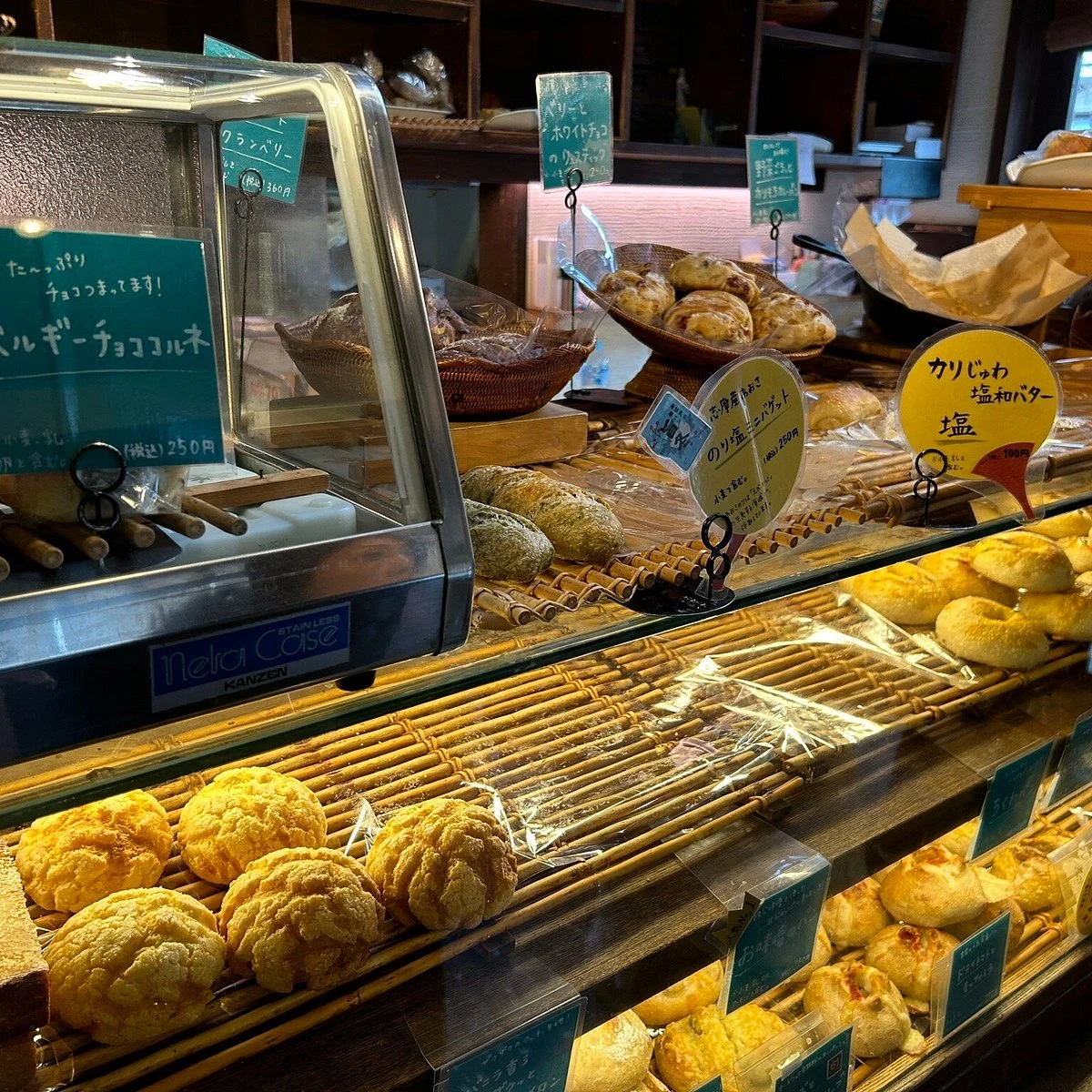
Miso is the clearest expression of what wa-pan means here. The signature run includes a miso bread and a miso melonpan, the second taking a familiar Japanese sweet bun and pushing it toward something savory and fermented. Curry pan works the same logic from the other direction, a Japanese bakery staple with no European ancestor. Then take the sweet potato bread, which is the local move: Kawagoe is a sweet potato town, and satsumaimo in a loaf here is a regional signature rather than a seasonal novelty. Kashi pan, the sweeter buns, round the bag out. The useful way to order is to build across those categories rather than chase one loaf, because the shop's argument is that Japanese wheat and Japanese flavors belong together in the same bread case.
Frequently asked questions
What should I order at Kawagoe Bakery Rakuraku?
Begin with the miso breads, which show most clearly what wa-pan means here: a miso bread and a miso melonpan that pushes a familiar sweet bun toward something savory. Then take the sweet potato bread, a regional signature in a city known for satsumaimo. Curry pan and kashi pan round the bag out.
What makes Rakuraku different from an ordinary bakery?
Two things. The bread is wa-pan, made for Japanese tastes and textures rather than a European repertoire, and the wheat is Japanese-grown, which the shop puts into its own name. It also sits inside Kashiya Yokocho, Kawagoe's old confectionery lane, so the bakery reads as part of a heritage street rather than a standalone shop.
Compare nearby places
| Venue | Type | Area |
|---|---|---|
| Asaka Bakery Asakadai ten | Bakery | Kita Asaka |
| PÂTISSERIE APLANOS | Bakery | Musashi-Urawa |
| Asaka Bakery Honmachi ten | Bakery | Honmachi |
| Kuneru Bakery | Bakery | Urawa |
| Boulangerie Arbre | Bakery | Negishidai |