Why go
Pour-over coffee in a drink-first kissaten
Made-to-order hot cakes define this tiny Tokyo kissaten, where Coffee Tengoku stamps each one with the Tengoku name and keeps the counter close to old Asakusa coffee-shop habits. The programme is classic kissaten rather than roastery bar. Coffee Tengoku serves coffee, tea, soft drinks, juice and beer, but the room is built around the rule that every guest orders a drink, so the cup is not an afterthought beside the plate.
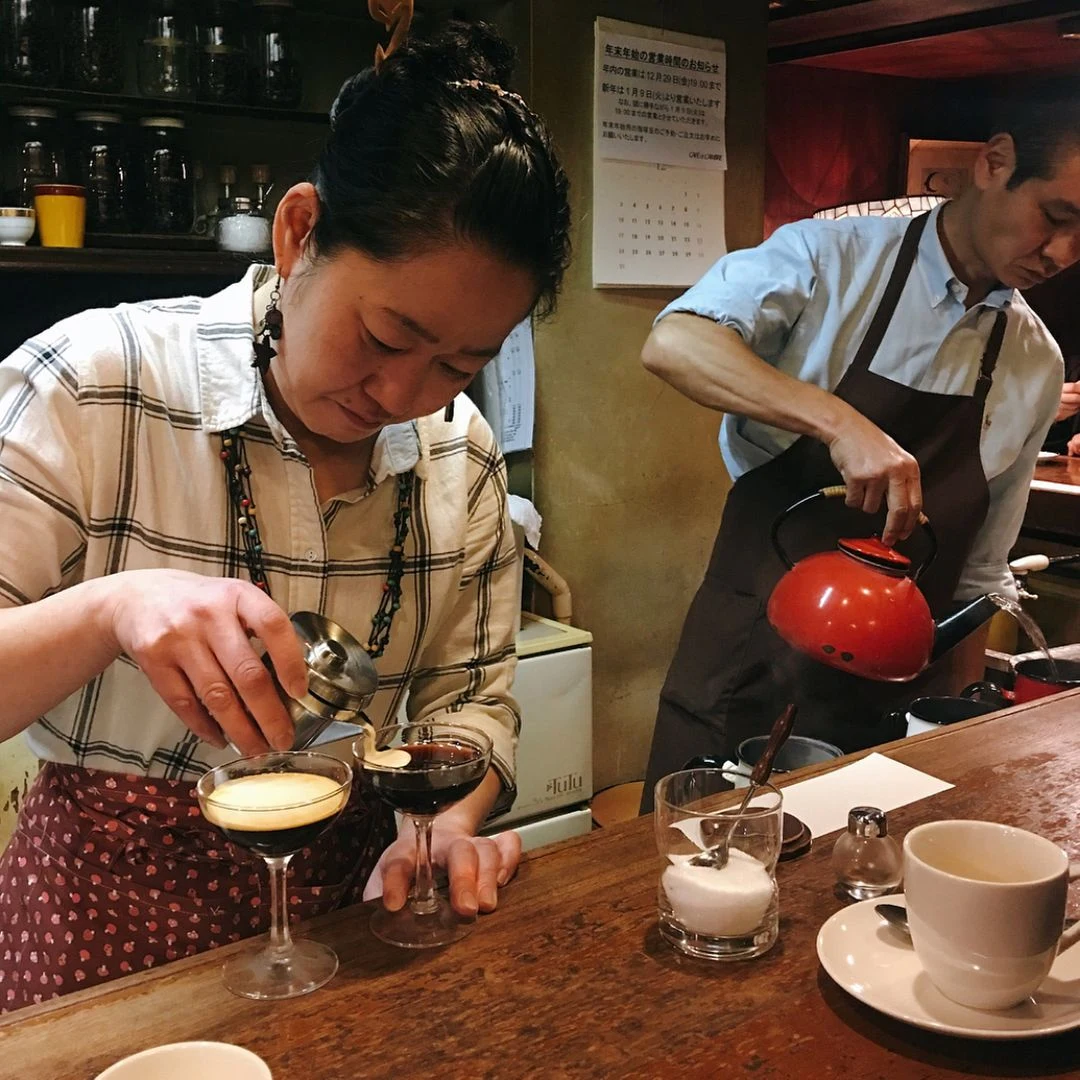
The black coffee is freshly ground and brewed as pour-over, with the old Japanese coffee-shop preference for a darker, slightly bitter cup that finishes sweet rather than sharp. Vienna Coffee is on the drink list too, the kind of cream-topped order that suits a room more interested in pace and comfort than origin cards. The house does not name a roaster or an origin, and that fits the format: this is a small Asakusa kissaten where the coffee supports the hot cakes, not a lab for rotating lots.
Brick, wood, baskets and a small room
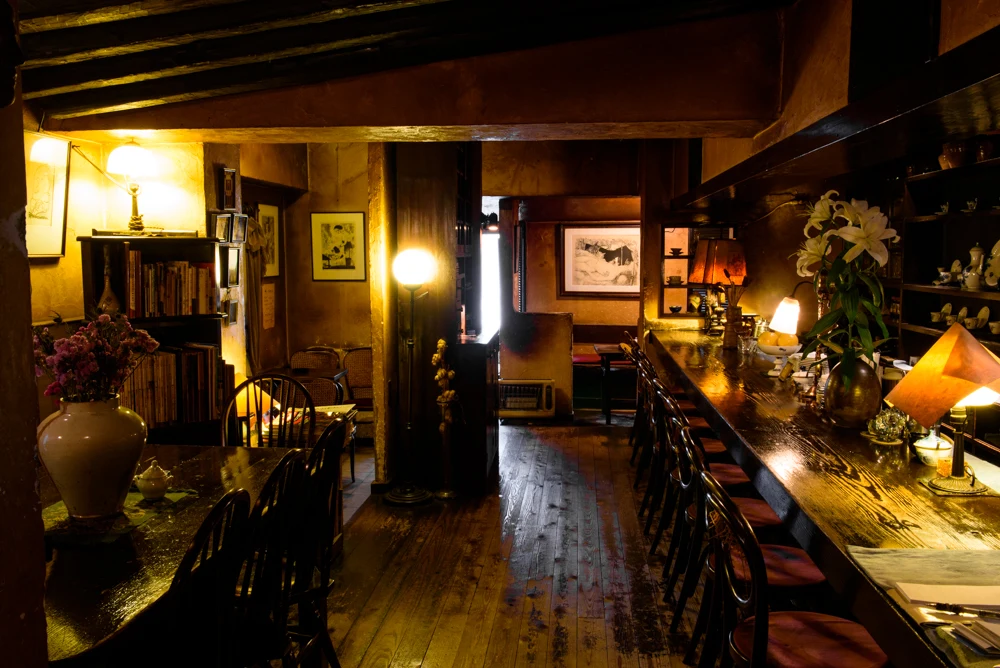
The room works on a compact scale. Red brick outside, wood and Showa-era detail inside, and a handful of tables make it feel closer to a private sitting room than a modern café floor. Table service keeps the flow simple: sit, settle bags and coats into the baskets provided at the table, then choose the drink and the plate.
The kitchen sits at the back and runs with the control a small menu needs, especially when the hot cakes are mixed and cooked to order rather than pulled from a batch. Lines can form at busier moments, but turnover is quick because most people are here for the same rhythm: coffee, hot cake, a short pause, then back out into Asakusa. The hour to like it is the quieter one, when the griddle has time to be the point.
Order the stamped hot cakes first
Start with the hot cakes. They are the house signature for a reason: made from the dry mix onward, cooked on the griddle, then branded with a hot iron so the word Tengoku sits on the surface. The texture lands between pancake and cake, with a light crisp edge, a soft middle, maple syrup and salted butter doing the rest.
If the table wants something savoury, add the hot dog, or the Hot Chili Dog with spicy ground beef and chili sauce, which stays more gentle than fierce. For the drink, black pour-over is the cleanest pairing when the sweet plate is the main event. Vienna Coffee is the softer order, especially if the appeal is the old kissaten register as much as the griddle cake itself. The useful move is simple: one hot cake, one coffee, no attempt to turn it into lunch.
Tags
Frequently asked questions
What should I order at Coffee Tengoku?
The hot cakes, which are mixed and cooked to order and then branded with a hot iron so the word Tengoku sits on the surface. They land between pancake and cake, with a crisp edge, a soft middle, maple syrup and salted butter. Take a black pour-over alongside them.
Do you have to order a drink?
Yes. The room runs on the rule that every guest orders a drink, so the cup is never an afterthought beside the plate. The black coffee is freshly ground and brewed as pour-over, darker and slightly bitter in the old Japanese style, and Vienna Coffee is the softer, cream-topped alternative.
Compare nearby places
| Venue | Type | Area |
|---|---|---|
| Royal Coffee Ten Honten | Café | Asakusa |
| Café Trois Chambres | Café | Shimokitazawa |
| Usagiya CAFE | Café | Ueno |
| Coffee Tei Ruan | Café | Omori, Ota City |
| Sumibi Yaki Coffee Kura | Café | Ikebukuro |