Why go
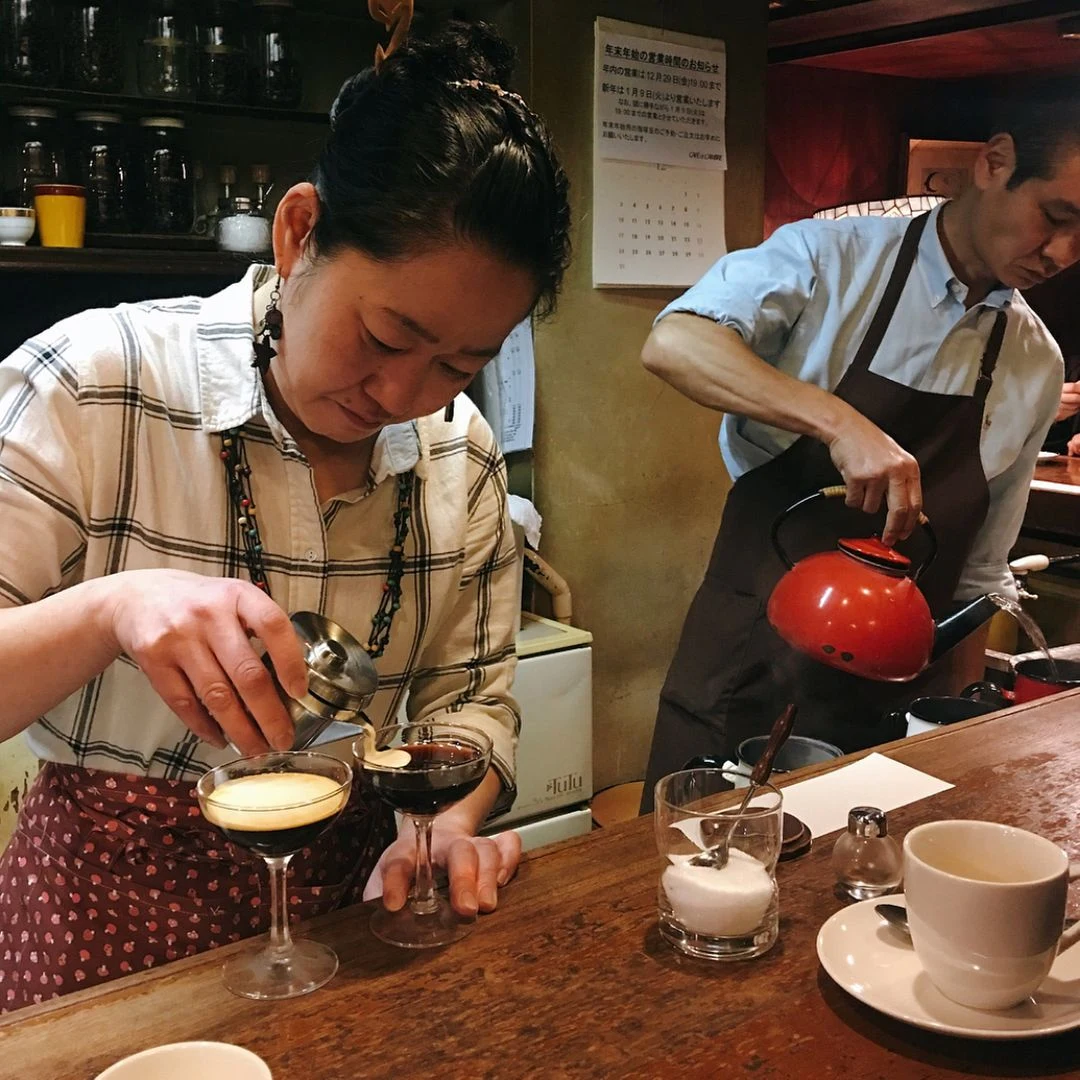
Coffee arrives composed here: the Ambre de la Reine comes with evaporated milk floating on coffee extract, and instructions not to stir it.
Charcoal roasting, layered milk and a slower pull
Coffee Tei, 皇琲亭, has been an Ikebukuro coffee house since April 1983, and the promise has not moved much in four decades: good coffee in a comfortable room. Roasting and extraction are treated as the work rather than the preamble. Beans are roasted over Kishu binchotan charcoal and extracted in a way meant to hold back bitterness and keep the flavour clean, an approach the house applies even to the rare kopi luwak it has poured in small quantities.
The same attention shapes the milk drinks. Ambre de la Reine is coffee extract topped with evaporated milk, and guests are asked not to stir it, so the two meet gradually in the mouth. The iced café au lait uses the same two-layer idea, keeping milk and coffee visually distinct because the contrast is part of the drink. Berry Berry Cake is the sweet that sits beside them.
Copper pots, Mozart and kissaten calm
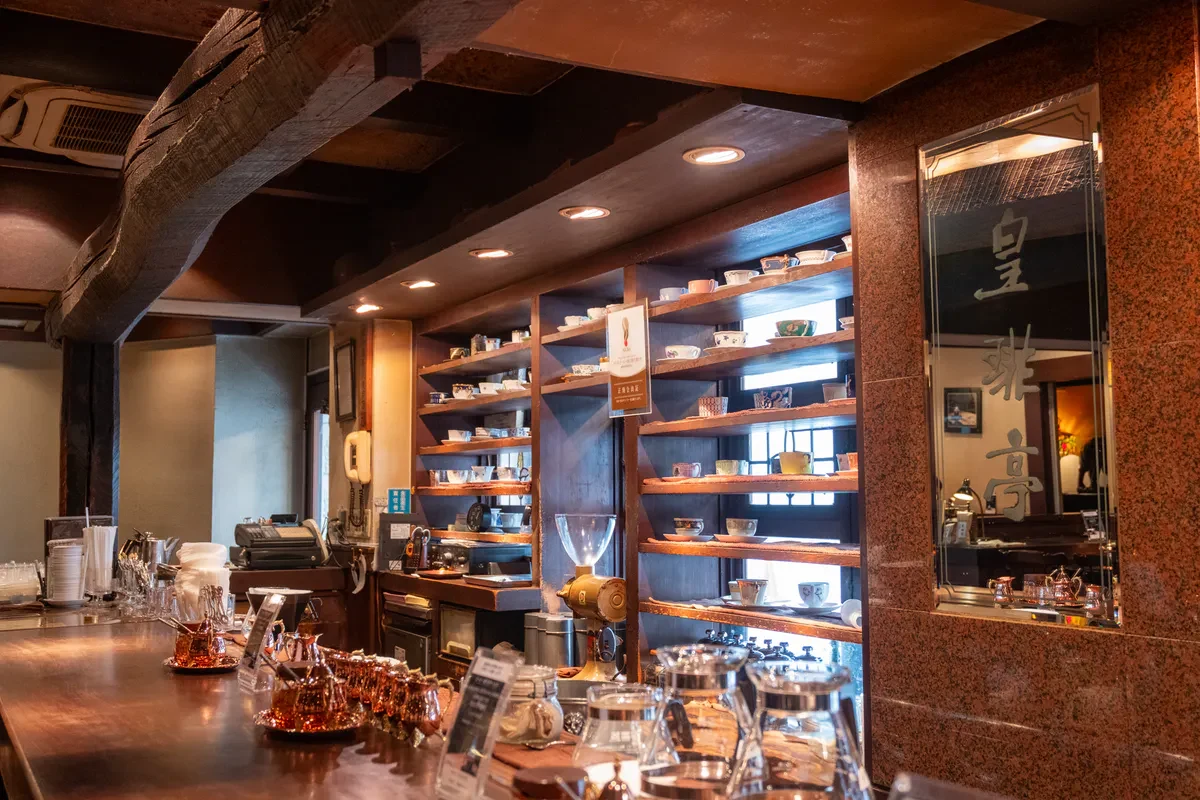
The room rests on comfort, polish and long-running ritual, closer to a British pub and tea room than to a modern coffee bar, with counter seating and Mozart playing without a break. In Ikebukuro, one of Tokyo’s busiest commercial districts, that stillness is the whole proposition.
A small service detail gives the atmosphere away: the copper sugar pots are polished every morning before service. It is not menu development, but it is hospitality, and it is the kind of care a guest notices only subconsciously. The room went fully non-smoking in October 2024, so the environment still changes while the core stays coffee, comfort and careful presentation.
Order the Ambre de la Reine first
Start with the Ambre de la Reine, because it explains the house style in one glass: coffee extract, evaporated milk, separation, and a request for restraint. Do not stir it. Let the layers combine as you drink, which turns familiar coffee and milk into a slower sequence of texture and flavour.
On warmer days the iced café au lait is the more direct order, built on the same visual logic. If kopi luwak is being poured it belongs in its own category, a limited coffee roasted over binchotan and extracted to keep the bitterness low. Add Berry Berry Cake alongside. The pattern is simple: choose a drink where the construction matters, then give it time at the table.
Tags
Frequently asked questions
What is the Ambre de la Reine?
It is Coffee Tei’s signature layered drink: coffee extract with evaporated milk floated on top, served with a request not to stir it. The layers meet gradually as you drink, so the balance shifts from milk to coffee across the glass. The iced café au lait works on the same principle.
What is the room like at Coffee Tei?
Quiet and formal in the old kissaten manner, with counter seating, polished copper sugar pots and Mozart playing continuously. It has been running since 1983 and reads closer to a British pub and tea room than to a modern coffee bar. Seating went fully non-smoking in October 2024.
Compare nearby places
| Venue | Type | Area |
|---|---|---|
| Sumibi Yaki Coffee Kura | Café | Ikebukuro |
| COFFEE VALLEY | Café | Ikebukuro |
| CAFE DE L’AMBRE | Café | Ginza |
| Coffee Kizoku Edinburgh | Café | Shinjuku |
| Pelican Cafe | Café | Asakusa / Tawaramachi |