Kinshicho

Coffee Senmon Ten Tomii

CafeSpecialty Coffee Shop4.3 on GoogleAbout $10 a head
Coffee Senmon Ten Tomii

Why go

North of Kinshicho Station, office workers thin out, local shopping streets take over, and polished central-Tokyo dining grammar gives way to smaller rooms with less performance. Coffee Senmon Ten Tomii belongs to Tokyo’s other coffee story: not the international specialty circuit of tasting flights and design-led retail shelves, but the kissaten tradition, where coffee shops serve as neighbourhood infrastructure with solo tables, slow pacing, counter seats, and food closer to habit than spectacle.

That matters in a city whose café culture now splits into tribes: minimalist roasters built around bean provenance, photogenic dessert cafés, hotel lounges arranged around afternoon sets, and kissaten preserving a quieter urban role. This Kinshicho address sits firmly in the last camp. Sumida feels less scripted than Ginza or Aoyama; its food culture rewards patience, repeat use, and small-format places that need not explain themselves. Tabelog’s Kissaten 100 recognition in 2021 and 2022 gives the room a public signal, but the category is the story: a Japanese coffee shop and pancake specialist operating at neighbourhood scale.

Kinshicho's coffee-shop rhythm, not central Tokyo café theatre

Tokyo’s eastern wards show how the city eats outside the prestige corridor. Kinshicho sits where commuter movement, shopping, after-work drinking, and old residential streets meet. Nearby dining spans inexpensive udon, South Indian cooking, yakitori, and mid-range casual restaurants, making the area more mixed than its reputation suggests. In the comparison set, Jun Teuchi Sanuki Udon Goro occupies the sub-JPY 1,000 everyday end, Venu's South Indian Dining Kinshichou ten works in a higher casual bracket, and Tori Ki sits in a much more expensive yakitori tier. Coffee Senmon Ten Tomii stands apart from that dinner economy: its value is daytime tempo and kissaten format, not destination dining ritual.

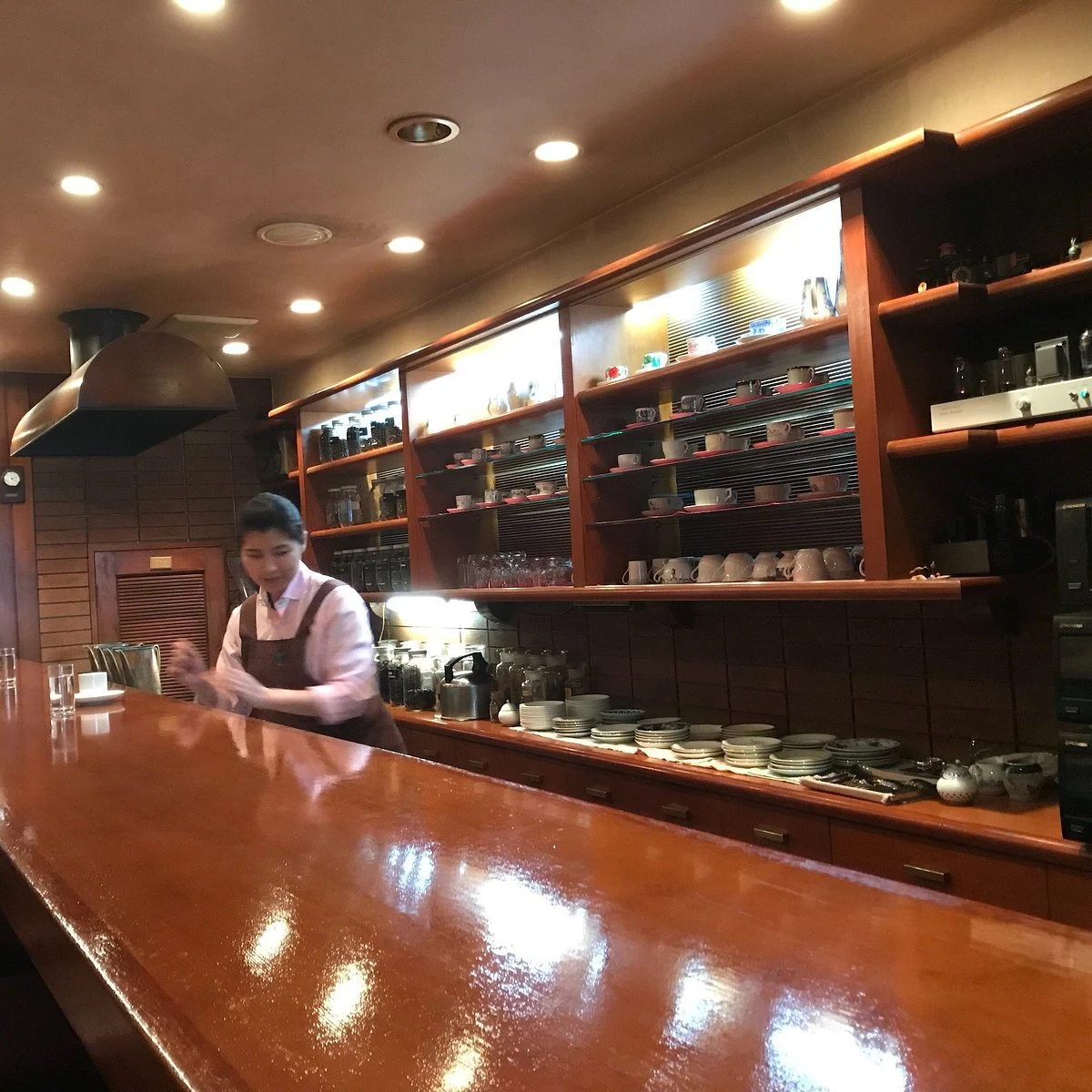
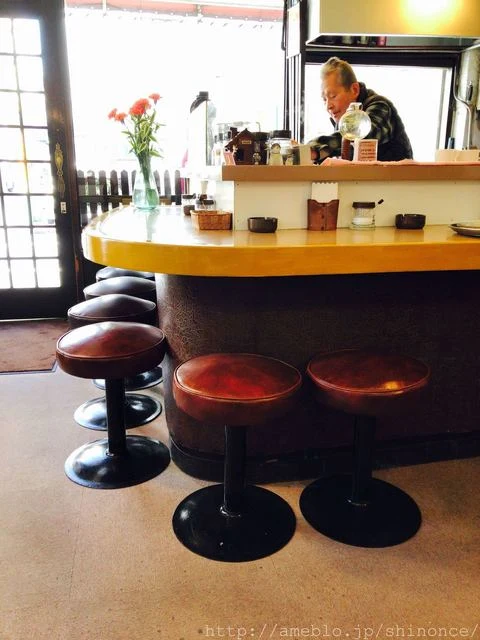
The 17 seats, split between counter and tables, make format shape the experience as much as the menu. In Japanese coffee-shop culture, counter seating turns a café into a working room rather than a lounge. The guest is not buying anonymity in a large all-day space, but entering a compact local system. The no-reservations format is more than logistics: it keeps the place closer to neighbourhood use than to the appointment-only style defining much of Tokyo’s high-end restaurant culture.

The Tabelog 100 Kissaten selection places it in a narrow competitive frame. Tokyo has thousands of cafés, but this list concerns a specific lineage: older coffee-shop habits, house desserts, smoking rules, seating intimacy, and the ability to sustain regular custom. A Tabelog score of 3.68 here is not a luxury credential; it signals that a modest format has been noticed in a city where small rooms can be judged as seriously as tasting counters. The point is Tokyo’s capacity for hierarchy even at pancake-and-coffee scale.

Pancakes and coffee as a Tokyo daytime category

Pancakes in Japan occupy a different lane from the American breakfast plate. In kissaten culture, they sit with toast, coffee, and light meals as part of a mid-morning or afternoon grammar, not a brunch performance. Soufflé pancake chains and dessert cafés have stretched the category, but a kissaten setting anchors it to coffee-shop pacing. At Coffee Senmon Ten Tomii, the listed categories are Japanese coffee shop and pancake, which identifies the editorial reason to go: not breadth or a chef-led tasting format, but a narrow daytime proposition with a recognisable tradition behind it.

That narrowness is increasingly valuable in Tokyo. Newer cafés compete through interiors and social-media-ready plating; older kissaten through continuity, price restraint, and the friction of small capacity. Cash-only payment and no official website place it outside the frictionless tourist path, but not in obscurity: Tabelog selections have already pulled it into public view. Read it as structurally local: small, weekday-oriented, and tied to Kinshicho’s rhythms rather than a citywide reservation chase.

For travellers building a Tokyo food itinerary, category discipline helps. Pairing a kissaten stop with higher-intensity meals keeps the city from becoming only counter menus and late-night bars. A day might start with old-school coffee culture in Sumida, then move toward curry, yakitori, or sake elsewhere. EP Club’s broader Tokyo coverage helps map those shifts: Our full Tokyo restaurants guide sits alongside Our full Tokyo hotels guide, Our full Tokyo bars guide, Our full Tokyo wineries guide, and Our full Tokyo experiences guide. Useful city contrasts include 鮪と炭火焼き うお炭 秋葉原店, 12/10 Shinjuku ten, 124. KAGURAZAKA (Yakitori), 2D Cafe, and 3 Chome no Curry Ya San, each showing another version of Tokyo’s casual and specialist dining map.

How to read the room before adding it to a Tokyo day

The question is not whether this is a grand detour, but whether a traveller wants a Tokyo coffee stop that explains place. Kinshicho gives the visit texture because it is not arranged around luxury consumption. Sumida’s appeal is cumulative: station-side density, everyday restaurants, old commercial streets, and a pace that makes small establishments socially legible. In that context, a 17-seat kissaten with Tabelog recognition carries more meaning than a larger café with sharper branding.

Practicalities should shape the decision. Reservations, private rooms, and parking are unavailable. Payments are listed as cash-only across cards, electronic money, and QR methods. Non-smoking status and take-out service make it easier to fit into a daytime plan, while the small seat count argues against using it as a flexible fallback for a large group. Solo diners and pairs are the natural fit. Better to make Kinshicho the point for that part of the day than force the stop between distant appointments.

For readers comparing across Japan and beyond, the appeal is category literacy more than trophy collecting. Other EP Club listings cover café, curry, sake-bar, and Japanese casual formats in different cities, from -Grilled beef Sukiyaki- KAMAKURA TANUKIAN 鎌倉 たぬき庵 in Kamakura and.cafe in Osaka to.know in Kumamoto, (Shoku) Vietnam in Kawasaki, [Curry Senmon Ten] Maruyama Kyoju. in Sapporo, [ki:] in Kyoto, Jōdo Saké Bar in Los Angeles, and Onigiri Time in Pasadena. Read against those, this Kinshicho kissaten reminds us that Japan’s dining culture is not only omakase counters and tasting menus. Sometimes the sharper lesson is a small coffee shop with pancakes, public recognition, and a neighbourhood that keeps the experience grounded.

Tags

ClassicCozyQuietHidden GemIntimateSoloCasual HangoutBrunchAfter WorkStandaloneDesign Destination