Why go
Kyushu tea leads the table
Tea is the first decision at Café Diva, and the list stays close to home. Japanese black tea grown in Kyushu sits at the centre of it, with an orange chocolate tea alongside for anyone who wants the cup to lean towards dessert. The pastry work is built to partner the pot rather than to upstage it, which is the reverse of how most hotel cafés are organised.
Seasonal afternoon tea is the fullest expression of that idea, bringing the patisserie and the tea list onto one table. The parfaits follow the same regional logic, built on Kyushu fruit and rebuilt as the season turns, so the glass in front of you is different in summer from what it is in autumn.
A jewel-box room inside the Ritz-Carlton
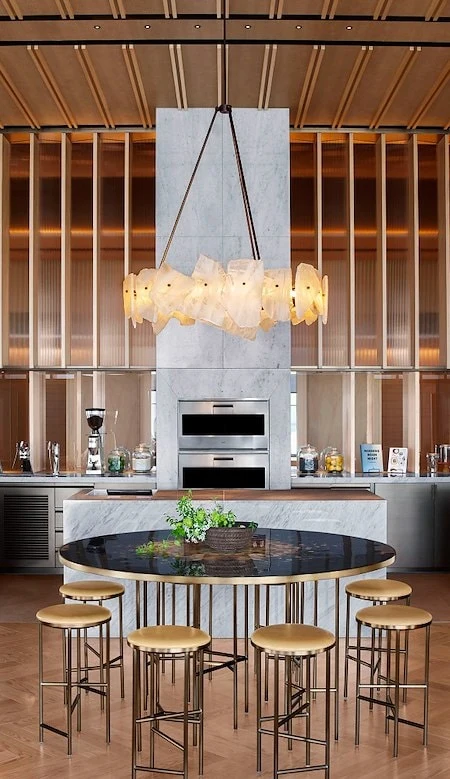
Café Diva sits high in the Ritz-Carlton Fukuoka in Daimyo, and the room is designed like a small and elegant salon: polished contemporary surfaces, soft lighting carried over from the hotel lobby, and windows that open onto the bay. It is calm without being hushed, and social enough in the middle of the afternoon to feel like a room people have chosen rather than passed through.
That setting decides what the café is for. It suits a long sit rather than a drink collected on the way somewhere, and the service moves at the pace of a tea table instead of a counter. Cakes and patisserie are treated as the main event here, not as something wheeled out at the end.
Order the seasonal afternoon tea first
The seasonal afternoon tea is the clearest expression of the place, because it puts the pastry side and the tea side on the same table instead of making you choose between them. It is also the part of the menu that changes most across the year, so a second visit in a different season is a genuinely different sitting.
For a shorter visit, take a seasonal parfait with Kyushu fruit and a pot of the Kyushu black tea. That pairing keeps the whole order inside the region: fruit in the glass, leaf in the cup. Orange chocolate tea is the better second pot when the table wants something sweeter, and it holds its own next to the richer cakes. Pastries and cakes can also be ordered on their own, which is the simplest way in when the full afternoon tea service is more than the afternoon needs.
Tags
Frequently asked questions
What is Café Diva known for?
Seasonal afternoon tea is the draw, served in an elegant café inside the Ritz-Carlton Fukuoka. The tea list leans on Japanese black tea grown in Kyushu, with an orange chocolate tea as the dessert-leaning alternative, and the kitchen builds parfaits around Kyushu fruit that change with the season. Patisserie and cakes complete the programme.
What should you order at Café Diva?
Order the seasonal afternoon tea on a first visit, because it puts the patisserie and the tea list on one table. For something shorter, take a seasonal parfait made with Kyushu fruit and a pot of Kyushu black tea. Orange chocolate tea is the sweeter second pot, and it works beside the richer cakes.
Compare nearby places
| Venue | Type | Area |
|---|---|---|
| Coffee Bimi | Café | Akasaka, Chuo-ku |
| Cafe Ospitale | Café | Hakata |
| Patisserie Au Fil Du Jour | Bakery | Sakurazaka |
| Shiroya Bakery Kokura ten | Bakery | Kokurakita-ku |
| Strut Coffee | Café | Jeonpo / Seomyeon cafe street |