Why go
Baguettes from a stone hearth
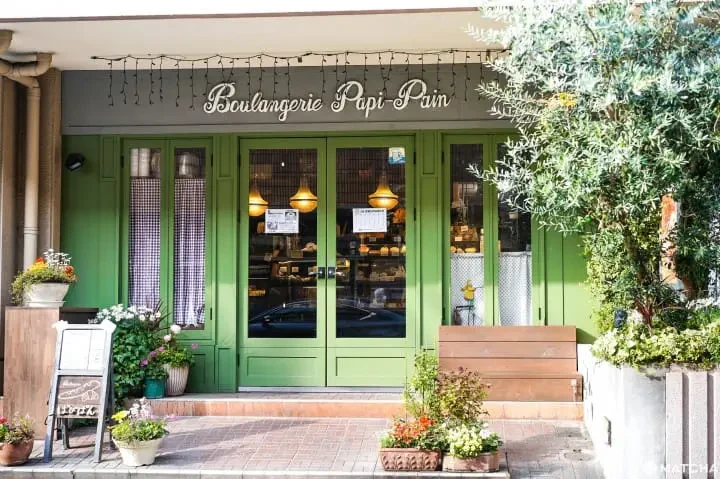
Baguette Traditional, バゲット・トラディショナル on the label, sets the terms here: French method, a stone-hearth oven, and a shop that keeps circling the question of what real French bread should taste like. Croissants, campagne, rye loaves and rustic breads extend the same craft, while sandwiches and sweet breads cover the everyday end of the counter. The address is in Ueda, in Nagoya's Tenpaku Ward, and the house calls itself a bread and baked-sweets specialist rather than a café.
Time spent in France sits behind the method, along with the image of an ideal neighbourhood bakery taken from an illustrated book. Even the name carries it: ぱぴ echoes the French word for grandfather, which suits a shop built on handwork.
What fills the case
The French base is localised in the details. Aichi coppe with red bean butter, an anko butter baguette and a mochi-fuwa Aichi coppe pull local tastes into a boulangerie framework. Around them the case runs through savoury buns, plain breads, baked sweets, sandwiches and croissants, so one visit can cover tomorrow's bread and this afternoon's sweet.
The sweets carry their own signatures. 濃厚クリームパン, the rich custard cream bread, is the named one, with アーモンド・メレンゲ, an almond meringue, close behind. めろめろレモンパン, a lemon bread, plus pistachio chocolat, orange-chocolate pastries and a kouign-amann fill out the sweeter shelves. Monthly recommendations bring seasonal work such as a blueberry cream cheese rye bread or a raspberry cream cheese pie.
Savoury baking is where the hybrid style shows most plainly. たっぷり!明太フランス, a mentaiko French bread, and プレミアム★ガーリックフランス, a premium garlic French bread, both treat the baguette as a carrier for something rich.
How to order
Take the rich custard cream bread first, since it is the named signature and it shows what the bakers do with a soft dough. Add the almond meringue for contrast, and the lemon bread if the order is staying sweet.
Then take the bread seriously. Baguette Traditional is the clearest statement of the French method, and campagne, rye and the rustic loaves carry it past a single loaf. A mentaiko or garlic French bread turns the visit into something closer to a meal. The shop was listed in the Tabelog 100 in 2022, which puts it among the bakeries readers in Japan will travel for, and the order that repays the trip runs bread first, sweets second.
Frequently asked questions
What should I order at Boulangerie Papi-Pain?
Start with the rich custard cream bread, the shop's named sweet signature, then take a Baguette Traditional, which is where the French method is clearest. Almond meringue and lemon bread cover the baked-sweets side, and a mentaiko or garlic French bread makes the visit closer to a meal.
What kind of bread does Papi-Pain bake?
French-method bread from a stone-hearth oven, led by Baguette Traditional and backed by croissants, campagne, rye and rustic loaves. Alongside that runs a Japanese-inflected range, including Aichi coppe with red bean butter and an anko butter baguette, plus savoury buns, sandwiches and a monthly rotation of seasonal breads and pastries.
Compare nearby places
| Venue | Type | Area |
|---|---|---|
| Patisserie Avalon | Bakery | Yagoto |
| Patisserie Vivienne. | Bakery | .null |
| Oosu Bakery | Bakery | Osu |
| patisserie gramme | Bakery | Chikusa |
| Echire Patisserie au Beurre | Bakery | Nagoya Station / JR Nagoya Takashimaya |