Why go
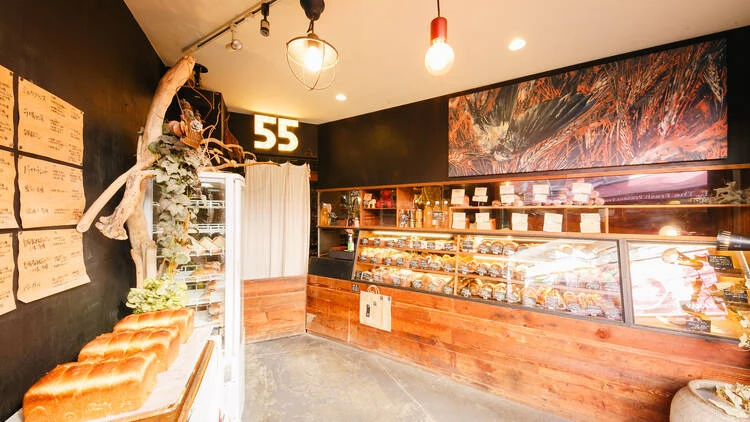
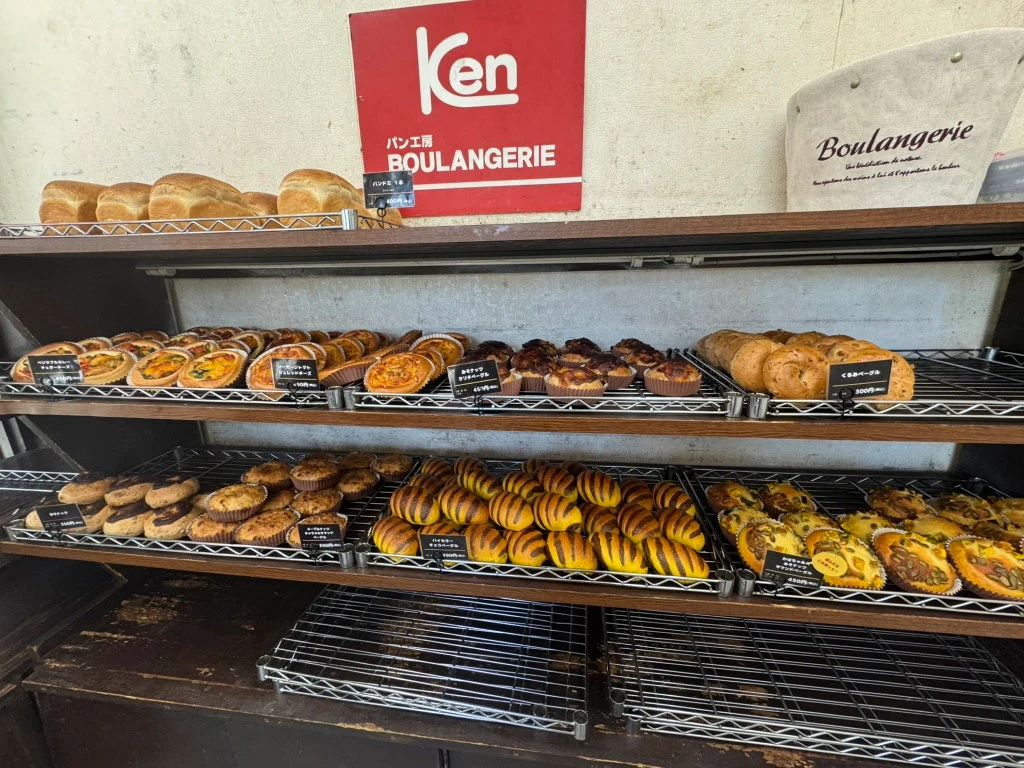
Akatsuka is not the Tokyo bakery fantasy of glass cases in a department-store basement or laminated pastries carried home in branded shopping bags. The appeal here is more local and more functional: a small take-out bakery rhythm, customers moving in and out, and a menu that treats bread, bagels, and sandwiches as the core architecture rather than side categories. BOULANGERIE KEN sits in that useful Tokyo category where the bakery is not a place to linger, but a stop built around selection, timing, and carrying the day’s purchases elsewhere.
That matters in a city where bread has developed along several lines at once. Tokyo has French-influenced pâtisserie-adjacent bakeries, department-store boulangeries, neighbourhood shokupan specialists, bagel counters, curry-pan institutions, and hybrid shops that borrow freely from all of them. This address belongs to the hybrid end of the spectrum. Its Tabelog Bread TOKYO 100 selection in 2022 is the clearest public signal that it is being judged inside the city’s bakery conversation, not merely as a convenient local shop.
A bakery menu built around categories, not ceremony
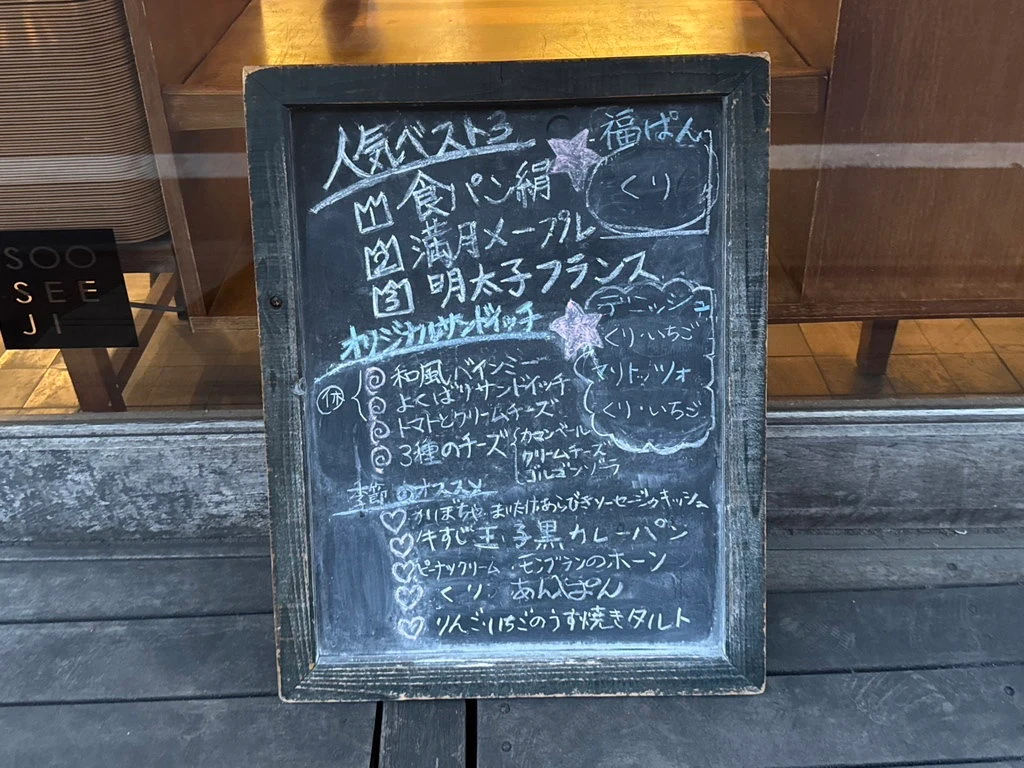
The useful way to read this place is through its structure. Bread, bagel, and sandwich are not vague labels here; they define the range of decisions facing the customer. In Tokyo, that kind of menu architecture usually signals a bakery aimed at repeat use rather than a single tasting moment. The question is not which course comes next, but how the counter balances daily bread, filled items, and portable lunch formats.
That makes the format different from Tokyo restaurants where sequencing, service, and booking pressure shape the experience. A yakitori counter such as 124. KAGURAZAKA (Yakitori) asks the diner to submit to pacing and heat; a specialist curry shop such as 3 Chome no Curry Ya San is built around a tighter plate identity. A bakery like this works by breadth within a narrow field. The commitment is to a family of products, not to a single dish category.
Compared with low-price Tokyo peers in the comparison set, the positioning is also telling. Ishida Ya operates in a similar sub-JPY 999 bracket, while Chuka Soba Benten sits one tier higher at JPY 1,000 to JPY 1,999. Rakusui En is priced well above both, at JPY 3,000 to JPY 3,999. Those numbers do not make a quality hierarchy, but they do explain the decision type: this is everyday spending with destination-bakery recognition attached, a combination Tokyo does particularly well.
Why Akatsuka changes the read
Neighbourhood context matters. Central Tokyo’s food scene often rewards theatrical scarcity: tiny counters, fixed menus, and reservation windows. Akatsuka moves at a different pace. Itabashi’s residential character gives a bakery more practical weight, because bread is part of daily life rather than a scheduled event. In that setting, take-out only is not a limitation; it is the format. The bakery’s value comes from how it fits into errands, commuting, family routines, and the small detours that define serious eating in Tokyo.
For travellers, this is the dividing line. Anyone building a Tokyo itinerary only around long dinners will miss a large part of how the city eats. Bread shops, kissaten, curry counters, ramen rooms, and prepared-food specialists often explain neighbourhoods better than formal dining rooms. The broader map is visible across Our full Tokyo restaurants guide, while the city’s other layers sit in Our full Tokyo hotels guide, Our full Tokyo bars guide, Our full Tokyo wineries guide, and Our full Tokyo experiences guide.
The bakery’s award history also gives the stop more weight than a casual neighbourhood detour. Tabelog Bread selections across multiple years, including 2017, 2018, 2019, 2020, and 2022, indicate sustained recognition in a category where consistency matters. Bread is unforgiving in a different way from sushi or tempura: the customer sees repetition rather than spectacle, and the reputation is built purchase by purchase.
How to place it in a Tokyo eating day
The smartest use of BOULANGERIE KEN is not to treat it like a restaurant replacement. It belongs earlier in the day, or as a targeted stop before a train ride, park walk, or hotel return. Because the format is take-out, the experience is compressed: choose from the bread, bagel, and sandwich field, pay, and move on. That brevity is part of the appeal, especially in a city where a single dining day can swing from bakery counter to ramen queue to formal dinner.
It also pairs well conceptually with Tokyo’s less formal specialists. The city can move from grilled and seafood-led rooms such as. 鮪と炭火焼き うお炭 秋葉原店 to genre-led addresses such as 12/10 Shinjuku ten and visual café formats like 2D Cafe. The bakery sits closer to the daily-use end of that spread, which is exactly why it is useful for readers trying to understand Tokyo beyond dinner reservations.
Japan’s wider casual dining culture shows the same pattern: narrow formats, strong identity, and quick decision-making. That thread runs through regional and international Japanese-led listings such as -Grilled beef Sukiyaki- KAMAKURA TANUKIAN 鎌倉 たぬき庵 in Kamakura,.cafe in Osaka,.know in Kumamoto, (Shoku) Vietnam in Kawasaki, [Curry Senmon Ten] Maruyama Kyoju. in Sapporo, [ki:] in Kyoto, Jōdo Saké Bar in Los Angeles, and Onigiri Time in Pasadena. Different cities, different formats, same lesson: compact food businesses often reveal more than polished dining rooms.
The editorial call is simple. This is for travellers who like Tokyo’s specialist food culture in its practical form: a recognised bakery, a take-out counter, and a menu whose categories explain the visit before any single item does. It is not a place to build an evening around. It is a precise daytime stop for anyone who understands that Tokyo’s serious eating often happens between appointments, not only at the table.