Why go
Roasting for the bean, not the menu board
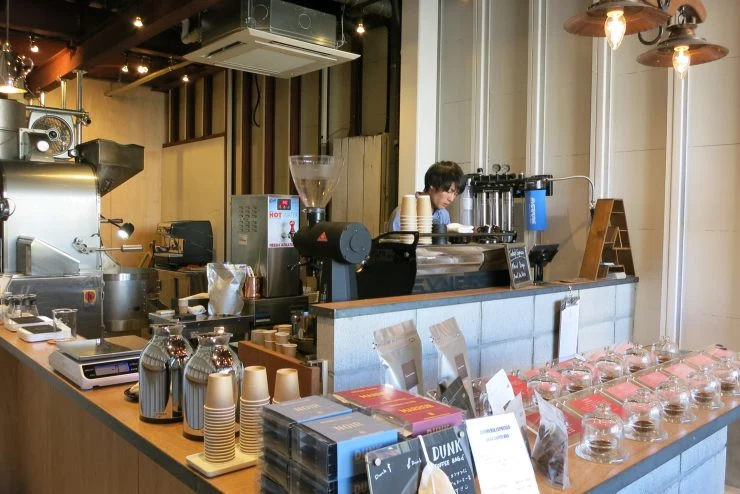
The argument starts with the coffee cherry and its seed, and everything at the counter follows from it: roasting is treated here as the way to unlock the fruit, sweetness and aroma the bean already holds. AMAMERIA ESPRESSO is a specialist coffee operation rather than an all-day café, founded in 2010 in Musashi-Koyama and still run as a small roastery with a bar attached. The center of gravity is roast development and extraction rather than a long food list, and the room is scaled to match, a neighborhood micro-roastery with limited seating and a calm, coffee-first atmosphere.
Beans from the top of the specialty tier
The sourcing is specific. The shop selects high-grade specialty coffee, including beans with cup scores of 84 and above, drawn from the top few percent of the world's crop, which is the sort of threshold that only matters if the roasting is good enough to show it. That is the appeal for drinkers who care about origin character and about what technique changes in the cup. There is a competition side to the operation as well, so the identity sits between neighborhood coffee service and professional specialty-coffee culture. The framing the house uses is about opening a door into coffee, with surprise and the magic of roasting doing the work, which makes the visit quietly educational. You notice how a bean changes with roast approach and extraction.
Start with the espresso, then a pour-over
Order espresso first. It is the fastest read on how the roaster handles a high-scoring bean, and the name over the door is a fair signal of where the effort has gone. Then take a seasonal single origin as pour-over and compare the two: the same care applied to a different bean, with sweetness and aroma arriving in a different order. Choosing by mood is encouraged, so it is worth saying what you actually want, whether that is bright and fruit-forward or sweet and rounded, and letting the counter point you at the right bean. The point of the place is not breadth across food and drink. It is the focused pleasure of coffee bought at the top of the specialty tier and roasted to show what is already inside it, one cup at a time.
Tags
Frequently asked questions
What should you order at AMAMERIA ESPRESSO?
Order espresso first, since it is the quickest read on how the roaster handles a high-scoring bean. Then take a seasonal single origin as pour-over and compare the two. Choosing by mood is encouraged, so say whether you want something bright and fruit-forward or sweet and rounded and let the counter pick the bean.
What kind of coffee does AMAMERIA roast?
High-grade specialty coffee, including lots with cup scores of 84 and above from the top few percent of the world's crop. The roasting aims to draw fruit, sweetness and aroma out of the bean rather than to impose a single house profile, which is why one selection can taste very different from the next.
Compare nearby places
| Venue | Type | Area |
|---|---|---|
| CAFÉ FAÇON Nakameguro honten | Café | Nakameguro |
| CAFE Mame-Hico Sangenjaya honten | Café | Sangenjaya |
| Café Trois Chambres | Café | Shimokitazawa |
| Coffee Senmon Ten Sanjikken Ginza honten | Café | Ginza |
| Juichibo Coffee Ten | Café | Ginza |