Why go
Every cup is poured by hand. That is the shop's own summary of itself, and it holds: good beans, careful manual brewing, and no machine doing the work in the background.
Hand drip, and little else in the way of coffee
Whitebird calls itself a hand-drip specialty shop and the menu is built to that claim. There is no espresso theatre and no long list of brew methods. The extraction is the craft and the cup is the product, and the narrowness is a decision rather than a limitation.
The beans are chosen for quality rather than novelty, and the shop makes more of the pour than of the provenance. That discipline is what put it at number 81 in the Tabelog 100 for 2025. Coffee royale sits alongside the straight drip as the other house signature, the spirit-laced version of the same careful cup, and between them they cover most of what people come in for.
A corner stand in East Umeda
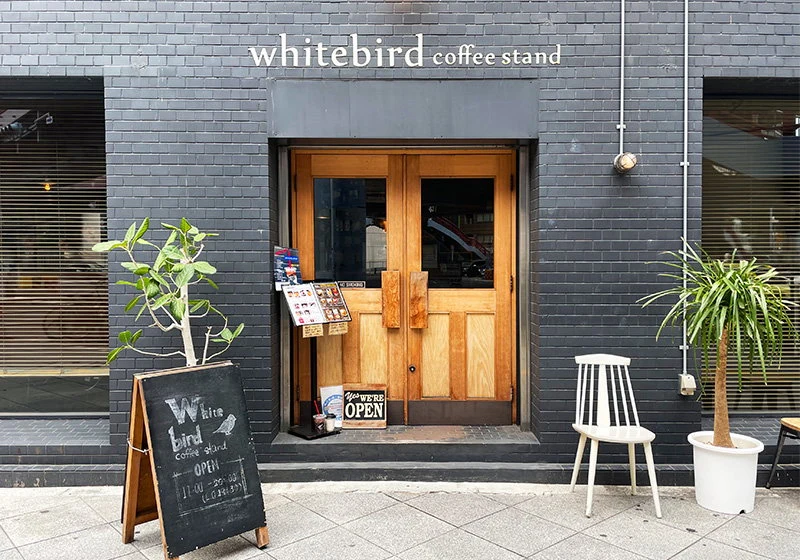
The shop sits on the corner of the Higashi-Umeda intersection, which explains the word stand in its name. It is street-facing and small, built for the flow of Umeda rather than folded into a quiet backstreet, and it works for commuters, neighbourhood regulars and anyone crossing the district on foot.
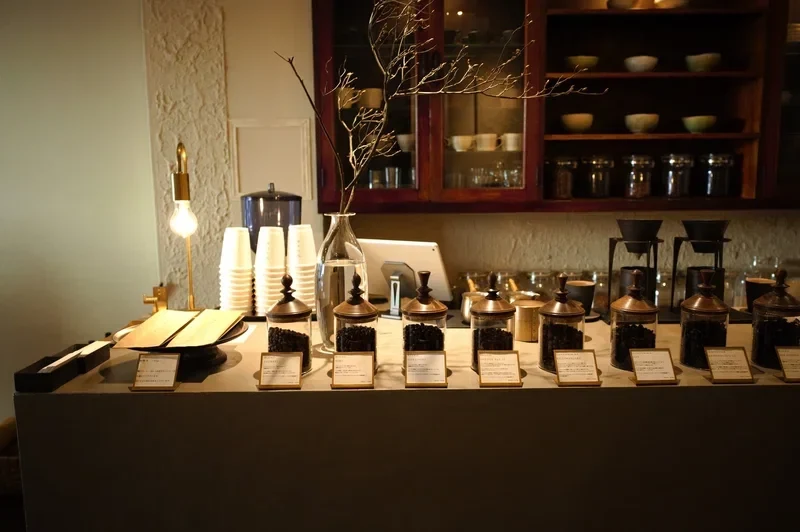
The room is calmer than the location suggests. Wood and iron give it the feel of a coffee bar rather than a kiosk, and the pace allows lingering over a cup instead of a hurried takeaway. Later in the day the board widens into other drinks, including alcohol, so the same counter serves as an evening stop as easily as a morning one.
Order the hand drip, then the pudding
The first order writes itself. Hand-drip coffee is the format the whole shop is arranged around, so ask what is on and take it black, at least for the first cup.
Pudding is the thing to add. It is the named sweet attached to the place and the right foil for a clean filter coffee, dense and cold against something hot. If the visit runs later, coffee royale bridges the coffee and the drinks list, and the rest of the alcohol side is there for whoever wants the evening version of the same small room. Little about the format has been complicated, and that is the appeal.
Tags
Frequently asked questions
What should I order at Whitebird coffee stand?
Hand-drip coffee, which is the format the shop is built around and the only one it claims. Take it black on the first cup. Pudding is the sweet to add alongside it, and coffee royale is the house variation for anyone who wants the spirit-laced version of the same careful pour.
Is Whitebird only a coffee shop?
Coffee is the anchor, but the board widens later in the day into other drinks including alcohol, so the same small corner counter works as an evening stop too. The room helps: wood and iron, a calm coffee-bar feel, and enough space to sit with a cup rather than carry it straight out of the door.
Compare nearby places
| Venue | Type | Area |
|---|---|---|
| Nova Coffee to Yakigashi | Café | / |
| cocoo cafe | Café | Hommachi / Utsubo Park area |
| Resolve Coffee Ten | Café | Takatsuki |
| CAFE BAHNHOF Sanbangai ten | Café | Hankyu Sanbangai / Umeda |
| MOTO COFFEE | Café | Kitahama |