Why go
French technique aimed at bread
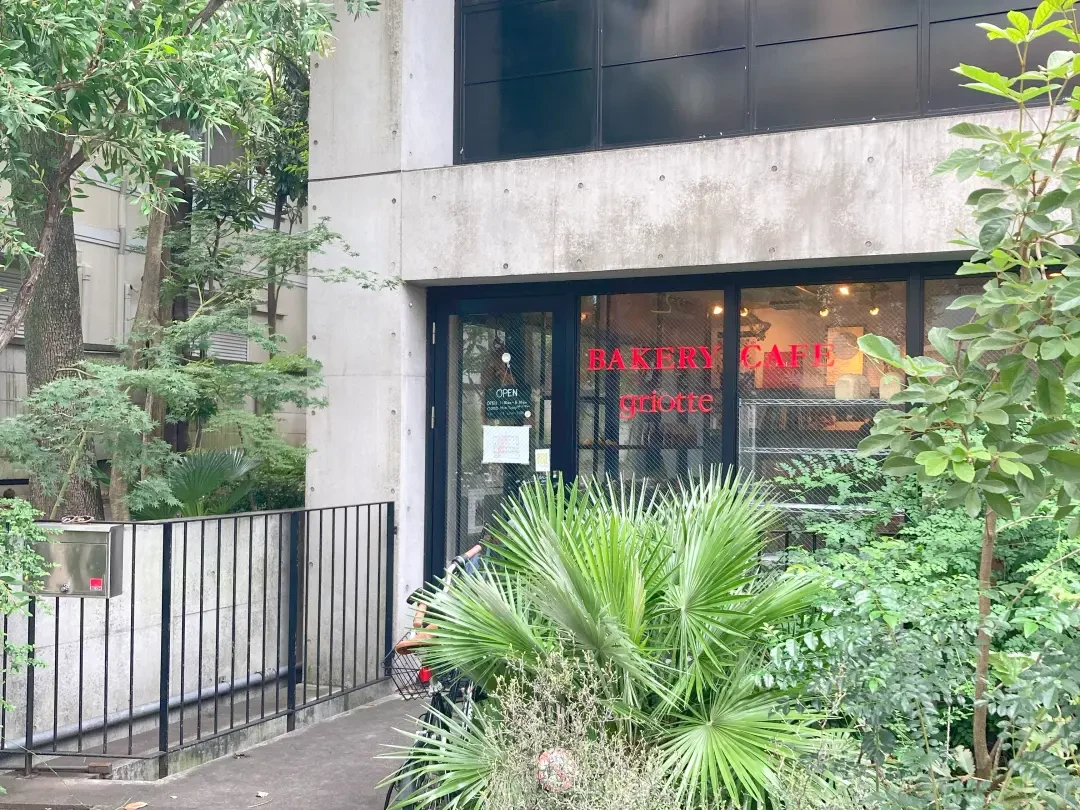
The premise at griotte Bakery cafe is that French cooking and bread making are one craft. Loaves and pastries here can read like plated savory dishes or plated desserts rather than a standard bakery lineup, which follows from the people behind them: the owner left an office career for a French kitchen before going independent, and the baker came out of French cooking and turned toward bread and sweets. The shop opened in November 2012 in the Meguro area, close to Komazawa Olympic Park, and has stayed a compact neighborhood bakery rather than growing into something bigger. The glass front is bright and stylish, and the whole operation is small enough that the baking, not the room, carries the visit.
Homemade yeast and sugar-free doughs
The program is craft-led in a specific way. Hard breads are raised with a homemade sweet rice alcohol yeast, and the doughs for shokupan, baguette, campagne and whole-wheat focaccia are made without sugar, so fermentation character and wheat flavor have to carry the loaf. The room matches the approach: the bakery counter sits upstairs and a small basement cafe with around ten seats sits below, which creates a two-part rhythm. Choose at the counter, then take the bread away or settle in downstairs. Selection narrows later in the day as the shelves thin out, so an early visit sees the full range and a late one is a lucky dip.
Start with the Griotte croissant
The Griotte Croissant is the named specialty and the right first order. It is made with a lot of Calpis butter and baked paler than most croissants so the butter aroma stays forward, and the house suggests eating it once it has cooled, which is a deliberate piece of texture control. It reads salty rather than sweet, butter-soaked through the inner layers and delicately crisp. Pommes et noix shows the savory, dish-like side: a rye-based bread with dried apples cooked in ginger and white wine, plus walnuts, for a mature mix of fruit, spice, wine and grain. The Ciabatta is kneaded with durum semolina and extra-virgin olive oil and comes out aromatic with a mochi-like chew, and an eponymous griotte bread carries sour cherry and ganache, which is the dessert-bread idea stated plainly. With Komazawa Olympic Park a short walk away, a croissant and a loaf make an easy picnic out of the visit.
Frequently asked questions
What should you order at griotte Bakery cafe?
The Griotte Croissant is the shop's named specialty and the first thing to try. It is baked paler than most croissants so the Calpis butter aroma stays forward, and the house suggests letting it cool before eating. After that, Pommes et noix and the semolina ciabatta show the savory, dish-like side of the baking.
What makes the bread here different from a standard bakery?
Hard breads are raised with a homemade sweet rice alcohol yeast, and the doughs for shokupan, baguette, campagne and whole-wheat focaccia are made without sugar, so fermentation and wheat flavor do the work. The kitchen treats a loaf the way a French restaurant treats a dish, which is why some breads read as savory plates or desserts.
Compare nearby places
| Venue | Type | Area |
|---|---|---|
| Boulangerie Paris no Sora no Shita | Bakery | Setagaya |
| Boulangerie Sudo | Bakery | Setagaya |
| Patisserie SOURIRE | Bakery | Meguro |
| Patisserie JUN UJITA | Bakery | Himonya, Meguro |
| Patisserie Cacao et Paris | Bakery | Nakameguro |