Karuizawa Ginza

French Bakery

Bakery4.2 on GoogleAbout $5 a head
French Bakery

Why go

Old Karuizawa has a particular bakery rhythm: early movement, compact shopfronts, and the practical pleasure of bread bought before the day splits into cycling, villas, outlet shopping, and walks under larch and maple. The area’s food identity is not built only around formal restaurants. It also depends on bakeries, confectioners, soba houses, dairy counters, and cafés that make sense of a resort town with Tokyo money, Nagano produce, and a long habit of Western-influenced leisure.

In that setting, French Bakery belongs to the part of Karuizawa dining that is modest in price but not minor in cultural weight. The category matters: bread in Japan is a serious craft field, with regional lists, obsessive customer followings, and a language of texture, fermentation, and daily bake timing that can be as competitive as sushi or ramen. A bakery selected for Tabelog Bread EAST “Tabelog 100” in both 2020 and 2022 sits inside that specialist conversation, particularly in a town where a morning bakery run can be as defining as a long lunch.

Karuizawa's bread culture is a resort-town habit, not a side note

Karuizawa’s relationship with Western-style baking is easy to misunderstand if it is treated as a novelty. The town’s modern identity has long been shaped by summer retreats, church-going foreign residents, villa culture, and Japanese domestic tourism, all of which helped normalize cafés, bread, jam, dairy, and sweets as part of the local table. That does not make the food less Japanese. It makes it a particular Japanese reading of European formats, filtered through Nagano’s cool climate and the expectations of weekend regulars.

The sourcing angle here is less about a named farm than about what Karuizawa rewards. Mountain resorts punish food that feels heavy or careless. Bread and sweets have to work for breakfast, for take-out, for families, and for people moving between short stops rather than sitting through a long meal. This is why the town supports venues across a broad casual-to-premium range: haluta bageri speaks to the same bread-minded audience from a different angle, while HARVEST NAGAI FARM Karuizawa ten reflects the area’s appetite for dairy and farm-led sweets. Together, they show why Karuizawa’s casual food scene is more exacting than its relaxed surface suggests.

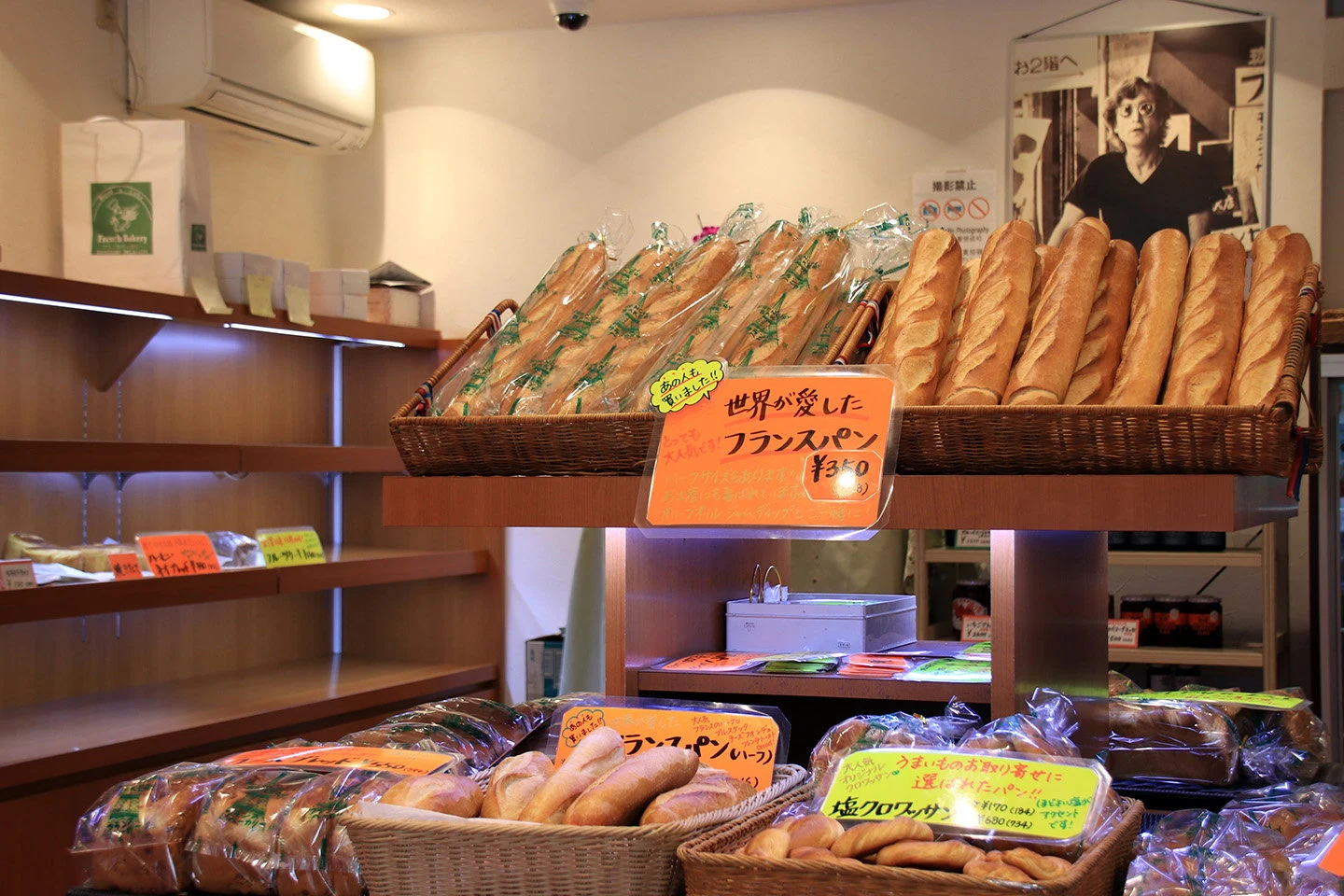
French Bakery’s public category listing, bread, Western-style sweets, and café, is therefore more revealing than a long menu description would be. It places the shop at the intersection of three Karuizawa needs: bread for the day, sweets for the stroll, and a café format for a short pause. The Tabelog score of 3.67 and inclusion in the Bread EAST 100 selection give the claim external weight, but the more interesting point is how a low-spend bakery can compete for attention in a town with polished hotel cafés and higher-ticket dining rooms.

The appeal is format discipline: bread, sweets, café, take-out

Japan’s stronger bakeries often succeed because they do not behave like miniature restaurants. They are built around flow: selecting, paying, carrying away, and sometimes pausing briefly if seats are available. That rhythm suits Karuizawa, where visitors rarely want every food stop to become an appointment. French Bakery’s take-out service and small seating footprint align with that pattern. The experience is not about lingering over a long progression; it is about using a bakery well, then letting the rest of the town continue around it.

That distinction separates it from Karuizawa’s fuller restaurant decisions. A Fenestella belongs to the sit-down dining side of the town’s Italian-leaning appetite, Chinese Hanten Reisho serves a different demand for composed Chinese cooking, and Chimoto Sohonten Karuizawa honten occupies the sweets-and-local-gift lane. The bakery decision is more immediate and, in some ways, more revealing: it shows how Karuizawa feeds people between plans.

Price also changes the editorial read, even without turning the bakery into a bargain story. In a resort town where hotel terraces and soba houses can quickly move into higher brackets, a sub-¥1,000 bakery spend keeps the focus on daily craft rather than occasion dining. That is part of the pleasure. Karuizawa’s food scene is strongest when it lets visitors mix categories: bread in the morning, sweets in the afternoon, soba or Italian later, and a hotel lounge only when the mood calls for it.

How to place it in a Kitasaku-gun food day

The useful way to read French Bakery is as a Karuizawa anchor for the first half of the day, especially for travelers who care about ingredient-led simplicity more than elaborate service. The chef is not the story here, and no named chef credential is needed to understand the appeal. The stronger signal is the bakery’s repeat recognition within Tabelog’s Bread EAST list, a field where selection depends on category credibility rather than dining-room theatre.

For a wider Kitasaku-gun itinerary, it fits neatly beside places that express the area’s range without pretending that every stop serves the same purpose. Use Our full Kitasaku-gun restaurants guide for the dining map, then treat adjacent planning categories separately: Our full Kitasaku-gun hotels guide, Our full Kitasaku-gun bars guide, Our full Kitasaku-gun wineries guide, and Our full Kitasaku-gun experiences guide. The point is not to rank a bakery against a hotel café or a dinner room. It is to understand how each category handles Karuizawa’s mix of leisure, weather, and appetite.

Travelers building a broader Japan food file can also compare how casual formats carry local identity elsewhere: -Grilled beef Sukiyaki- KAMAKURA TANUKIAN 鎌倉 たぬき庵 in Kamakura frames a different kind of regional meal,. 鮪と炭火焼き うお炭 秋葉原店 in Tokyo shows the urban izakaya spectrum,.cafe in Osaka sits in another café culture,.know in Kumamoto adds a Kyushu reference point, (Shoku) Vietnam in Kawasaki shows how imported cuisines localize in commuter cities, and [Curry Senmon Ten] Maruyama Kyoju. in Sapporo belongs to another comfort-food tradition. Across the Pacific, Jōdo Saké Bar in Los Angeles and Onigiri Time in Pasadena show how Japanese drinking and snack formats travel. Karuizawa’s version is quieter: bread, sweets, café, and a town that has made that combination part of its daily grammar.

Tags

ClassicCozyIconicSoloFamilyCasual HangoutAfter WorkStandaloneHistoric Building