Why go
A dark blend poured in a Showa room
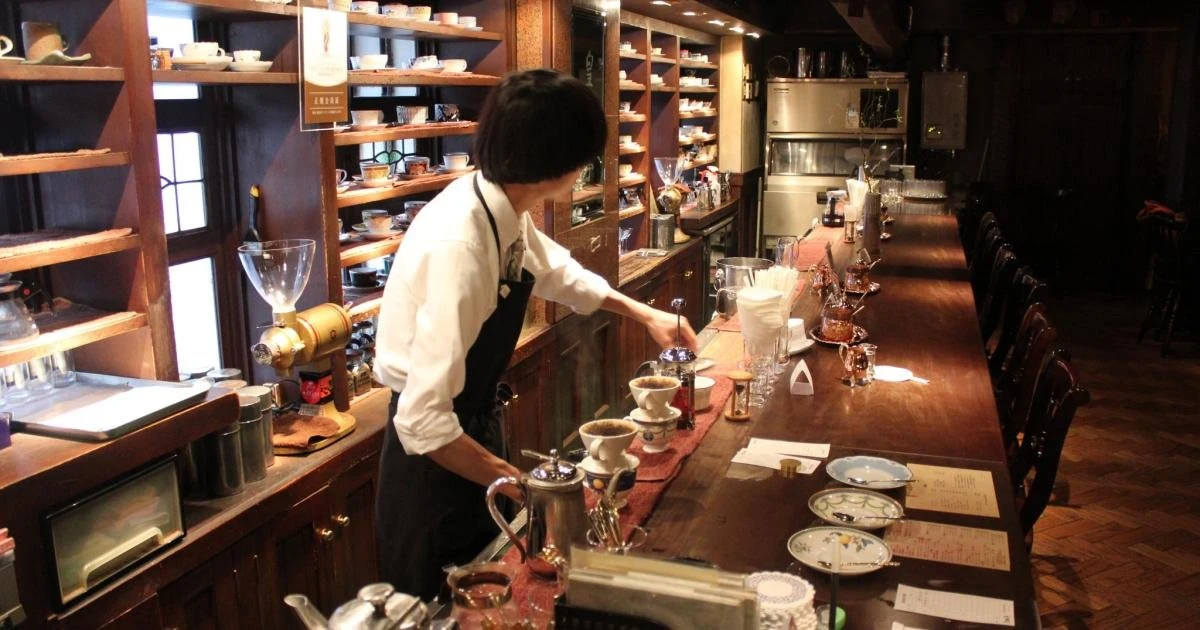
The house blend is what this kissaten is built on: deep and bitter, low in acidity, poured strong and served in porcelain. It is a style of coffee that predates the lighter roasts of the specialty era, and Cafe Enseigne Dangle has shown no interest in updating it. The menu around that cup is short and drink-led, with a small food list that exists to support the coffee rather than to compete with it.
Cheesecake is the thing to eat with it. Made in house, it is rich without being heavy on sugar and smooth rather than dense, which is the counterweight a bitter blend needs. Sweets sit in the café's public identity rather than at the edge of the menu, so ordering cake here is the expected move rather than an indulgence.
Brick, counter seats and a quiet Jiyugaoka corner
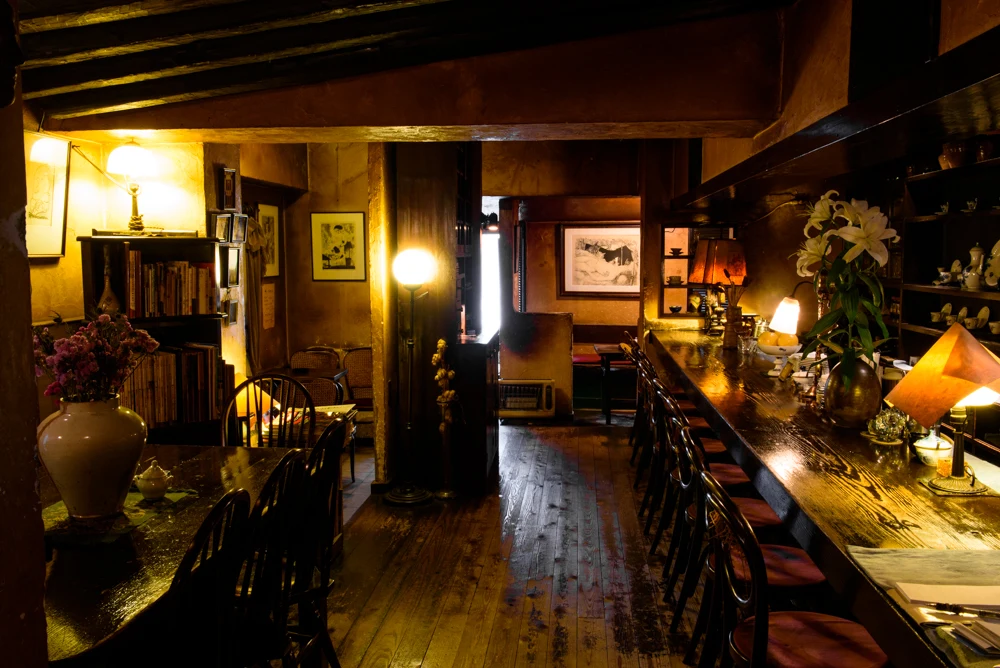
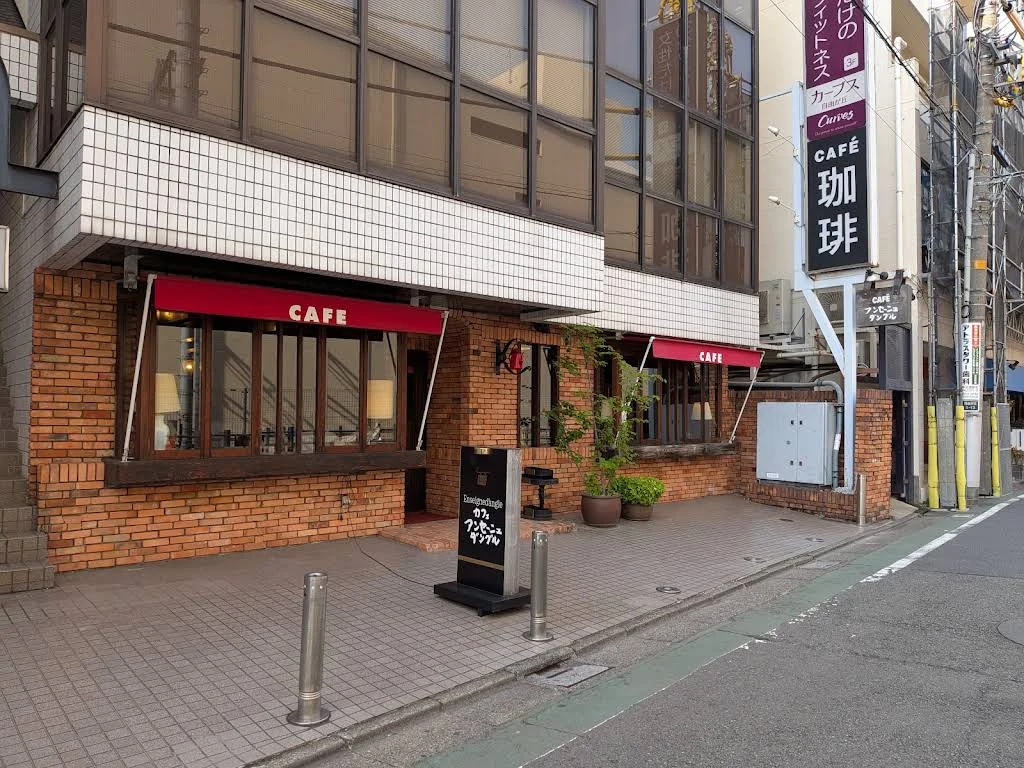
The room is brick-lined and solid, with counter seating and the nostalgic weight of a Showa-era coffeehouse. Conversation stays low, nobody hurries, and the cups are porcelain rather than paper. It is a kissaten in the full sense: a room designed for sitting with a drink, not for collecting one on the way past.
Jiyugaoka around it is one of the Tokyo neighbourhoods most crowded with cafés, cake shops and lifestyle retail, so the competition is real and the room's stubborn old-fashionedness is exactly what separates it from the newer places on the same streets. Tabelog selected the café for the 2022 edition of its hundred-best kissaten list, which puts it in national company among traditional Japanese coffeehouses.
Order the blend, then the cheesecake
Start with the blend coffee. It is the clearest statement of what the café does, and it is strong enough that milk becomes a genuine decision rather than a habit. Anyone who usually finds dark roasts hard work should still try it here, because the low acidity keeps the bitterness round instead of sharp.
Then order the cheesecake and let the two sit together, since that pairing is the whole visit in miniature. If a second round is called for, the drinks list is where the breadth lies and the food side stays deliberately narrow. Bring something to read and treat the table as yours for an hour: the room is built to allow it, and the coffee is strong enough to justify staying.
Tags
Frequently asked questions
What is Cafe Enseigne Dangle Jiyuugaoka ten known for?
A dark house blend is the signature, deep and bitter with low acidity and served in porcelain, in a brick-lined room that keeps its Showa-era kissaten character. The house cheesecake is the standard order beside it. Tabelog selected the café for the 2022 edition of its hundred-best kissaten list.
What should you order at Cafe Enseigne Dangle Jiyuugaoka ten?
Order the blend coffee first, because it is the clearest statement of what the kissaten does and strong enough that taking it black is worth trying. Then add the house cheesecake, which is rich but restrained in sugar and cuts against the bitterness. The drinks list carries the breadth here, while the food side stays small.
Compare nearby places
| Venue | Type | Area |
|---|---|---|
| GELATERIA VITALI | Café | Jiyugaoka |
| patisserie Paris S'eveille | Bakery | Jiyugaoka |
| Coffee Tei Ruan | Café | Omori, Ota City |
| Café Trois Chambres | Café | Shimokitazawa |
| Coffee Arabica | Café | Akasaka |