Why go
A jewel-box counter on the lobby floor
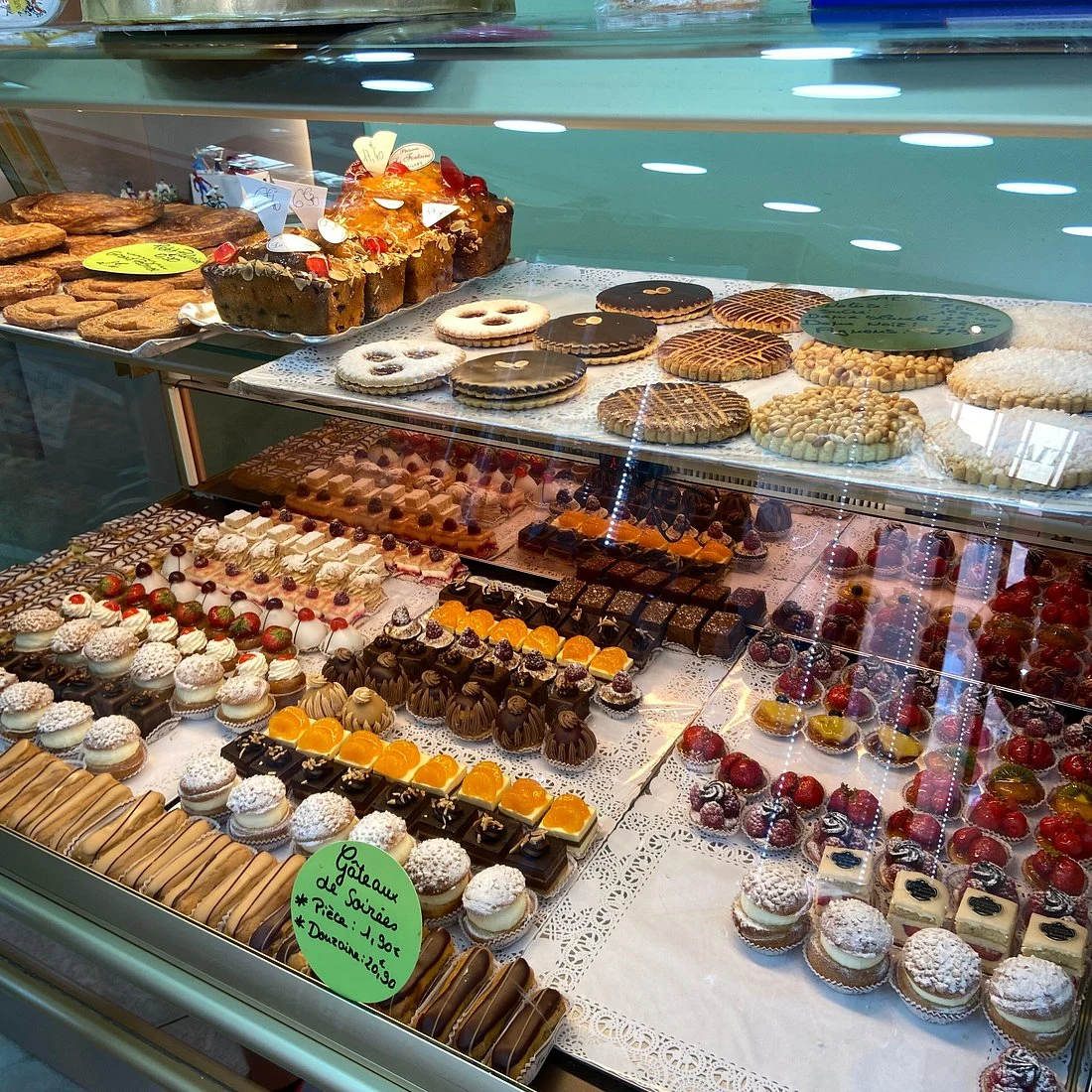
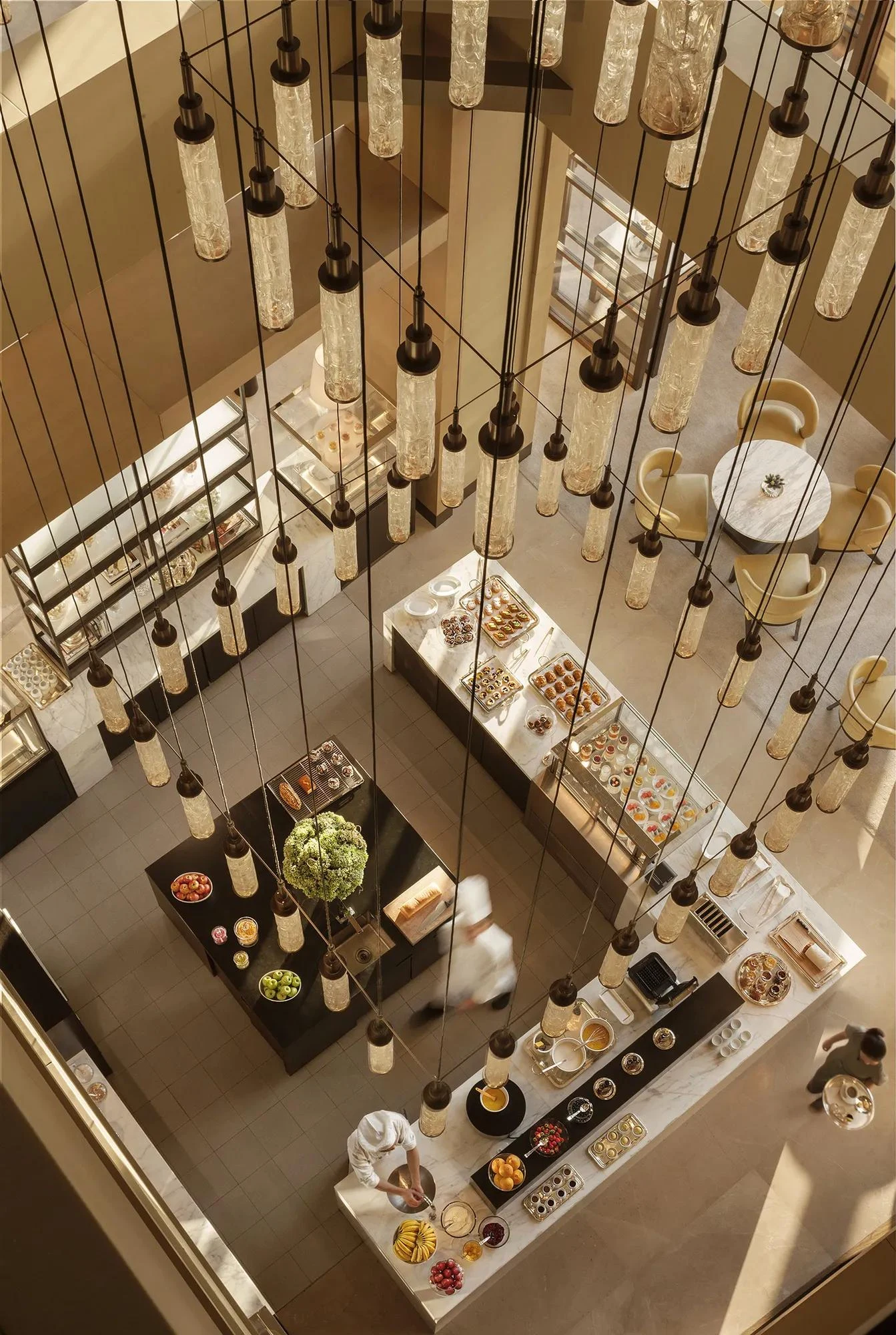
The counter runs on chocolate and pastry rather than a restaurant menu: artisanal chocolates, seasonal cakes, delicate pastries and handcrafted gift boxes, set out in the small Butterfly Patisserie boutique on the lobby floor of Rosewood Beijing. A black-and-white butterfly motif carries through the packaging and the display, which sets the register before anything is chosen. The patisserie opened in June 2021, and its defining house position is sweetness pulled back: the range is built around cakes and pastries made with 40% less sugar, framed as a balance of taste and well-being rather than as a diet claim. The vocabulary underneath is French and conventional in the best sense, with millefeuille, Paris Brest, flan, palmiers, chiffon cakes, roll cakes, cookies and pralines forming the working repertoire.
Layered pastry, nut cream and small-format chocolate
The range reads clearly by category. Millefeuille appears in several directions, from hazelnut, macadamia and vanilla to Tahitian vanilla, salted caramel and coffee. Flans and custards do the softer work: chocolate hazelnut flan, Hokkaido custard flan and a butterfly vanilla flan. Fruit and tea carry the cakes, with mango roll cake, white tea lychee and guava cake, taro chiffon cake, strawberry chiffon cake and black forest cake. Paris Brest arrives with macadamia and hazelnut, and a hazelnut latte cake continues the nut-and-coffee line. Lapsang souchong palmiers and cashew cookies give the case something drier to sit beside the cream. The chocolate work is just as central, with mixed pralines and flavoured assortments in caramel, hazelnut, coffee, earl grey tea, raspberry and passion fruit.
Start with millefeuille, then move to the pralines
Order a millefeuille first. It recurs across the range more than any other format, and it leaves the layering and the pastry cream nowhere to hide. Move next to the pralines for the most compact view of the chocolate side, since caramel, hazelnut, coffee, earl grey, raspberry and passion fruit run through ganache, nut, tea and fruit in a single box. For a table sharing dessert the cakes make more sense: mango roll cake for something light, white tea lychee and guava for the fruit-and-tea register, black forest or one of the chiffons when the occasion wants a proper slice. For taking away, the chocolate gift boxes and hampers are what the boutique is built around, and the reduced-sugar framing makes them an easier present than the format usually allows.
Frequently asked questions
What should I order first at Butterfly Patisserie?
Start with a millefeuille. It appears across the range in hazelnut, macadamia and vanilla, Tahitian vanilla, salted caramel and coffee versions, and it shows the layering and the pastry cream most plainly. After that, a box of pralines covers the chocolate side, running from caramel and hazelnut through earl grey tea, raspberry and passion fruit.
Is the pastry here very sweet?
The house works to a reduced-sugar position, building its cakes and pastries with 40% less sugar than the format usually carries. That shows most in the fruit and tea cakes, such as white tea lychee and guava or the chiffon cakes, where the flavour is left to carry the slice. The pralines and the flans stay closer to classic French sweetness.
Compare nearby places
| Venue | Type | Area |
|---|---|---|
| Patisserie Couture | Bakery | Tian'anmen Square and Wangfujing Area |
| Blue Bottle Coffee | Café | Seongsu |
| Fritz Coffee Company, Dohwa | Café | — |
| Intelligentsia Coffee Seochon Coffeebar | Café | Seochon |
| Thanks, Oat | Café | Bukchon / Anguk (Jongno-gu) |