Sannomiya

Akaneya Coffee Ten

CafeSpecialty Coffee Shop4.4 on GoogleAbout $8 a head
Akaneya Coffee Ten

Why go

A serious Japanese kissaten asks for a different approach than a modern café. The mood narrows before the order: fewer laptops, less turnover theatre, more attention to the counter as a working stage. In Sannomiya, where rail traffic, shopping streets, and late-day eating routes overlap, Akaneya Coffee Ten belongs to the older coffee-house tradition built around pause, repetition, and a small set of customs rather than novelty.

Kobe gives the format particular charge. The city is often read through port-city dining, Western-style sweets, beef restaurants, and hotel lounges, but its coffee culture shares the same historical register: imported tastes absorbed, localized, then disciplined into routine. Kissaten are not cafés with darker interiors. They run on a different social contract: guests settle in, order with restraint, and let the room’s tempo dictate the visit. The counter matters because it makes the exchange compact and observable; the cup becomes part of a service ritual, not a takeaway commodity.

A counter-first kissaten in a city that understands Western influence

The distinction matters because Kobe’s dining identity is often flattened into beef and harbor views. The better reading is broader. Around Sannomiya Station, quick-drinking taverns, gyoza counters, yoshoku rooms, coffee houses, and small-format specialists layer into short walking circuits. A kissaten here feels less like nostalgia than civic infrastructure: a controlled stop between meals, trains, shopping, or an evening plan.

Akaneya Coffee Ten sits inside the recognized national kissaten conversation. It was selected for Tabelog’s Kissaten 100 in 2021 and 2022, and its listing score is 3.70, meaningful in a category where long-running rooms win loyalty through consistency rather than spectacle. Its opening date, January 25, 1966, predates many current Japanese specialty-coffee trends. That chronology is context, not romance: the format belongs to a pre-third-wave grammar in which roasting, brewing, counter seating, and quiet service form the experience.

Compared with nearby casual-price Kobe options such as Tommy's Sannomiya ten and Gyoza no Mise Hyotan Sannomiya ten, the value proposition is not volume or speed. Compared with Sannomiya’s meal-driven rooms such as European Ryori Mon or drinking-led formats such as Stand Classic, the pleasure is narrower and more exacting: coffee as a deliberate interval. It pairs well with a Kobe day built across categories, from beef-focused meals like Aburi Niku Kobo Wakkoku Shinkobe ten and Aburi Niku Kobo Wakkoqu Kitano Sakamoto Ten to smaller local stops such as Akari, Ali's Halal Kitchen, and anthem.

The ritual is the point, not a long menu chase

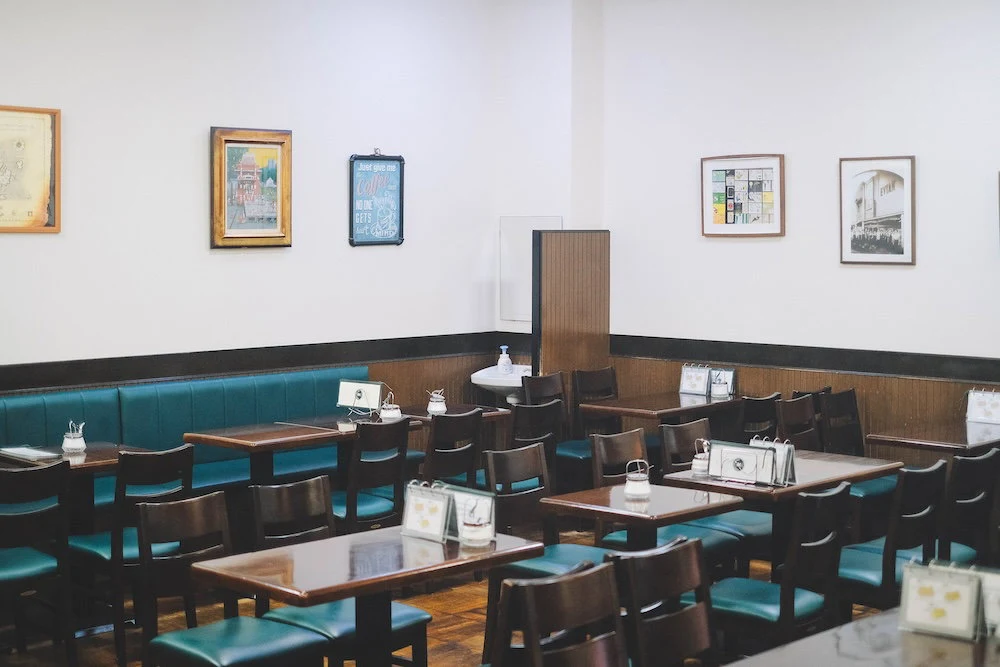
Kissaten etiquette rewards patience. The order is not a platform for customization, and the room is not designed around groups competing for attention. A 16-seat, counter-only format compresses the experience, so plan accordingly. Solo dining reads naturally, the counter structures the visit, and lingering should stay proportionate to the room’s scale.

The category also sits apart from contemporary specialty coffee. Third-wave cafés foreground origin data, processing methods, extraction ratios, and retail bags. A traditional kissaten asks a different question: can a room repeat a familiar act with enough care that regulars keep returning? Akaneya Coffee Ten answers through longevity and selection history, not chef-driven authorship or a public-facing founder narrative. That absence of personality-led framing is part of the appeal. The culture is procedural, not biographical.

There is a spending distinction, too. This is not a blowout stop in Kobe terms; the listed budget is JPY 1,000 to JPY 1,999 for lunch and dinner periods. That makes it a deliberate daily luxury rather than a destination tasting-menu expense. The better comparison is not fine dining but the economics of time: a modest spend buys a slower register of service in a city center that otherwise pushes visitors from platform to storefront to table.

How it fits into a Kobe itinerary

For travellers mapping Kobe by appetite, the coffee stop works as punctuation. Sannomiya is the practical hinge for many restaurant routes, and a kissaten before dinner can reset the pace without adding another full meal. The venue is listed as non-smoking and offers take-out, useful in a category where older coffee houses vary sharply on atmosphere and format. Reservations are unavailable, so treat it as a flexible stop rather than the anchor of an evening.

Its location near Kobe Sannomiya Station makes it easy to fold into a wider plan, but convenience is not the editorial case. Kobe’s food culture is strongest when read as a sequence of specialized rooms rather than one headline cuisine. Use Our full Kobe restaurants guide for the dining arc, then cross-check Our full Kobe hotels guide, Our full Kobe bars guide, Our full Kobe wineries guide, and Our full Kobe experiences guide if building a full city stay rather than a station-area meal run.

For readers comparing Japanese dining formats beyond Kobe, the lesson travels. A kissaten should not be judged by the same criteria as a curry counter, sake bar, sukiyaki room, or modern café. The difference becomes clearer beside addresses such as -Grilled beef Sukiyaki- KAMAKURA TANUKIAN 鎌倉 たぬき庵 in Kamakura,. 鮪と炭火焼き うお炭 秋葉原店 in Tokyo,.cafe in Osaka,.know in Kumamoto, (Shoku) Vietnam in Kawasaki, [Curry Senmon Ten] Maruyama Kyoju. in Sapporo, Jōdo Saké Bar in Los Angeles, and Onigiri Time in Pasadena. Each format has its own rhythm. Here, the rhythm is quiet, counter-led, and resistant to hurry.

The verdict is simple: Akaneya Coffee Ten is for travellers who care about a city’s everyday rituals. It is not trying to be a multi-course event, design café, or dessert salon. Its importance lies in precisely preserving the kissaten interval: small scale, coffee focus, counter discipline, and enough national recognition to justify making room for it in a Kobe itinerary.

Tags

ClassicCozyHidden GemIntimateSoloHistoric BuildingStandalone