Why go
Yemeni coffee roasted in small batches
The counter here pours Yemeni coffee, and everything else follows from that. The beans are 100% organic Arabica grown at Al Hasbani Farms in Yemen’s highlands, carried to the United States, and roasted in small batches by the company’s own team, with roasting kept close enough to service that freshness is part of the pitch. Behind it sits a family history of coffee growing running back eight generations, which is why the room treats Yemeni coffee as a tradition to explain rather than a novelty to sell. The Williamsburg branch is one of more than thirty cafes the company now runs across the country, and it appears in the Infatuation Coffee Guide for 2026.
A busy room with the story on the walls
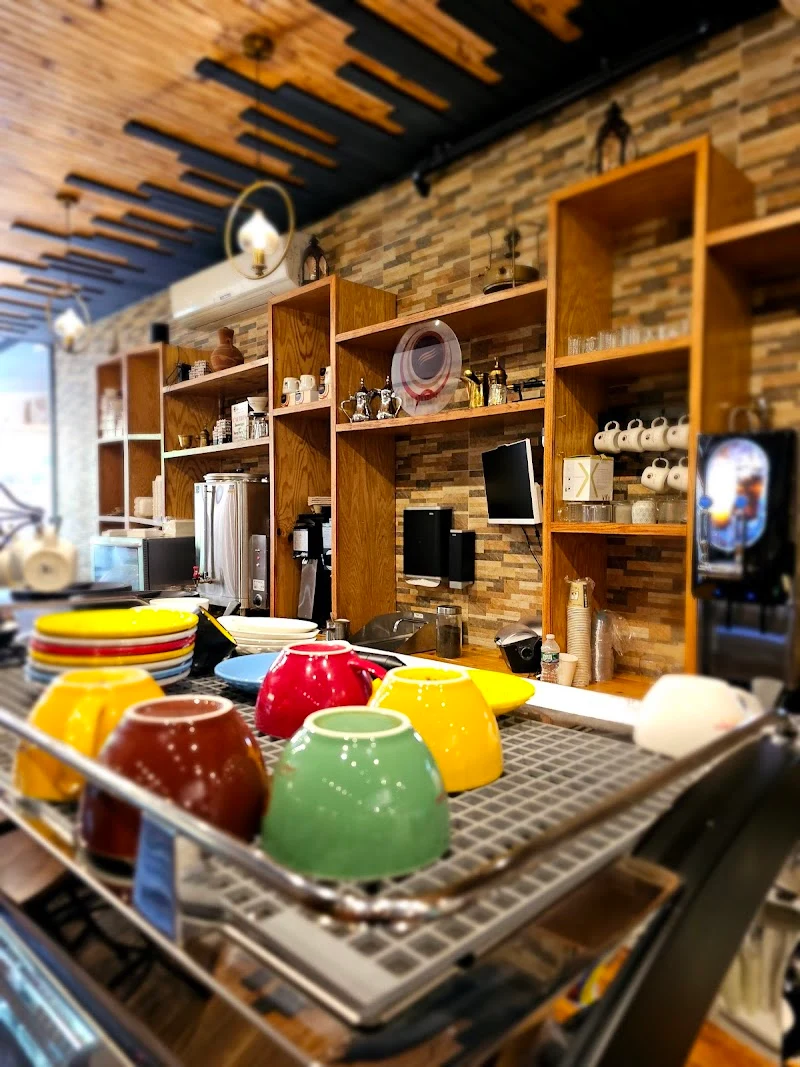
Counter service sets the pace, and on a Sunday morning the room is genuinely full: a few well-spaced tables, a steady takeaway line, and a lovely outdoor seating area that absorbs the overflow. The artistic walls do more than decorate. They carry the origin story of what is in the cup, which turns a wait in line into something closer to an introduction to Yemeni coffee culture. Retail sits alongside the drinks, with beans, teas, mugs, brewing accessories and traditional vessels including the Arabic dellah pot, so the cafe works as a small showcase as much as a place to drink. The energy is closer to a busy neighbourhood coffeehouse than a restaurant, and it stays that way through most of the day.
Start with a spiced Yemeni cup, then the almond croissant
Order from the Yemeni side first. The house blends are spiced with cardamom, ginger and cinnamon in different combinations, taken with or without cream, and they are the clearest expression of what the company brought from Yemen. Preparation runs from pour-over and French press to Turkish-style, so the same beans arrive several ways depending on how much time the visit allows. Espresso drinks hold their own too, with the cappuccino and the cortado the ones regulars single out. Chai is the natural alternative for anyone who wants a warm drink close to the same flavour register, and loose-leaf teas sit beside it, though coffee remains the signature. For something sweet, the almond croissant is the pastry to take, and it pairs as well with a spiced Yemeni cup as it does with a cortado.
Tags
Frequently asked questions
What is Qahwah House known for?
Yemeni coffee, poured from 100% organic Arabica grown at Al Hasbani Farms and roasted in small batches. House blends are spiced with cardamom, ginger and cinnamon, taken with or without cream, and served as pour-over, French press or Turkish-style. The almond croissant is the pastry regulars pair with it.